
Review · SPAIN
Alicante: Via Ferrata del Ponoig Guided Trek and Climb
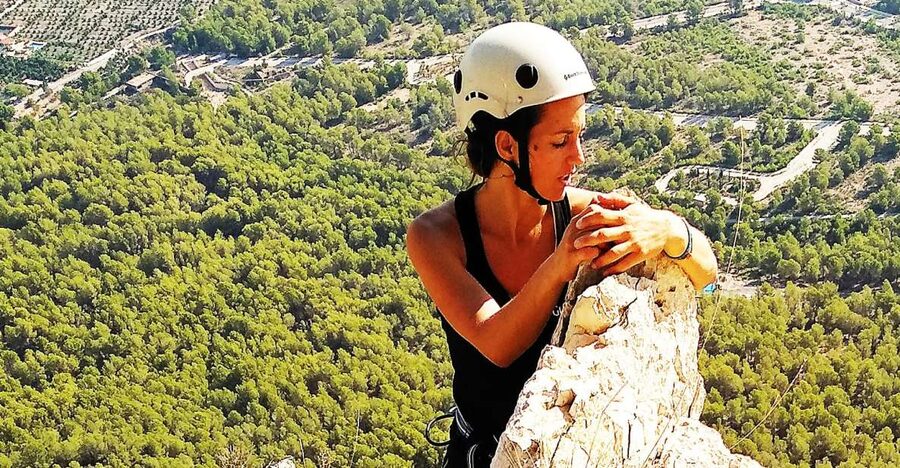
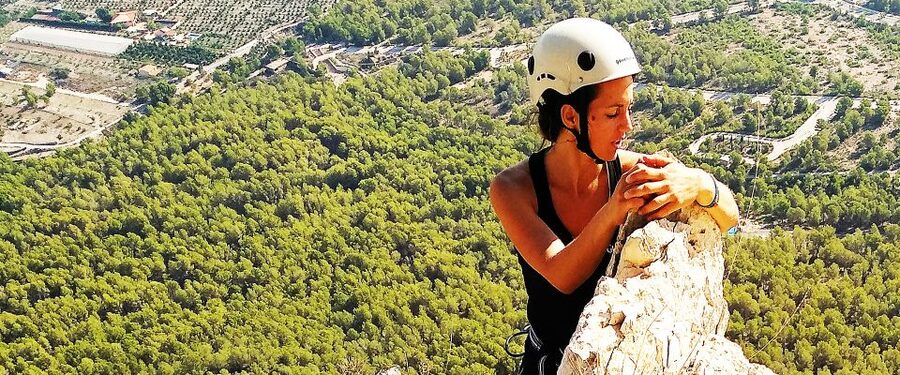
Via Ferrata del Ponoig turns a mountain hike into a serious vertical adventure. You climb straight up rock using metal staples and a safety cable, with the Guadalest Valley and Mediterranean coast opening below you. The K4 rating means this is not a casual stroll with a pretty view.
I like two things here. First, you get a practice session and safety briefing before committing to the cliff. Second, your guide supplies the harness, helmet, Ferrata kit, and photos, so you can focus on the climb rather than arrive with a garage full of gear. Guides such as Frank and Osmar have been praised for clear English, patience, and calm coaching.
The catch is simple: this takes real strength, balance, and a head for heights. The nearly vertical climb is not suitable for children under 18, pregnant women, people with mobility impairments, or anyone with vertigo. Bring hiking shoes, water, sun protection, and clothes suited to the weather.
Key points to know before you climb
- A K4 route with a near-vertical ascent: You will pull and step upward on thick metal staples fixed into the rock.
- A proper introduction before the climb: Your guide explains the equipment and lets you practise basic wall climbing first.
- Views that improve with every metre: Look across the Guadalest Valley, the Sierras de Aixortá and Bernia, and the Mediterranean coast.
- Small groups make a difference: Numbers are limited to 10, allowing the guide to watch your technique and pace.
- Equipment is supplied, but shoes are not: Bring sturdy hiking shoes, plus plenty of water and suncream.
- A five-hour mountain outing: The climb and guided activity take about four hours, with the full experience lasting five hours.
What makes Via Ferrata del Ponoig different
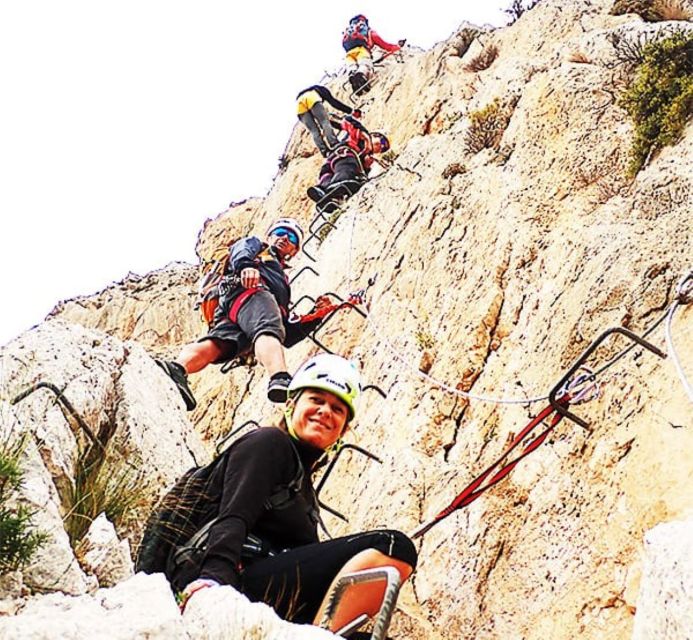
A via ferrata sits between hiking and rock climbing. You do not need to bring a rope or know how to lead a climbing pitch. Instead, you use fixed metal steps and a steel safety cable attached to the rock.
That makes the route more approachable than traditional climbing, but it does not make it easy. On this K4 route, you will move up steep, exposed sections with your harness clipped into the cable. Your legs do much of the work, but your arms and hands will also be busy, especially when the rock turns sharply upward.
The attraction is the steady change in viewpoint. At the bottom, you are thinking about equipment and foot placement. Higher up, the view stretches across the Valley of Guadalest and the Sierras de Aixortá and Bernia. On clear days, you can also look toward the Mediterranean coast from above.
This is the kind of activity that rewards attention. You are not simply walking to a viewpoint and taking a picture. You are earning the view one metal staple at a time.
More Guided Tours in Spain:
- La Palma: Tajogaite Volcano Guided Trek
★ 4.8 · 1,810 reviews - From Valencia: Montanejos Guided Hike with Natural Pools
★ 4.5 · 1,741 reviews - Lanzarote: Guided Volcano Hike with Transfers
★ 4.9 · 861 reviews
Meeting your guide at Parking Vía Ferrata Ponoig
The meeting point is Parking Vía Ferrata Ponoig. Look for the guide holding a visible sign. This is a useful arrangement because you meet at the base of the route rather than waste time searching through a town or waiting for transport.
The experience does not include transportation, so you need to make your own way to the parking area. The supplied information does not give a transfer service or hotel pickup, so check your route carefully before booking and allow enough time to arrive ready to climb.
Once you meet the guide, you receive the safety equipment. The package includes a climbing guide, helmet, harness, and Ferrata kit. Photos are also included, which is handy because taking a phone out on a steep section is not always sensible.
The group size is limited to 10 people. That is still large enough to feel social, but small enough for the guide to pay attention to individual movement. A group of 10 can also affect the pace, since people normally climb one after another along the fixed route. Your guide will set the rhythm.
The first lesson: gear, technique, and the rock wall
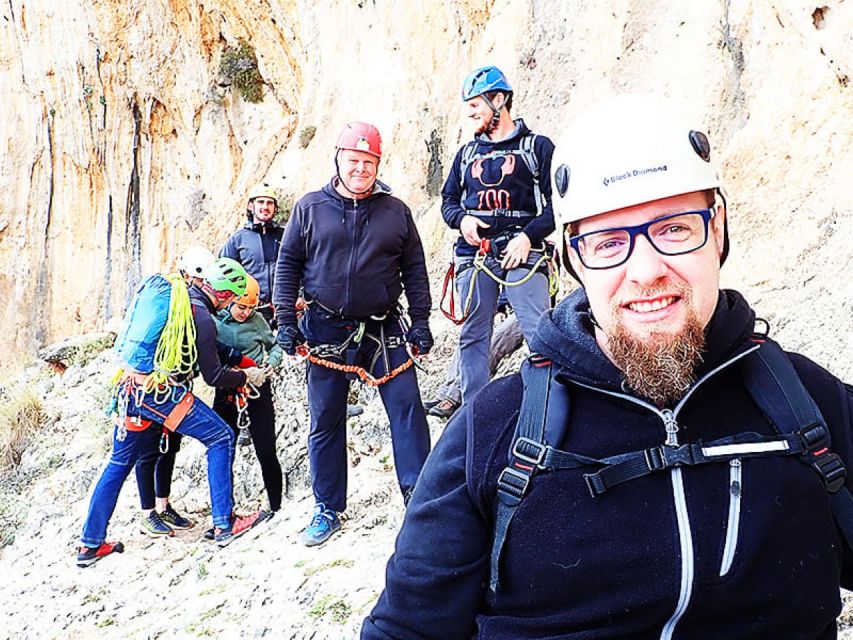
Before the main ascent, your guide teaches basic wall-climbing skills. This step matters more than it may sound. The hardest part for a first-time climber is often learning how to trust the equipment while keeping three points of contact on the rock.
You will get used to the harness and Ferrata kit, then practise climbing on a rock wall with guidance. This gives you a chance to ask questions and find a comfortable rhythm before the route becomes steep and exposed.
Pay close attention here. Learn how to place your feet on the staples, how to use your legs instead of hauling yourself upward with your arms, and how to move the safety connection along the cable. The guide is there to explain the basics, but you still need to make controlled movements and follow instructions.
The most highly praised part of the guiding is the human touch. Frank was praised for finding the right amount of English during the climb, while Osmar was noted for patient explanations and clear instructions. Another guide, mentioned by name as part of the provider team, is Jose Francisco Carbonell Oltra. Guides may vary by date, so you should not assume one particular person will lead your session.
Climbing the metal staples on the K4 route
The main climb begins when the rock turns upward and the staples become your path. These thick metal steps are fixed into the cliff, and the security cable gives you a continuous point of protection as you move.
You will clip into the cable with the Ferrata system and work your way from one staple to the next. The route is described as steep, aerial, and spectacular, so expect exposure rather than a simple scramble. The physical effort comes from repeated upward movement, while the mental effort comes from looking down and seeing the drop below.
You do not need to rush. A good pace is one you can sustain while keeping your breathing steady and your foot placements controlled. If your arms tire, pause where the route allows and let your legs recover. Your guide can help you manage the pace, which is one of the main benefits of taking this route with professional supervision.
The route is rated K4, and that rating deserves attention when you decide if this activity fits you. You do not need to be an expert climber, but you should be comfortable with significant physical activity and a nearly vertical climb. A beginner who is fit, listens carefully, and has no fear of heights may find the introduction helpful. Someone who dislikes exposure may struggle even if they are strong.
More hikes and treks around Spain:
- From Seville: Caminito del Rey Hike Day Trip
★ 4.5 · 1,240 reviews - Lanzarote: Hike Across Timanfaya’s Volcanic Landscapes
★ 4.8 · 1,234 reviews - The Volcano Heart Tour: Hiking, Tasting and Sunset Experience
★ 5.0 · 1,120 reviews - From Barcelona: Montserrat Monastery, Easy Hike, Cable Car
★ 4.9 · 1,021 reviews
The views over Guadalest and the Mediterranean
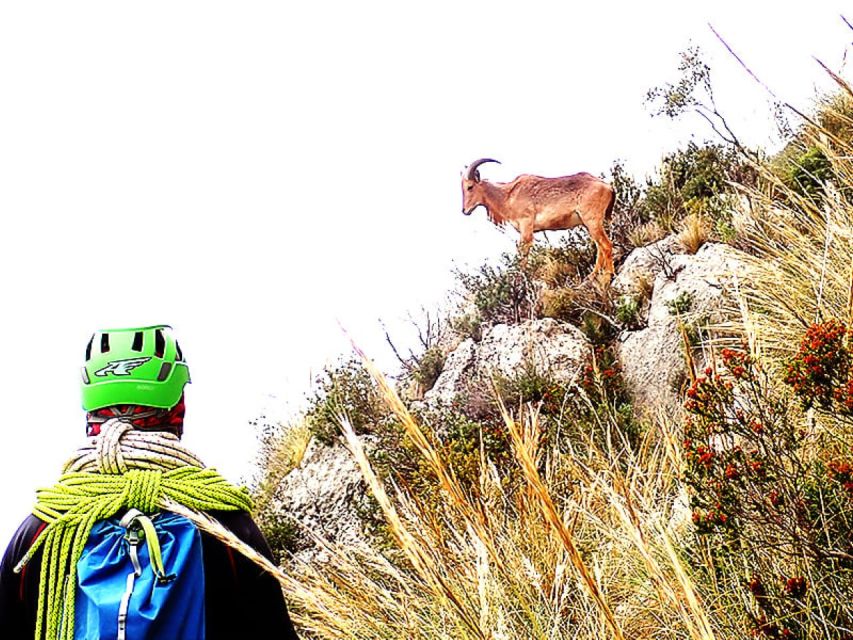
The scenery is not an afterthought here. The route gives you a high position over the Valley of Guadalest, with the Sierras de Aixortá and Bernia forming the wider mountain setting. The Mediterranean coast adds a broad blue horizon when visibility allows.
The best way to appreciate the view is to stop safely when the route permits, settle your breathing, and look outward. You will have a more memorable experience if you resist the urge to stare at the ground or hurry toward the top.
The climb also changes how you read the area. From a road or ordinary walking trail, the mountains are something you look at. On the Ferrata, the rock becomes the route itself. You notice its angle, texture, and fixed hardware because your hands and feet depend on them.
Bring suncream. Stuart specifically advised packing plenty of water and suncream, along with a rucksack and a few sweets for energy. Food and drinks are not included, so a small backpack with water and simple snacks is practical. Keep it light and secure, since a bulky load can make a vertical climb awkward.
How the five-hour schedule feels
The full activity lasts five hours, while the guided climb and safety portion are listed at about four hours. The remaining time allows for preparation, equipment, regrouping, and returning to the parking area.
This is not a rushed attraction that you squeeze between lunch and an evening reservation. Give yourself the better part of a day. Afterward, you may want a quiet meal and a little time for your legs to recover.
The activity begins and ends at Parking Vía Ferrata Ponoig. The route is therefore straightforward from a planning point of view, since you return to the same general starting point. The exact start time depends on availability, so check the schedule when booking.
The group is limited to 10 people and the guide speaks Spanish and English. If you need instruction in English, state that clearly when arranging your place, though the available guiding languages are Spanish and English.
What to wear and pack for the rock
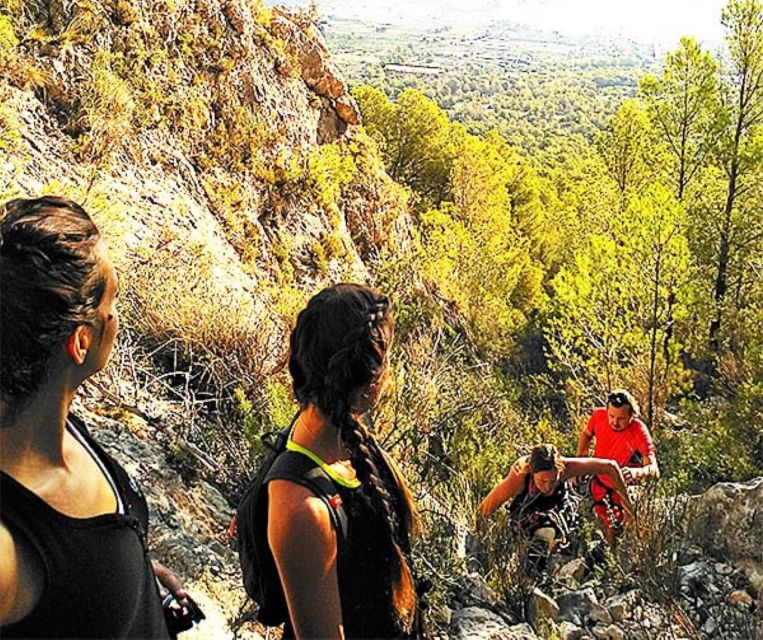
Shoes are not included. Bring hiking shoes that fit securely and have soles suitable for rocky ground. The supplied information does not specify a rental shoe option, so do not arrive expecting footwear to be provided.
Your packing list should include:
- Hiking shoes
- Plenty of water
- Weather-appropriate clothing
- Suncream
- A small rucksack
- A simple snack, such as sweets for quick energy
The harness, helmet, and Ferrata kit are supplied. That saves you from buying or renting specialist safety equipment for one outing, and it also means the guide can check that the gear is being used as intended.
Weather matters. The activity calls for clothing suited to the conditions, but no specific weather cancellation details are given. Check the forecast before setting out and be prepared for the possibility that mountain conditions may affect the experience.
Who will enjoy this and who should skip it
I would recommend this to an active adult who wants more than a standard walking route and is curious about climbing without booking a full technical climbing course. It suits someone who can handle sustained physical activity, steep rock, and the feeling of height.
It may also work for a first-time Ferrata participant if you are fit and open to careful instruction. The practice wall and safety briefing give you a useful start, while the guide controls the overall structure of the outing.
I would not choose it if you have vertigo, limited mobility, or an injury that makes pulling, stepping, or balancing difficult. It is also not suitable for children under 18 or pregnant women. The K4 grade and near-vertical sections are not details to brush aside.
If you are uncertain about your fitness, ask before booking. The guide can explain the route, but no guide can remove the physical demands of climbing a cliff.
Is $65 good value?
At $65 per person, the price is reasonable for a five-hour guided mountain activity that includes specialist safety gear and photos. You are paying for more than access to the route. The guide provides an introduction, monitors the group, explains the equipment, and helps you manage the ascent.
The value is strongest if you do not own a harness, helmet, or Ferrata kit. Buying those items for one holiday would cost far more than the activity price, and using them correctly is part of the safety issue.
It is less compelling if you want a relaxed nature walk or a sightseeing trip with little exertion. In that case, the vertical climb is not an added bonus. It is the central feature, and you should choose a gentler outing instead.
Free cancellation up to 24 hours before the activity and the option to reserve now and pay later add useful flexibility. Still, read the booking conditions at the time you reserve, especially if your plans depend on weather.
Should you book Via Ferrata del Ponoig?
Book it if you want a focused mountain challenge, broad views, and a guide-led introduction to Ferrata climbing. The strongest reasons are the small group, included safety gear, practice session, and the patient, clear coaching associated with guides such as Frank and Osmar.
Skip it if you are uncomfortable with height, cannot manage a near-vertical climb, or are hoping for a gentle hike. Bring water, suncream, sturdy hiking shoes, and a light rucksack, then give the activity a full five-hour window. For the right person, the views are well earned and the climb gives Alicante’s mountain country a memorable physical edge.
FAQ
Where does the Via Ferrata del Ponoig activity start?
It starts at Parking Vía Ferrata Ponoig. Your guide will be holding a visible sign at the meeting point.
How long does the activity last?
The full activity lasts five hours. The guided tour and safety portion take about four hours, with preparation and the return to the parking area included in the overall schedule.
What difficulty is the route?
Via Ferrata del Ponoig is categorized as K4. It includes steep, aerial sections and a nearly vertical climb.
Is safety equipment provided?
Yes. The activity includes a helmet, harness, and Ferrata safety kit, along with a climbing guide.
Are climbing shoes included?
No. Shoes are not provided. You need to bring your own hiking shoes.
What should I bring?
Bring hiking shoes, water, and clothing suitable for the weather. A small rucksack, suncream, and a simple snack are also practical choices.
Are food and drinks included?
No. Food and drinks are not included, so you need to bring your own water and any snacks you want.
What languages does the guide speak?
Guiding is available in Spanish and English.
Is the activity suitable for children?
No. It is not suitable for children under 18.
Can I cancel for a refund?
You can cancel up to 24 hours in advance for a full refund. The activity also offers a reserve-now, pay-later option.
Recently reviewed hikes in Spain
- Alicante: Coastline E-Bike and Hiking Tour★ 4.7 · 34 reviews
- Alicante: Via Ferrata Hike in Redovan★ 5.0 · 8 reviews
- From Valencia: Montanejos Tour with Guided Hike★ 4.1 · 86 reviews
- From Valencia: Cala del Moraig Hiking & Beach Trip★ 4.8 · 107 reviews
- Montanejos Hiking Tour & Thermal Pools from Valencia★ 4.5 · 111 reviews
- Montserrat very early : Hiking, Abbey, very small group★ 5.0 · 127 reviews
- Trekking in the Volcanoes Natural Park in a small group★ 5.0 · 97 reviews
- Montserrat Hiking Experience & Monastery Premium Small Group Tour★ 5.0 · 279 reviews
Spain Hiking Tours, compared.
From Valencia: Montanejos Guided Hike with Natural Pools
Read our review →
From Seville: Caminito del Rey Hike Day Trip
Read our review →
Lanzarote: Hike Across Timanfaya’s Volcanic Landscapes
Read our review →
The Volcano Heart Tour: Hiking, Tasting and Sunset Experience
Read our review →
From Barcelona: Montserrat Monastery, Easy Hike, Cable Car
Read our review →
From Barcelona: Montserrat Monastery & Scenic Mountain Hike
Read our review →
Granada: Los Cahorros de Monachil Canyon Hiking Tour
Read our review →Other lists this hike appears in