
Review · MOAB
Moab: The Windows Astro-Photography and Stargazing Hike
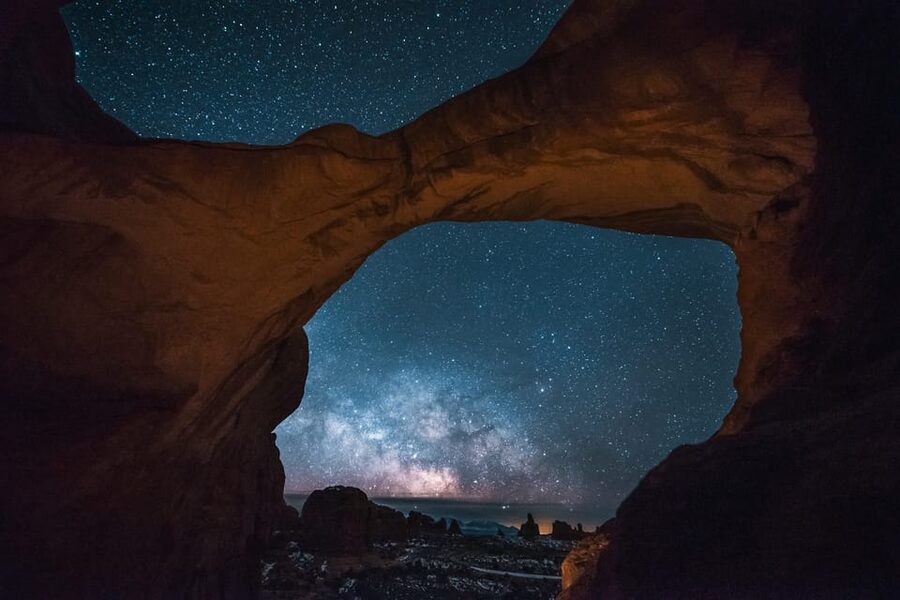
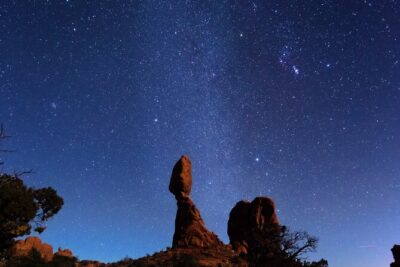
The best part of this Moab night tour is simple: Arches National Park looks completely different after dark. With city lights far away, you can see the Milky Way with your eyes, then work with your guide to record it with a camera or phone. The red headlamps help you walk without flooding the trail with harsh white light.
I like the small group size, limited to six people, and the practical teaching. Guides such as Sam and Brandon have patiently helped people use iPhones, DSLR cameras, and unfamiliar night settings. I also like that the route includes the North and South Windows, Turret Arch, and Double Arch, rather than parking beside one viewpoint and calling it a night.
The main thing to consider is the price. At $175 per person, you still pay the $30 Arches entry fee per standard vehicle, and transportation to the trailhead is not included. The tour is also a real two-mile night hike, so it is not a good fit if you have mobility limits or dislike walking on uneven ground in the dark.
Key points to know before booking
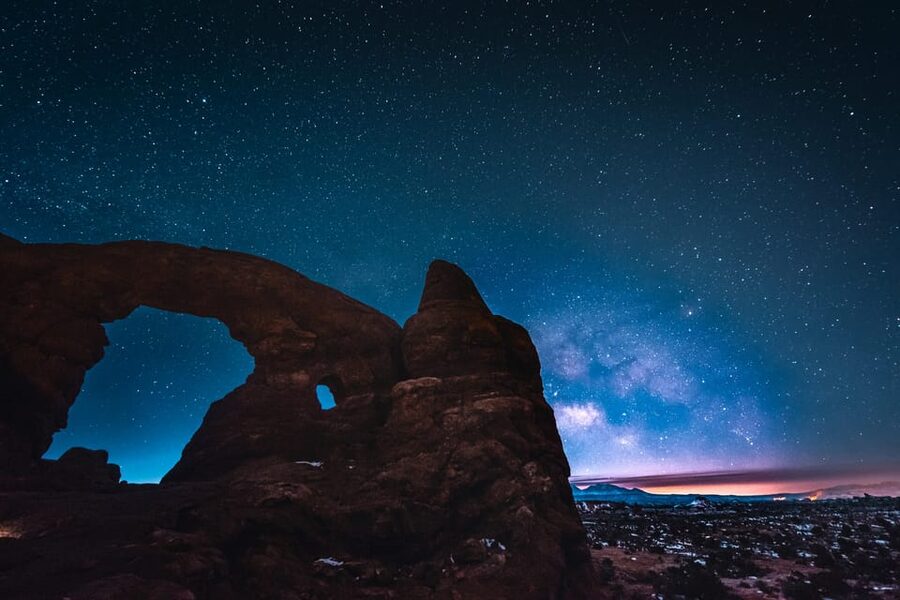
- Double Arch is the night’s main photo stop, with a broad opening that frames the sky dramatically.
- Sam and Brandon have helped guests get strong results with phones, not just expensive cameras.
- The group is capped at six, giving you a better chance to receive one-on-one camera help.
- Red LED headlamps and tripods are included, while DSLR cameras and lenses cost extra.
- The two-mile route visits three major formations, including the North and South Windows and Turret Arch.
- Moonlight changes the experience, so a dark moonless sky is not the only worthwhile option.
Starting after dark at the Windows trailhead
You meet your guide at the Windows parking area, in the first parking lot on the right. This is not a hotel pickup, so you need to arrange your own way to Arches National Park and pay the park entry fee separately. Plan that part before sunset, since the tour itself starts after dark.
The guide provides red LED headlamps and tripods if you need them. The red light is a useful touch. It lets you see the path and nearby rock without throwing a bright beam across the group or spoiling everyone’s night vision.
Bring hiking shoes, water, your camera, and a charged smartphone. The phone matters even if you plan to use a DSLR. Guides have helped people make impressive night images with iPhones, and your phone may also serve as a backup camera or light for checking settings.
The group size is limited to six. That matters more here than it would on a daytime sightseeing walk. Night photography involves trial and error, and you may need help adjusting focus, exposure, or the way your phone handles low light. A large group could leave you waiting. Six people keeps the instruction more personal.
More hikes and treks around the USA:
- Lower Antelope Canyon Hiking Tour
★ 5.0 · 6,216 reviews - Boston Freedom Trail Walking Tour with Costumed Guide
★ 4.5 · 2,531 reviews - Multnomah Falls and Columbia River Gorge Half-Day Hiking Tour
★ 5.0 · 2,108 reviews
Learning the basics of night photography
The first part of the tour is not a lecture in a classroom. You learn by setting up in the park and trying to make an image. Your guide explains the fundamentals of astrophotography, including how to operate your camera in conditions where the sky looks almost black to your eyes.
That last point is important. A camera can pick up faint light that you cannot see clearly with your eyes. Your finished picture may show more stars, color, or detail than the scene seemed to contain at the time. Do not mistake that for a problem. It is one of the pleasures of night photography.
The guide helps you take the next step beyond simply pointing and pressing the shutter. A tripod keeps the camera steady during longer exposures. The included tripods mean you do not need to bring one, though you should still bring your own camera and be ready to handle it in the dark.
You can also request a DSLR camera or lens rental before the tour. The available lenses use Canon EF/EFS or Nikon F mounts. This option may suit you if you want a stronger camera setup but do not own one. It does add to the cost, so I would not rent equipment merely because it sounds more professional. The guide’s instruction can be useful with a phone, too.
The strongest part of the teaching is its practical tone. Sam has helped people work with phone-camera features and night settings. Brandon has spent extra time with groups to help them get better photographs, even when the original plan involved a more advanced camera. You should still expect to do some of the work yourself. This is a lesson and a hike, not a service where someone takes the pictures for you.
The North and South Windows after sunset
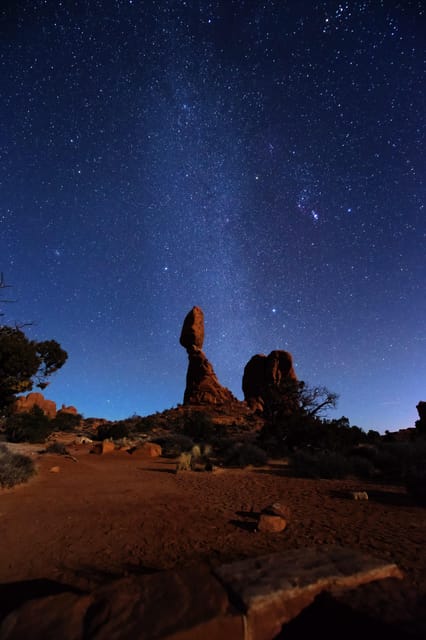
Once the group is set up, you follow the guide through the Windows area. The North and South Windows are among the major formations on the route, and their shapes take on a different character in the dark.
In daylight, these arches are bold, warm-colored rock forms. At night, the openings become frames for stars, moonlight, and the black outline of the surrounding formations. Your guide can help you position a tripod and include both the rock and sky in the same composition.
The route covers roughly two miles in total. That is manageable for people who are comfortable hiking, but you should not treat it like a flat walk across a paved plaza. Darkness makes small changes in the trail more important. Your guide points out drop-offs and helps the group stay safe, a detail that mattered to guests who felt uneasy near the edges.
The walk itself is part of the experience. You may move by the glow of the moon or the dim red lights, with the stone formations appearing piece by piece. It is quieter and slower than a daytime park visit. You have to watch your footing, but that slower pace gives you time to notice the shapes above you.
Turret Arch and the value of a small group
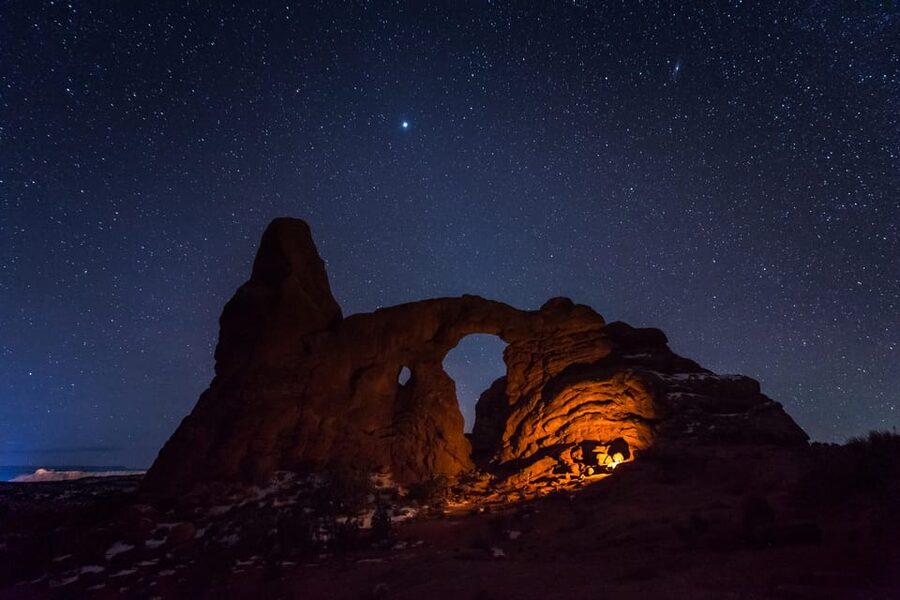
Turret Arch is another major stop along the route. The tour does not simply rush from one famous formation to the next. You have time to practice the camera techniques introduced at the start and adjust your settings as the surroundings change.
That practice time is one reason the six-person limit helps. One person may need help with a phone, another with a DSLR, and someone else may be trying to frame the arch and the stars together. A patient guide can move between people and offer corrections without turning the stop into a long wait.
The guides also bring more than camera advice. They explain the stars and point out constellations, while sharing information about the park’s rock formations and the forces that shaped the arches. You are not getting a full geology class, but the setting makes those short explanations more meaningful. You are standing beneath formations created by forces that worked over a vast span of time, while the sky changes above them in real time.
Moonlight can alter the balance between rock and sky. A full moon may make the trail easier to walk and put a soft glow on the arches. It can also make the sky look less crowded with stars. A darker moon phase may give you a stronger Milky Way, but the rock can be harder to see with your eyes.
That is why this tour can work at different points in the lunar cycle. If you want the darkest possible sky, contact the activity provider before booking so they can confirm that the timing suits your goal. If you prefer a moonlit view of the arches, a brighter moon can be a plus.
Same mountains, a different route up:
- Small Group: Valley of Fire Half Day Tour from Las Vegas
★ 5.0 · 2,130 reviews - San Francisco: Yosemite National Park & Giant Sequoias Hike
★ 4.5 · 1,777 reviews - Valley of Fire Guided Hike from Las Vegas
★ 5.0 · 1,611 reviews - Los Angeles: The Original 2.5-Hour Hollywood Sign Hike
★ 5.0 · 1,468 reviews
Double Arch, the main photographic payoff
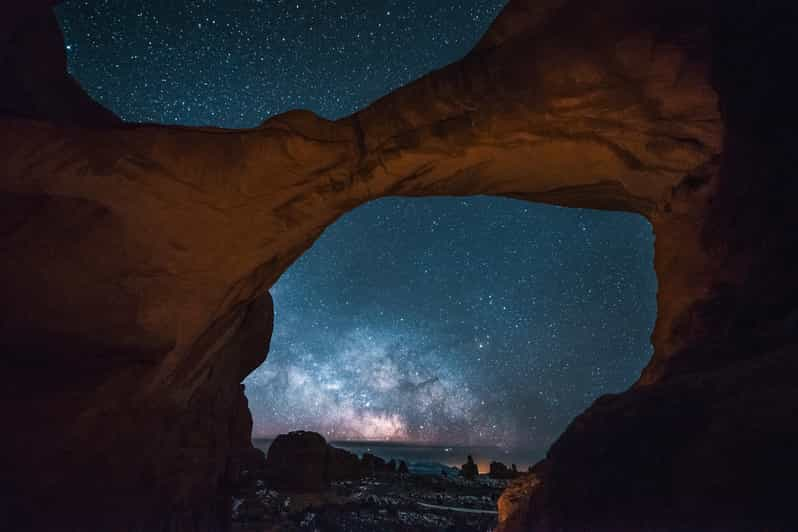
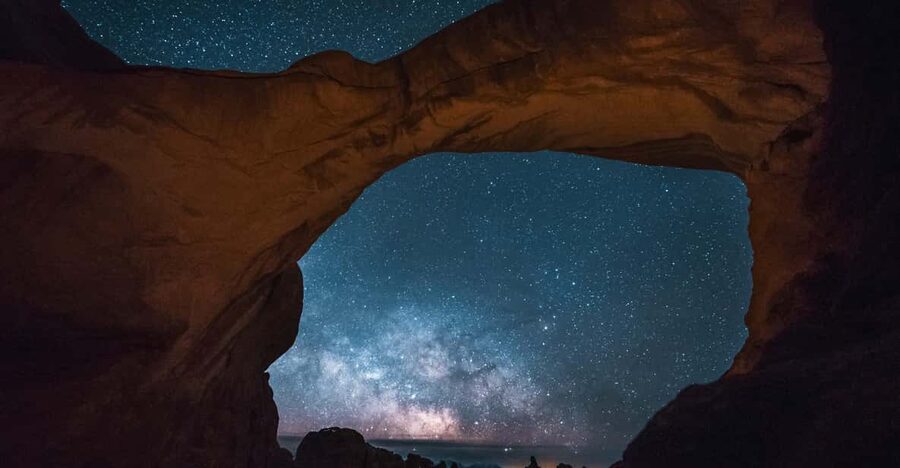
The hike continues to Double Arch, described as the highlight of the area for this experience. The formation gives you a strong subject for a night photograph, with the galaxy or stars above and the curved rock openings below.
This is where the earlier instruction begins to pay off. You can set the tripod, frame the formation, and try several exposures. Your guide can help you balance the bright rock, the dark sky, and any light sources that appear in the picture.
Keep in mind that a photograph may show light that was not visible to your eyes. The camera can gather light during a longer exposure, producing a picture that looks brighter or more detailed than the scene felt in person. That is part of the technique, not a guarantee that the sky will look exactly like a finished photo on the back of the camera.
Conditions still matter. Clear skies help, but the tour cannot promise a particular view of the Milky Way, northern lights, or a certain number of stars. One group happened to see the northern lights in November, which made an already unusual night even more striking. That is a lucky bonus, not something to book this activity expecting.
You may also get a chance to look through a telescope. One recent experience included a view of Saturn, but telescope viewing is not listed as a standard inclusion, so you should not count on it every night. The reliable part is the guided walk and photography instruction.
Is $175 a fair price?
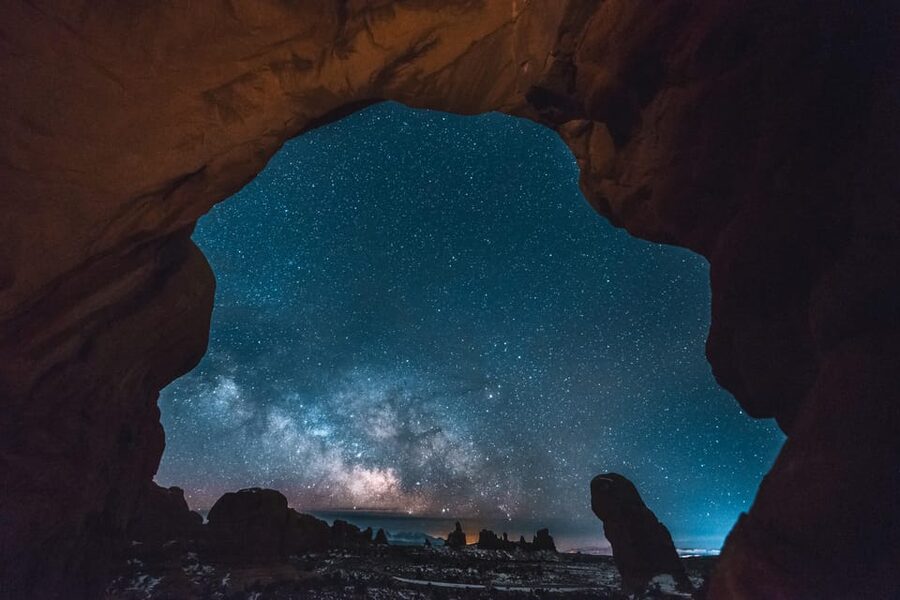
The cost is $175 per person for two hours. That is not cheap, especially once you add the $30 Arches entry fee per standard vehicle, your travel to the Windows parking area, and any camera or lens rental.
The value depends on what you want from the night. If you already know night photography and own a tripod, you may find the price harder to justify. You could visit the Windows area on your own, though you would not get the same organized instruction or the benefit of a guide leading the group through the dark.
For a beginner, the calculation looks better. You get a guide, a walking tour, red headlamps, and a tripod if needed. You also get help using your own equipment instead of being pushed toward a costly rental. The small group is a real part of the value because camera questions can take time.
This is also a special access point into Arches. The park is familiar to many daytime visitors, but a night walk changes the pace and mood. You are paying for instruction and guidance, not just a viewpoint. If you care about coming home with usable images and learning a skill you can repeat later, the fee may be reasonable.
The experience is less valuable if you want a quick stargazing stop, a guaranteed Milky Way photograph, or a fully effortless evening. You will hike, set up equipment, adjust settings, and pay attention to the trail. The result depends partly on the sky, partly on your patience, and partly on the camera you bring.
Who should book this night hike?
I would recommend it most strongly to beginners who want to photograph the stars but do not know where to start. It also suits couples, friends, and small groups who want something more active than a drive to a dark-sky viewpoint.
Phone photographers should not feel out of place. Guides such as Sam and Brandon have helped people use iPhones and other smartphones, and the tour is not limited to DSLR owners. Bring your phone charged and be ready to try the night-photo features your model offers.
The tour can also suit an experienced photographer who wants a guide to the Windows area after dark. Just keep expectations in check. The guide can teach and assist, but the two-hour format is not a full professional workshop, and the weather or moon may not match your preferred conditions.
It is not suitable for children under six, wheelchair users, or people with mobility impairments. Pets are not allowed. You should be comfortable with about two miles of hiking and with walking around rock formations after sunset.
Cancellation is flexible, with a full refund available if you cancel at least 24 hours ahead. You can also reserve now and pay later, which helps if your Moab plans are still shifting.
My verdict on the Windows night experience
Book this tour if you want to learn night photography while seeing Arches from a completely different angle. The best reasons are the small group, patient camera help, included headlamps and tripods, and the route through several major formations rather than one quick stop.
I would book it with a clear plan: bring a charged phone or camera, wear proper hiking shoes, carry water, and decide if you prefer a darker sky or more moonlight. If your only goal is to see a thick band of Milky Way stars, ask the provider about timing before you commit.
For someone who wants an easy, guaranteed photo session, this may feel like too much money and effort. For someone willing to hike, learn, and experiment, it offers a memorable way to see the North and South Windows, Turret Arch, and Double Arch after dark.
FAQ
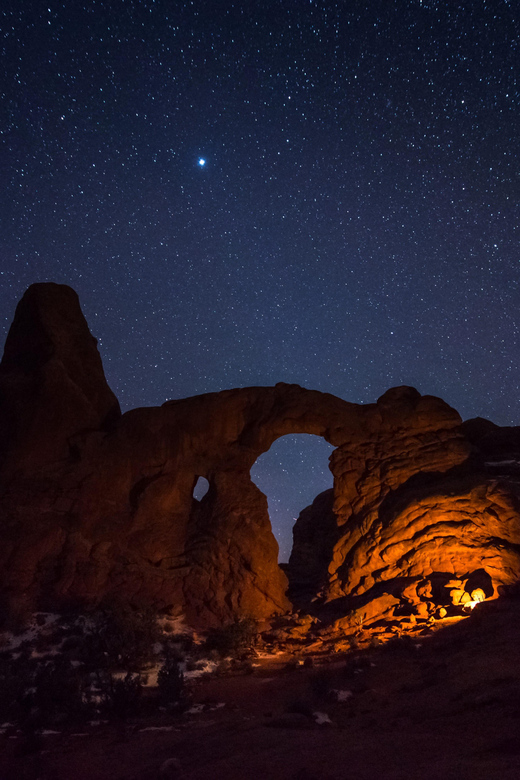
Where does the tour meet?
Meet your guide at the Windows parking area in the first parking lot on the right.
How long is the experience?
The tour lasts two hours and involves roughly two miles of hiking.
What formations will I see?
The route includes the North Window, South Window, Turret Arch, and Double Arch.
Is the tour suitable for phone photographers?
Yes. Guides have helped people use smartphones, including iPhones, to take night photographs.
Are tripods provided?
Tripods are available if needed, and red LED headlamps are included.
Can I rent a camera or lens?
Yes. A DSLR camera and DSLR lenses with Canon EF/EFS and Nikon F mounts are available for an additional fee. Arrange the rental before the tour begins.
Is the Arches National Park entry fee included?
No. Entry is separate and costs $30 per standard vehicle.
Is transportation to the meeting point included?
No. You need to arrange your own transportation to the Windows parking area.
Can I see the Milky Way during the tour?
You may see the Milky Way with the naked eye, but sky conditions and moonlight affect what is visible. Contact the provider if you specifically want the darkest possible sky.
Recently reviewed hikes in the USA
- Asheville: Yoga on a Mountain Hike★ 4.7 · 7 reviews
- Antelope Valley: Ligai Si Anii Canyon Hiking Tour★ 4.9 · 13 reviews
- Anchorage: Matanuska Glacier Hike with Transfers★ 4.7 · 20 reviews
- Acadia Full Day Small Group Tour & Hike★ 5.0 · 9 reviews
- Private Family Hike in Yosemite★ 5.0 · 37 reviews
- Private Guided Hiking Tour in Yosemite★ 5.0 · 94 reviews
- Guided Yosemite Hiking Excursion★ 5.0 · 80 reviews
- Yosemite Valley Private Hiking Tour★ 5.0 · 83 reviews
Moab Hiking Tours, compared.
Astro-Photo, Hiking and Stargazing Tour in Arches National Park
Read our review →
Other lists this hike appears in