Review · CATANIA
Mount Etna: Guided Trek 3,000 Meters to the Summit
Mount Etna gives you a rare chance to walk high on an active volcano without signing up for a technical climb. From La Terrazza Dell’Etna, you ride toward 2,500 meters, then hike through black ash, rough lava, and open volcanic slopes to about 3,000 meters, near the summit craters.
I like the small-group feel created by an attentive guide, especially when the pace needs adjusting. I also like the mix of scenery and science: Luca, Marco, and Manuel are all praised for explaining Etna’s craters, lava flows, and volcanic forces in a lively way. The main drawback is cost clarity. The booking details list both a cable car ticket as included and a €50 ticket paid locally, so confirm exactly what your $113.29 covers before you go.
Key points at a glance
- Reach about 3,000 meters: Hike near Etna’s summit craters, where weather and volcanic conditions can change quickly.
- Ride above the tree line: The cable car removes much of the lower climb and gives you broad views before the walking begins.
- Walk on active volcanic ground: See old and recent lava flows, loose ash, rough rock, and the still-fuming 2001 Crater.
- Get a guide who manages the group: Luca is especially praised for calm pacing, humor, and remembering people by name.
- Pack for cold, wind, and ash: Warm layers, ankle-high boots, a face covering, water, and long trousers make a real difference.
- Expect a real hike: The route suits people with moderate fitness, not children under 10 or anyone with the listed health restrictions.
What this Mount Etna trek is really like
This is not a quick cable car viewpoint with a short stroll. The cable car helps you reach the upper mountain, but the main reward comes from walking across Etna’s bare volcanic slopes under your own power.
You’ll spend about six hours at the activity, including the ride up, roughly three and a half hours of hiking, stops, and the return ride. The advertised high point is around 3,000 meters, at the base of the summit craters. That wording matters: you are hiking in the summit area, but this is not presented as a climb into an active central crater.
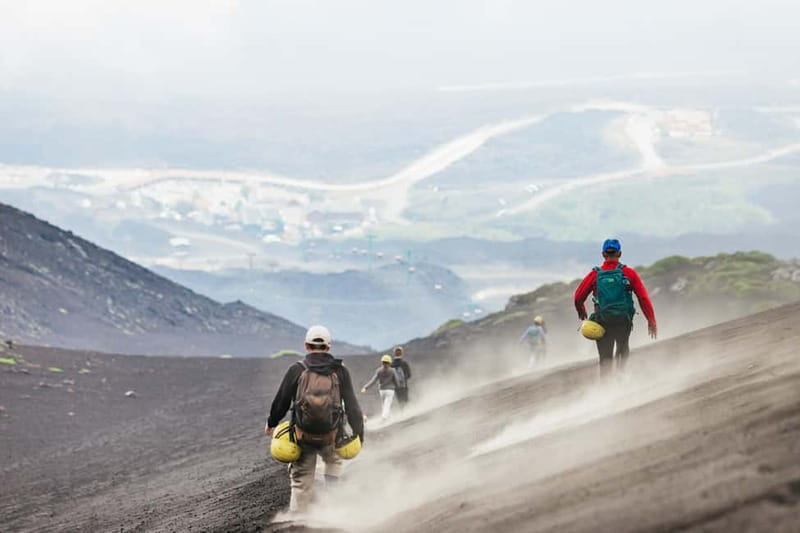
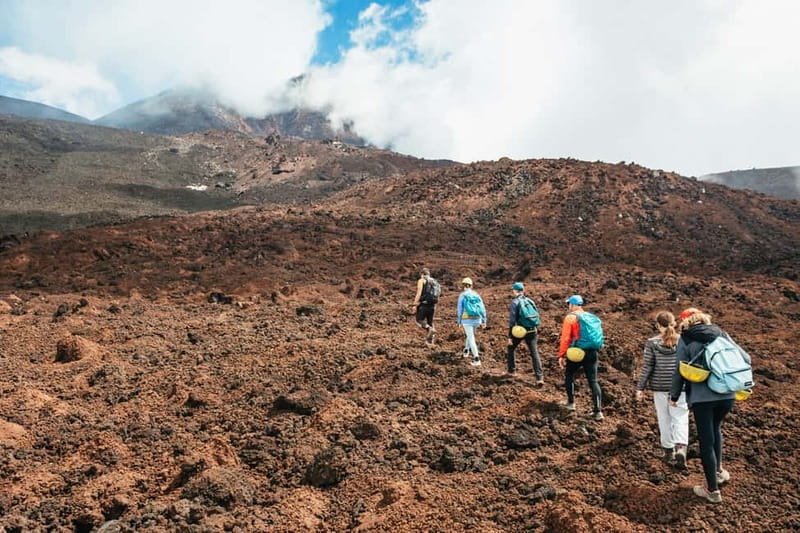
At this height, Etna can feel stark and otherworldly. There are no ordinary paths in some sections. You may walk on loose sand, ash, and rock, with parts of the route exposed. The footing is manageable for someone in decent shape, but descending loose volcanic ground can be harder than expected.
The payoff is a much closer look at Etna than you get from the lower visitor areas. You see the marks left by older eruptions, newer lava flows, and craters that look like raw openings in the mountain. On a clear day, the views stretch across Sicily and the surrounding volcanic terrain. On a windy or cloudy day, the mountain feels wilder, and visibility may be limited.
More Mountain and Summit Hikes in Italy
- Mount Etna: Summit Guided Hiking Tour up to 3,400 m
★ 4.8 · 4,792 reviews - Mount Etna: Trek to 3000m with cable car and 4×4
★ 4.6 · 3,823 reviews - Mount Etna: Summit Crater Trek with Cable Car
★ 4.8 · 1,875 reviews
Starting at La Terrazza Dell’Etna
Your meeting point is La Terrazza Dell’Etna. There is no hotel pickup or drop-off, so you need to arrange your own way there and allow enough time to find the meeting area.
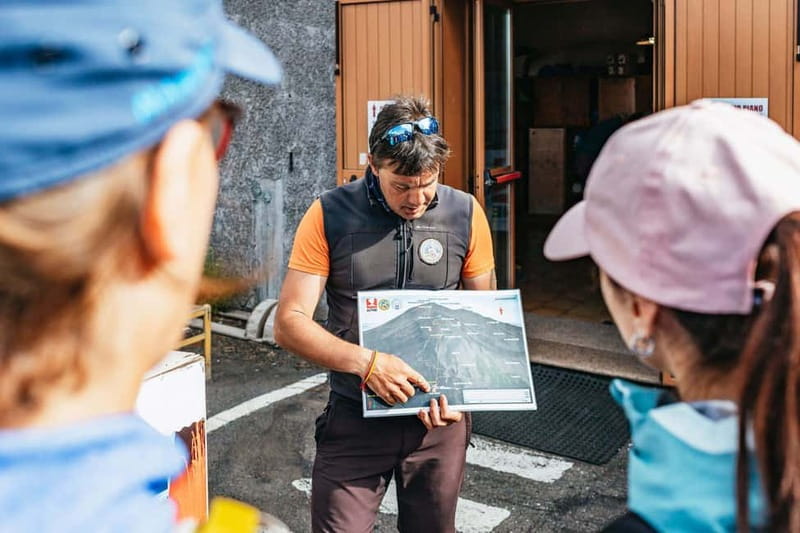
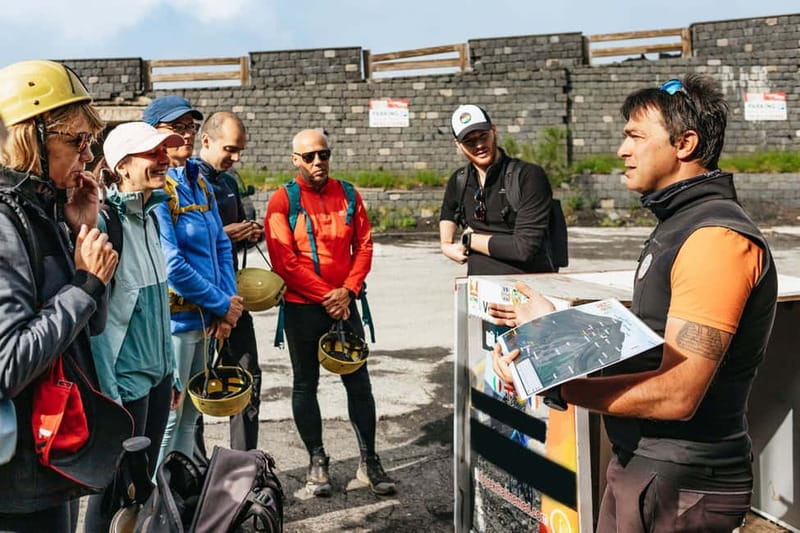
The guide begins with a briefing. This is more than a routine introduction. The guide needs to explain the route, the loose footing, the possible exposure, and the conditions that might force a change of plan. Etna is an active volcano, so the schedule can be altered or stopped if weather, environmental conditions, or volcanic risk makes the route unsafe.
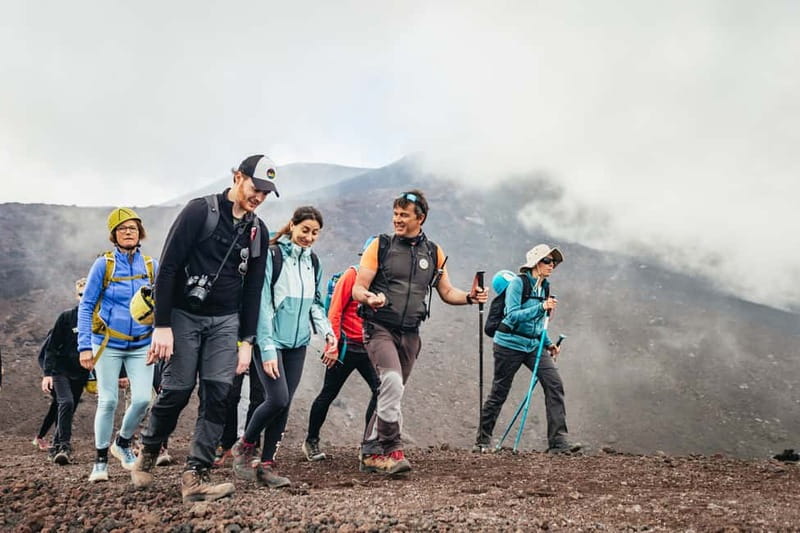
English and Italian are available. Guides named in the feedback include Luca, Marco, and Manuel. Luca receives repeated praise for keeping a mixed-ability group together without rushing anyone. Manuel is noted for adapting the route during difficult weather, including rain, frost, and snow in May. Those details give you a useful picture of the guide’s role: this is not just a person walking in front of you, but someone making decisions as the mountain changes.
Helmets, trekking poles, and insurance are listed as included. Still, bring your own sturdy footwear if possible. The advice to use boots above the ankle and high socks is practical, since loose pebbles can easily work their way inside low shoes.
The cable car to 2,500 meters
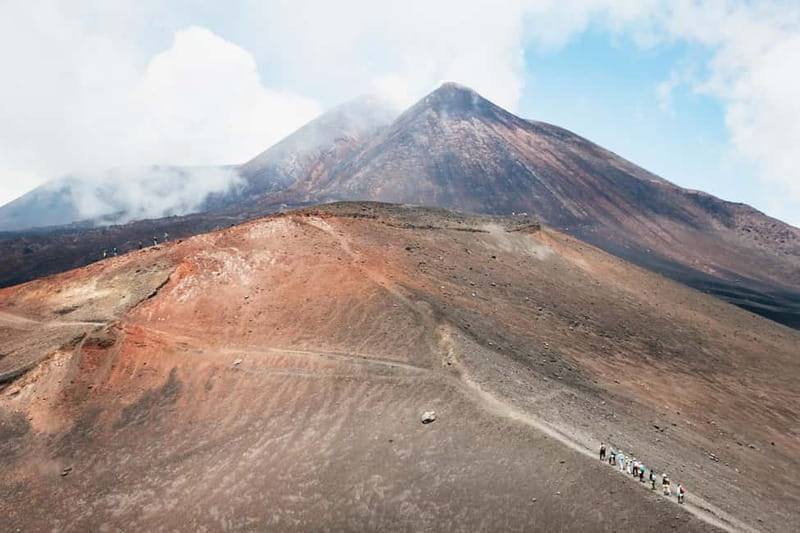
The cable car ride takes about 20 minutes. It saves your legs for the upper section and gives you a quick change from developed visitor facilities to the rougher volcanic world above.
This is one of the tour’s strongest practical features. Reaching 3,000 meters on foot from much lower down would turn the outing into a far longer and harder undertaking. The cable car makes the upper mountain accessible to people with moderate fitness, though it does not make the trek easy.
You should also be ready for a rapid change in temperature and wind. Sicily may be hot at lower elevations while the upper slopes are cold, exposed, and dusty. Pack a pullover, anorak or windproof jacket, gloves, and a hat. A spare T-shirt is useful after several hours of walking.
There is conflicting information about the cable car charge. One part of the booking information lists the ticket as included, while another says the €50 cable car ticket is paid on site. Some on-site comments also refer to different prices for different people. I would ask Etna Est to confirm the current arrangement before departure. At this price, an unexpected local charge can affect the value of the tour.
Hiking across ash, rock, and lava flows
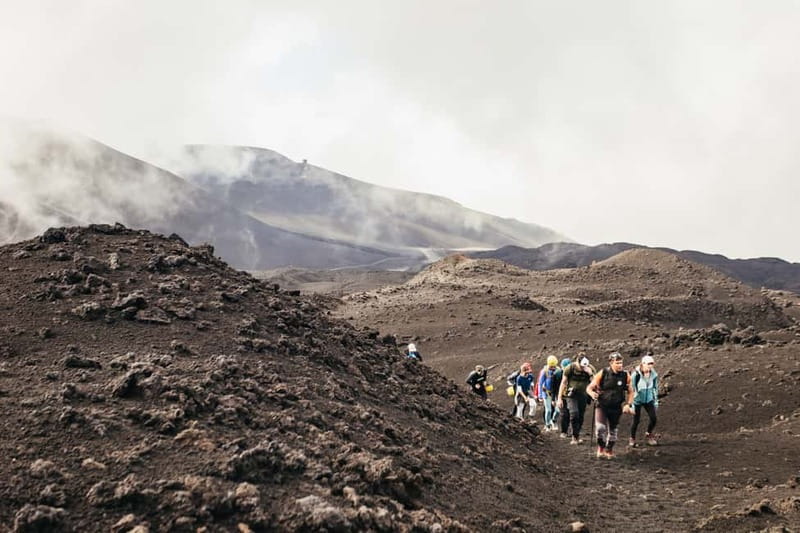
After leaving the cable car, you begin the main trek. The route crosses volcanic ground shaped by old and recent eruptions. Expect a mix of loose ash, dark sand, rough rock, and uneven surfaces rather than a smooth mountain trail.
The first hiking section is listed at about two hours. This is where the guide’s pacing matters most. The group may include people with different levels of fitness, and the best guides keep the walking steady rather than turning the outing into a race. Luca is repeatedly praised for finding that middle ground: enough effort to feel like an achievement, but not so much that the day becomes a slog.
You should watch your footing and stay close to the group. Some sections may be exposed, and there are no ordinary trail comforts in the upper volcanic zone. A trekking pole helps with balance, particularly on loose ash and on the way down.
The scenery is the main attraction, but the surface itself is also worth noticing. A guide can point out how lava cools, how ash behaves underfoot, and how separate eruptions leave different textures and colors. This turns a walk across black rock into a lesson in how a volcano changes over time.
Do not expect a lush mountain hike. Etna’s upper slopes are spare and severe. That lack of vegetation is part of the appeal, but it also means there is little shelter from the sun, wind, or blowing ash.
More Volcano Hikes in Italy
- Etna: summit craters trekking with volcano guide 3350mt
★ 4.7 · 1,712 reviews - Catania: Mount Etna Trekking Tour Beyond the Tourist Trails
★ 4.9 · 1,596 reviews - Etna Sunset Tour: Volcano trek, Cave & tasting from Catania
★ 4.8 · 1,290 reviews - Catania: Mount Etna Adventurous Hiking Tour with Equipment
★ 4.7 · 784 reviews
Reaching the summit crater area
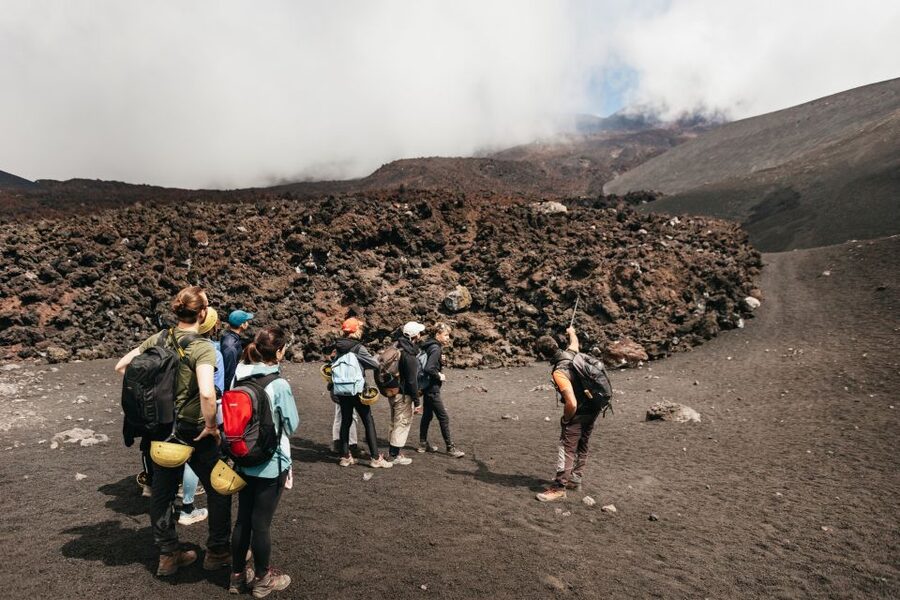
The trek continues toward the base of the summit craters. This is the high point of the day, both physically and visually.
At about 3,000 meters, conditions can shift fast. Strong wind may arrive without much warning. Clouds can move in and cut off the distant views. Guides have changed or shortened routes when weather became unsafe, and that is a sensible part of visiting an active volcano. A day with limited visibility can still be worthwhile, but you should not book this expecting guaranteed panoramic views.
When visibility cooperates, this is the moment that makes the demanding parts worthwhile. You look across a huge field of volcanic forms, with the summit area close by and lower Sicily spread beyond it. The feeling is less like reaching a conventional mountain peak and more like entering the upper working zone of a living volcano.
Some people want a dramatic summit photograph, but the better reason to come is to understand the setting. Your guide can explain the eruption cycles and the hazards around you. The experience is strongest when you give yourself time to look at the ground, the crater rims, and the changing gases rather than simply rushing to the highest point.
The use of contact lenses is forbidden because wind can carry volcanic ash. Bring sunglasses, and consider a scarf or face covering for ash and fumes. One person specifically found a face covering useful when gases blew in their direction. This is a small item, but it can make an exposed section much more comfortable.
The 2001 Crater and the return route
The second hiking section takes about an hour and a half. During the descent, the route includes the 2001 Crater at approximately 2,700 meters. It still fumes, making it one of the most memorable stops on the trek.
This crater offers a different experience from the summit area. It is a clear reminder that Etna’s activity is not just a story from the distant past. The crater’s continued fumes bring the volcano’s heat and instability closer to your attention, even when there is no visible eruption.
The descent is not simply the reverse of the climb. Loose ash and small stones can slide under your boots, and the uneven surface can put more strain on your knees. Keep your pole ready, shorten your stride, and follow the guide’s instructions. Long trousers are sensible because they help keep grit out of your boots and protect your legs from sun, wind, and rough rock.
Lunch is not included. You should carry at least 1.5 liters of water, a snack, and a packed lunch in a 10 to 20-liter backpack. There is a planned break on the way down, but do not count on buying food at the upper mountain. Eat enough to keep your energy steady, especially if the wind and cold make you feel less thirsty than usual.
After the crater stop and break, you return toward 2,500 meters and take the cable car back down. The return ride takes about 20 minutes before you arrive again at La Terrazza Dell’Etna.
The guides make the biggest difference
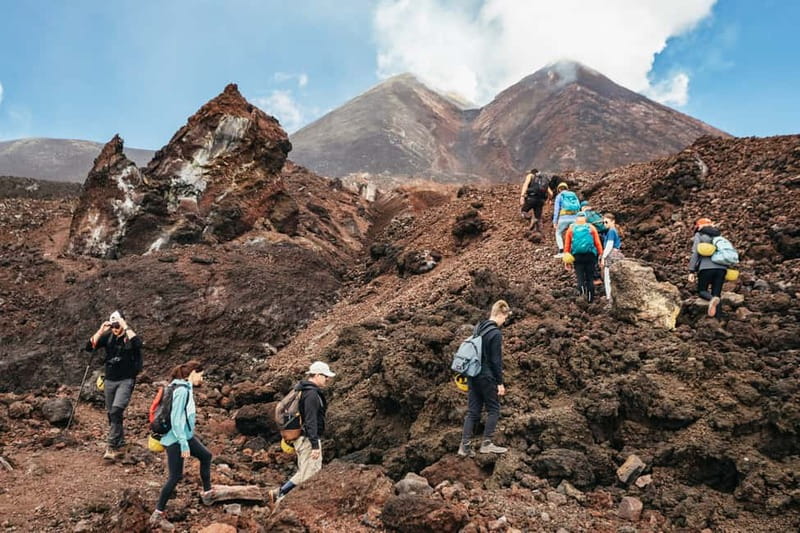
The guide is the key part of this experience. Etna is fascinating, but the upper slopes can look confusing and similar from one direction to the next. A guide provides route judgment, safety support, and the context that turns volcanic scenery into something understandable.
Luca receives the most consistent praise. You can expect a friendly, humorous style, clear explanations, and a pace that works for a mixed group. He has been noted for remembering individual names and for keeping the atmosphere relaxed while still taking the mountain seriously.
Marco is also praised for explaining the volcano and leading an enjoyable hike. Manuel is described as calm and flexible in rough weather, providing gear such as boots and jackets when available. You should not assume that a particular guide is guaranteed, but these names give you an idea of the standard of personal attention associated with Etna Est.
The strongest feature here is not simply that the guides know facts. It is that they connect the geology to what you are seeing beneath your feet. That is useful on a volcano, where the scenery can otherwise become a string of black slopes and crater rims.
Price, equipment, and overall value
The listed price is $113.29 per person. For six hours with a guide, safety equipment, trekking poles, insurance, and upper-mountain access, that can be reasonable, especially if the cable car is genuinely included.
The value becomes less clear if you must add €50 for the cable car. That extra cost may still be justified because the ride saves substantial effort and gets you to the high hiking zone, but you should compare the final amount rather than relying only on the advertised starting price.
The tour includes helmets and poles. Some feedback also describes boots and windproof jackets being lent out, but I would treat that as availability rather than a guaranteed inclusion. Bring your own hiking shoes, warm clothing, and rain or wind protection.
You receive the most value if you want more than a viewpoint. The guide, route changes, volcanic explanation, and support on rough ground are the reasons to choose this over simply visiting the lower areas independently. If you only want a quick look at Etna, six hours of hiking may feel like too much.
Who should book this trek?
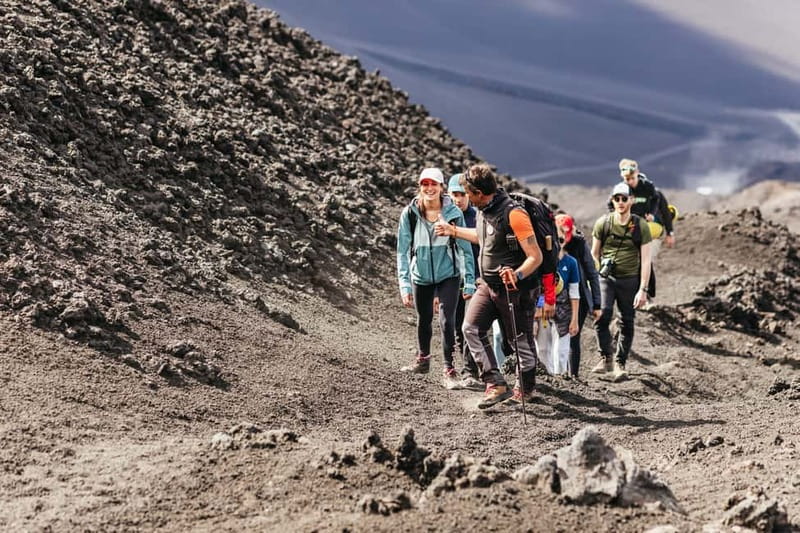
This tour suits adults and older teenagers with moderate fitness who are comfortable walking for several hours on sand and rock. You do not need special climbing skills, but you do need steady footing and the patience to move over uneven ground.
It is not suitable for children under 10, pregnant women, people with mobility impairments, heart problems, vertigo, or respiratory issues. Tell the guide about any health concern before setting out.
You should also be comfortable with uncertainty. The route may change or stop because of wind, weather, environmental conditions, or volcanic risk. That is not a flaw in the operation. It is the correct way to manage an active volcano.
Pack carefully:
- Hiking boots with ankle support and high socks
- Warm layers, long trousers, gloves, and a hat
- A windproof jacket or anorak
- Sunglasses and sunscreen
- A face covering for ash and fumes
- At least 1.5 liters of water
- A snack and packed lunch
- A 10 to 20-liter backpack
- A spare T-shirt
The tour offers free cancellation up to 24 hours before departure, and you can reserve now and pay later. Those terms help if your Sicilian plans depend on weather, but you still need to check the available start time and confirm the cable car charge.
Should you book this Mount Etna experience?
Book it if you want to walk high on Etna, learn what you are seeing, and accept a genuine mountain outing rather than a polished sightseeing stop. The upper craters, the 2001 Crater, and the black volcanic ground create a memorable day, while a good guide makes the route safer and more meaningful.
I would especially recommend it to anyone who likes active sightseeing and has moderate fitness. The main cautions are the exposed terrain, fast-changing weather, strict clothing needs, and unclear cable car pricing. Confirm that cost before paying, bring proper layers and boots, and choose this trek for the chance to experience Etna up close, not simply to collect a summit photograph.
FAQ
How long does the Mount Etna trek last?
The activity lasts about six hours. The schedule includes two cable car rides of about 20 minutes each and roughly three and a half hours of hiking.
Where does the tour start and finish?
You start at La Terrazza Dell’Etna and return to the same meeting point at the end. Hotel pickup and drop-off are not included.
How high does the trek go?
The advertised maximum altitude is about 3,000 meters, near the base of Mount Etna’s summit craters.
Is the cable car ticket included?
The supplied booking details give conflicting information. One section lists the cable car ticket as included, while another says a €50 ticket must be paid on site. Confirm the current arrangement with Etna Est before booking.
What languages are available?
The live guide is available in English or Italian. Guides named in the activity information and feedback include Luca, Marco, and Manuel, though a specific guide is not guaranteed.
What should I bring?
Bring sunglasses, sunscreen, hiking shoes, warm clothing, a windproof jacket, gloves, a hat, long trousers, at least 1.5 liters of water, a snack, a packed lunch, and a 10 to 20-liter backpack. A face covering can help with volcanic ash and fumes.
Recently reviewed hikes in Italy
- Amalfi Coast Path of the Gods Hike from Agerola★ 5.0 · 58 reviews
- Adrenaline River Trekking in Brembana Valley★ 5.0 · 13 reviews
- Agerola: Path of the Gods Guided Hiking Tour★ 4.7 · 48 reviews
- Stromboli: sunset trekking to Sciara del Fuoco – Ashàra★ 4.5 · 270 reviews
- Catania: Mount Etna Sunset Trekking with Wine Tasting★ 5.0 · 140 reviews
- Etna – Trekking to the summit craters (only guide service) experienced hikers★ 5.0 · 286 reviews
- Hike The Path Of Gods from Sorrento★ 5.0 · 208 reviews
- Path of the Gods Hiking Day Tour from Sorrento★ 5.0 · 110 reviews
Volcano Hikes, compared.
Bali: Sunrise Mount Batur Guided Hike with Breakfast
Read our review →
Bali: Mount Batur Sunrise Guided Hike and Natural Hot Spring
Read our review →
Mount Etna: Summit Guided Hiking Tour up to 3,400 m
Read our review →
Mount Etna: Trek to 3000m with cable car and 4×4
Read our review →
Bali: Mount Batur Sunrise Trek With Guide and Breakfast
Read our review →
Mount Batur Sunrise Hike and Natural Hot Spring Option
Read our review →
Mount Etna: Summit Crater Trek with Cable Car
Read our review →