
Review · CATANIA
Etna Volcano: South Side Guided Summit Hike
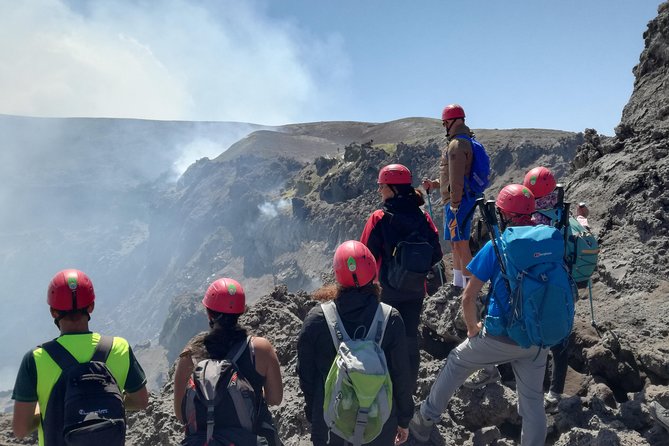
Mount Etna is not a tidy mountain walk. It is an active volcano, and this six-hour outing takes you across black sand, fresh-looking lava, gas vents, and crater rims high above Sicily. The most dramatic part is reaching the summit zone, where the Northeast, Central, and Southeast Craters may be viewed from safe points.
I like the way a volcanologist guide turns a hard hike into a lesson in how volcanoes work. I also like the practical setup: helmets, boots, poles, and insurance are included, while the cable car and 4×4 ride get you quickly to the serious walking at about 2,800 meters. The catch is simple: this is a medium-to-high effort hike, and Etna may force a route change if gas, wind, weather, or volcanic activity makes the summit unsafe.
Key points to know before booking
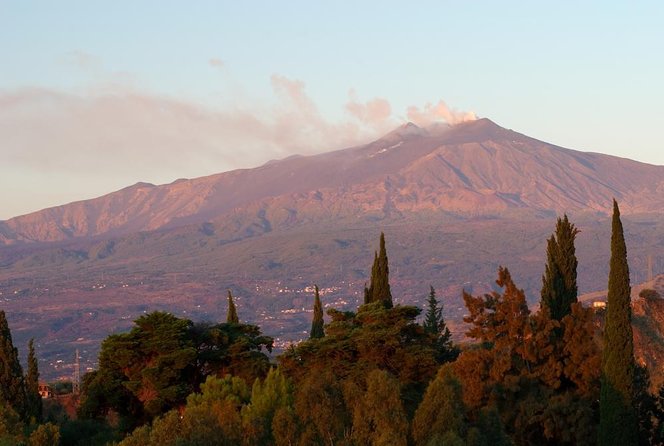
- The real hiking begins near 2,800 meters: Cable car and 4×4 tickets cost an additional €65 per person.
- The summit is never guaranteed: Conditions at an active volcano can close paths or alter the route.
- The terrain is demanding: Expect steep, uneven, slippery ground, deep volcanic gravel, and roughly 8 to 10 kilometers of walking.
- Equipment is supplied: Helmets, trekking boots, hiking poles, and insurance are included.
- Pack for fast weather changes: Bring water, food, warm layers, gloves, a hat, and a windproof jacket.
- Guides make the difference: Antonio, Max, Fabio, Massimo, Marco, Angelo, Filippo, and Simon are among the guides praised for safety and clear explanations.
Starting at Rifugio Sapienza at 8 a.m.
Your morning begins at Ashàra Etna & Stromboli Guides at Piazzale Rifugio Sapienza, on Etna’s south side near Nicolosi. The tour returns to this same meeting point, and the early start gives you a full half-day on the mountain.
This is not a Catania hotel pickup. You arrange your own way to Rifugio Sapienza unless you separately organize a transfer. The meeting point has nearby public transportation, and some visitors have arranged paid transfers to and from Catania through the provider. Confirm this before you go, since pickup service is not part of the listed price.
Allow time to arrive early. You will need to sort out equipment, meet your guide, and buy the uphill transport tickets. The extra transport is not a minor footnote. The cable car and 4×4 ride cost €65 per person, paid locally, in addition to the advertised tour price of $78.64.
That combined cost is still reasonable for a specialized mountain outing with a certified guide and safety gear, but it is not an all-inclusive $78.64 excursion. Add food, water, and perhaps a wind jacket, and your actual spending will be higher.
More Volcano Hikes in Italy
- Mount Etna: Summit Guided Hiking Tour up to 3,400 m
★ 4.8 · 4,792 reviews - Mount Etna: Trek to 3000m with cable car and 4×4
★ 4.6 · 3,823 reviews - Mount Etna: Summit Crater Trek with Cable Car
★ 4.8 · 1,875 reviews
Cable car and 4×4 access to 2,800 meters
The first part of the ascent uses the Etna cable car and then a 4×4 vehicle toward the high trail. The tour information gives the upper starting point as about 2,800 meters, while some descriptions refer to 2,900 meters. Either way, you begin the main hike high above the coast, with much less climbing than an all-day ascent from the lower slopes.
That transport is valuable for two reasons. First, it saves your legs for the summit zone. Second, it puts you directly among Etna’s starkest volcanic features, where the ground turns to black ash, gravel, old lava, and crater debris.
The cable car and jeep ride also create a practical limitation. If the lift or vehicles cannot operate because of conditions, the itinerary may change. Etna is not a theme park with a fixed timetable. The mountain sets the rules.
At altitude, even a normal walk feels harder. You may start in mild weather at Rifugio Sapienza and reach cold, fierce wind within the hour. Several people found the upper section far colder than expected, including one outing with snow and temperatures around minus 10 degrees Celsius. Pack for winter at the top even if Catania feels warm.
Two hours across lava and volcanic sand
From the high transport point, expect about two hours of walking toward the summit craters. The route crosses uneven volcanic ground, lava flows, soft black sand, and gravel that can slide under your boots.
The upward walk is strenuous rather than technical. You need good balance, a steady pace, and enough fitness to keep going at altitude. One account describes roughly 10 kilometers on foot, while another estimates about 8 kilometers. Treat the route as a serious half-day hike, not a casual stroll from the cable car.
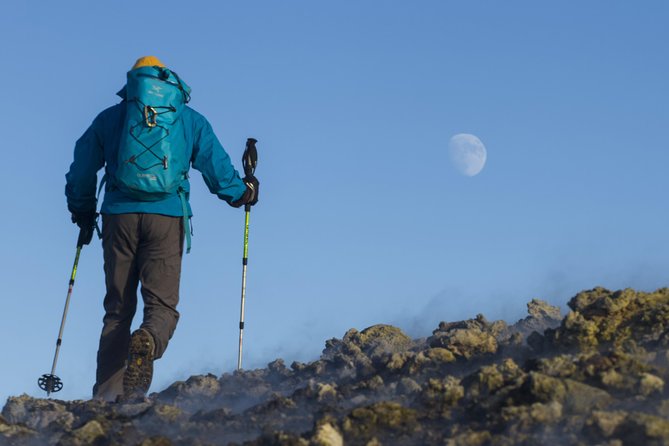
The supplied trekking poles are useful here. They help on loose uphill ground and are especially handy on the descent, when volcanic sand can act like marbles underfoot. Hiking boots are included, but you can use your own if they are sturdy and suitable for uneven, slippery terrain.
The guides build in regular rest stops. That matters because the aim is not to rush you to the top. You get time to catch your breath, listen to explanations, and take photographs of the sea, Catania, surrounding craters, and the strange black slopes below.
Stay close to the group. The terrain can look simple from a distance, but lava ridges, loose ash, and sudden drop-offs make wandering off the route a poor idea. The guides are there not just to explain the volcano but to keep the group moving safely through changing conditions.
The Central, Northeast, and Southeast Craters
The summit zone is the main prize. The route may take you along the rim of the Central Crater, toward the vertiginous Northeast Crater, and near the Southeast Crater, which has produced some of Etna’s most recent and impressive eruptions.
You will not necessarily stand at the highest or most active point. Gas, wind, poor visibility, or new volcanic activity can close sections of the route. One outing stopped short of the summit because too much vapor and gas was coming from the main crater. That was not a failed tour. The group still saw older craters, lava flows, lava tubes, lava bombs, and spatter cones.
This is the right attitude for Etna. You are paying for expert access to an active volcanic area, not a guaranteed summit photograph. The guide may take you to a safer rim, a better viewing point, or a different crater system. A route change can mean less altitude but more useful volcanic features.
At the summit, look for gas emissions and bright mineral colors in the ground. Sulfur and other elements can create yellow, orange, and shimmering patches around vents. These are not decorations. They are signs that the volcano is still releasing heat and gases beneath your feet.
Keep your helmet on and follow instructions around fumaroles and crater rims. The hazards here are part of the experience, but they are also the reason a certified guide matters.
Same mountains, a different route up:
- Cinque Terre Day Trip with Optional Hiking or Pisa
★ 5.0 · 8,486 reviews - Florence: Cinque Terre Day Trip with Optional Hiking or Pisa
★ 4.9 · 4,848 reviews - Etna: summit craters trekking with volcano guide 3350mt
★ 4.7 · 1,712 reviews - Catania: Mount Etna Trekking Tour Beyond the Tourist Trails
★ 4.9 · 1,596 reviews
Valle del Bove and the Barbagallo Craters
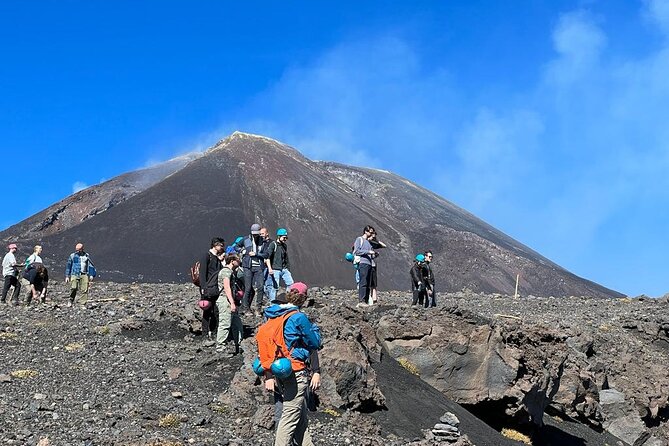
The itinerary includes Valle del Bove, one of the major volcanic features associated with Etna. The valley gives the mountain scale. From high ground, you can see how eruptions have carved broad channels and built layers of old volcanic material over time.
The exact route through or near the valley depends on conditions. The same applies to the Barbagallo Craters, which you visit during the descent. These smaller craters help you see how an eruption can create new cones and fresh-looking black slopes without needing to approach the main active crater.
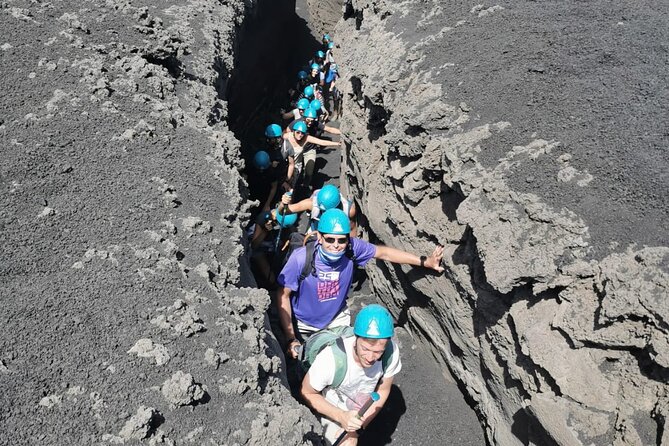
The descent includes a lava flow channel. This is where the poles and boots earn their keep. Loose ash can make downhill walking harder than the climb, and one account specifically warns that the descent can be slippery. Move slowly, keep your knees relaxed, and do not feel pressured to match the fastest person in the group.
The route is not just a march to a viewpoint. You see several kinds of volcanic activity in one outing: summit craters, older cones, lava channels, gas vents, bombs, and mineral deposits. That variety is one reason the tour feels more substantial than a cable car ride followed by a short walk.
What your guide adds to the day
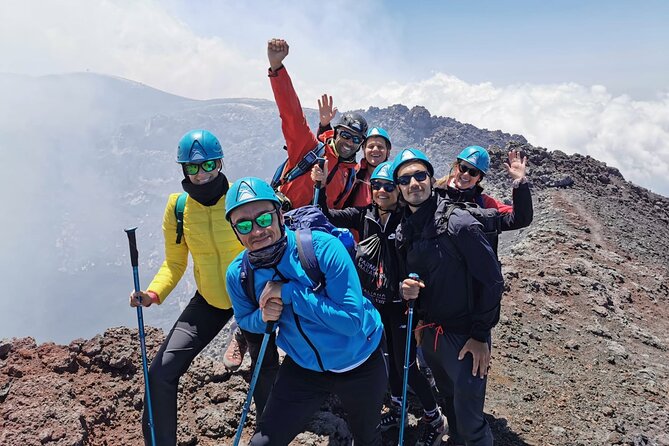
The guides are certified mountain and volcano guides, and the best part of their work is connecting safety with explanation. Antonio is noted for combining geology, volcano science, and local history with an upbeat manner. Max is described as professional, engaging, and careful about explaining the dangers of an active volcano.
Fabio, Massimo, Marco, Angelo, Filippo, and Simon are also named in feedback about the experience. The consistent strength is not one particular personality. It is the guiding team’s ability to explain what you are seeing while watching the whole group.
That last point matters in a group of up to 20 people. A larger group can make it harder to hear every explanation, particularly if you walk at the back. Stay near the guide when possible, especially at crater stops. If you are slower, tell the guide early. The group generally takes breaks, and guides have helped people who needed a steadier pace or felt nervous near heights.
You may not get the same guide on every departure. Names are useful examples of the team, not a promise that one particular person will lead your date.
Clothing, food, and gear that make the difference
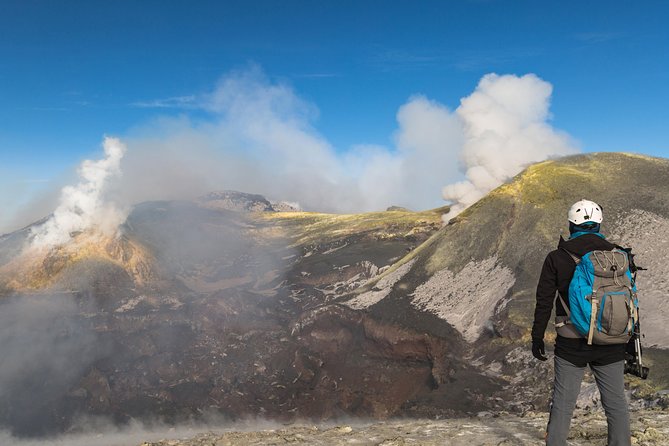
The company supplies a helmet, trekking boots, and hiking poles. Insurance and volcanological guiding are included. That is a good equipment package, especially if you are visiting Sicily without a full hiking kit.
A wind jacket is not included in the official inclusions, so bring one. Some clothing may be available to borrow or rent for a small fee, but you should not rely on that without checking in advance.
Pack these essentials:
- Plenty of water
- A sandwich or substantial snack
- Warm layers
- A windproof jacket
- Gloves
- A hat or thin cap
- Long trousers
- Tall socks
- A scarf or neck covering
- Sturdy footwear if you prefer your own boots
Dark clothing is sensible because black volcanic dust gets everywhere. The sun can be strong above the clouds, while wind can make the same spot feel bitterly cold. A short-sleeved start does not mean a short-sleeved summit.
Food is not included. There are places near Rifugio Sapienza where you can buy a sandwich before departure, but do not assume you will have time for a full meal once the hike begins. A lunch break near the upper section is welcome, especially before the final climb and descent.
How difficult is the Etna summit hike?
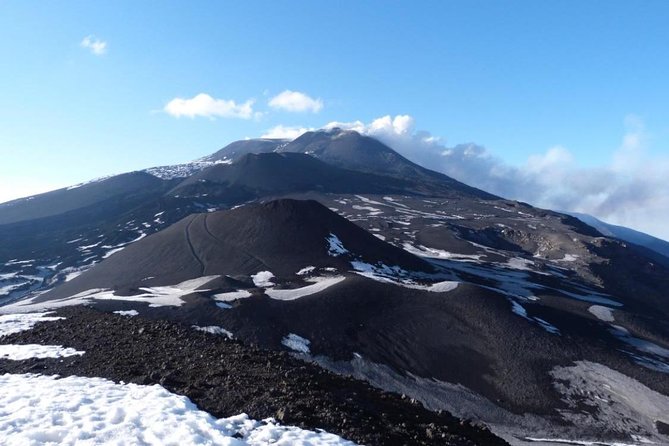
The official guidance calls for moderate fitness, but the more honest description is medium to high fitness. You should be comfortable walking for several hours over steep, loose, uneven ground and handling altitude around 3,000 meters.
The hike has no guarantee of easy footing. Deep sand and gravel can slow you down, and the downhill section may strain your legs. One fit 67-year-old hiker found it very hard despite being accustomed to walking. Another person found it less intense than expected, so individual experience varies.
You do not need to be an expert mountaineer, but you should be in good physical condition. This is not a suitable choice if you want a gentle sightseeing outing or have difficulty walking on unstable ground.
Heights deserve a mention. The crater paths can feel exposed, especially in high wind. A guide can help you manage the route, but you still need to be comfortable walking near steep volcanic edges from safe viewing areas.
Is the $78.64 price good value?
The advertised price is attractive for a six-hour guided outing, especially with a certified volcanological guide, insurance, helmet, boots, and poles included. The added €65 cable car and 4×4 charge changes the calculation, bringing the core experience closer to a full-day paid excursion rather than a budget activity.
I still consider it good value if your goal is to understand Etna and walk through its summit zone. A basic lift ride gives you altitude, but not the same interpretation of lava channels, sulfur deposits, crater formation, and recent eruptions.
The value is weaker if you mainly want a guaranteed summit photo. Weather and volcanic safety can alter the route, and you may finish below the main crater while still having a strong day on the mountain. Book this for the guided volcanic experience, not for one fixed viewpoint.
The maximum group size is 20. That is manageable but not intimate. If you walk near the back, you may miss some explanations. Ask questions during breaks, and position yourself close to the guide at important stops.
Cancellation and practical booking notes
You can cancel free of charge up to 24 hours before the 8 a.m. start time for a full refund. Changes or cancellations inside that window are not accepted for a refund.
The tour requires suitable weather and a minimum number of participants. If the provider cancels for either reason, you are offered another date, another experience, or a full refund.
Book well ahead if your schedule is tight. The activity is commonly reserved about 26 days in advance, and an Etna day can be difficult to replace once your time in Sicily is fixed.
Who should book this Etna hike?
Book it if you want a serious volcano outing, enjoy walking on rough ground, and like having a guide explain what you are seeing. It suits hikers who would rather spend several hours among craters and lava than stop at a roadside viewpoint.
It is also a good fit for visitors who want equipment supplied. You still need proper clothing and food, but you do not have to pack a helmet, poles, or specialist boots from home.
Think twice if you dislike wind, cold, heights, loose gravel, or uncertain plans. You might not reach every advertised crater, and the day can be tiring even when the route is adjusted for safety.
Should you book the South Side summit hike?
Yes, if you accept Etna on its own terms. The strongest reasons are the specialist guides, the varied route through summit craters and lava features, and the chance to see volcanic gases and mineral colors at close range without treating the mountain like a normal trail.
I would book this over a simple cable car visit if you are fit enough for 8 to 10 kilometers on uneven ground. Bring more warm clothing than you think you need, budget the additional €65 transport fee, and expect the guide to change the route if the volcano demands it. That flexibility is not a flaw. It is the sensible way to visit an active mountain.
FAQ
Where does the Mount Etna summit hike start?
It starts at Ashàra Etna & Stromboli Guides, Piazzale Rifugio Sapienza, 95030 Nicolosi, on Etna’s south side.
What time does the tour begin?
The scheduled start time is 8:00 a.m.
How long does the experience last?
The activity lasts approximately six hours and ends back at the meeting point.
Are the cable car and 4×4 included in the price?
No. Cable car and 4×4 transport tickets cost €65 per person and are paid locally.
What equipment is included?
The tour includes a helmet, trekking boots, trekking poles, insurance, and volcanological guides.
Is a wind jacket included?
No. A wind jacket is listed among the items not included, so bring your own.
Do I need to be physically fit?
Yes. The tour requires good physical condition and a medium-to-high fitness level. The route includes several hours of walking over steep, uneven, loose, and sometimes slippery ground.
Will the tour always reach the summit craters?
Not necessarily. Because Etna is active, gas, weather, wind, and volcanic conditions can require an itinerary change. If the tour is canceled because of poor weather, you are offered a different date or a full refund.
Recently reviewed hikes in Italy
- Amalfi Coast Path of the Gods Hike from Agerola★ 5.0 · 58 reviews
- Agerola: Path of the Gods Guided Hiking Tour★ 4.7 · 48 reviews
- Adrenaline River Trekking in Brembana Valley★ 5.0 · 13 reviews
- Catania: Mount Etna Sunset Trekking with Wine Tasting★ 5.0 · 140 reviews
- Stromboli: sunset trekking to Sciara del Fuoco – Ashàra★ 4.5 · 270 reviews
- Hike The Path Of Gods from Sorrento★ 5.0 · 208 reviews
- Path of the Gods Hiking Day Tour from Sorrento★ 5.0 · 110 reviews
- Etna – Trekking to the summit craters (only guide service) experienced hikers★ 5.0 · 286 reviews
Volcano Hikes, compared.
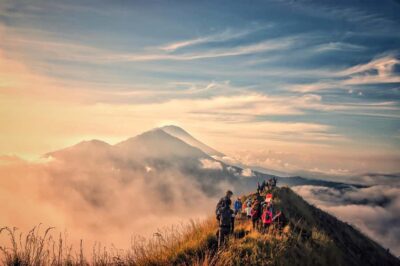
Bali: Sunrise Mount Batur Guided Hike with Breakfast
Read our review →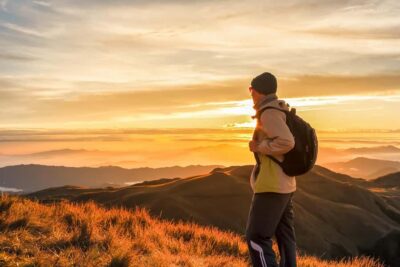
Bali: Mount Batur Sunrise Guided Hike and Natural Hot Spring
Read our review →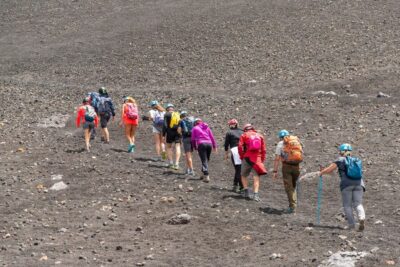
Mount Etna: Summit Guided Hiking Tour up to 3,400 m
Read our review →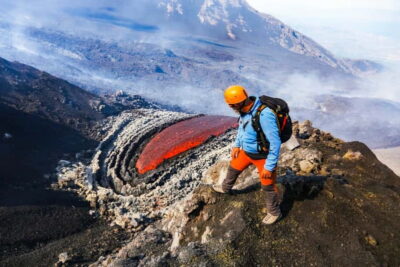
Mount Etna: Trek to 3000m with cable car and 4×4
Read our review →
Bali: Mount Batur Sunrise Trek With Guide and Breakfast
Read our review →
Mount Batur Sunrise Hike and Natural Hot Spring Option
Read our review →
Mount Etna: Summit Crater Trek with Cable Car
Read our review →
Other lists this hike appears in