
Review · JAPAN
Morning Hiking Tour: Mt. Futaba & Hiroshima’s History
Hiroshima’s best morning surprise may be only ten minutes from the station: a forested mountain path leading past shrines, red torii gates, and a hilltop peace pagoda. I like the way this tour links religion, nature, and Hiroshima’s recovery instead of treating the city as only a place for museums and memorials. I also like the small-group format, which gives your guide room to explain shrine customs and local history at your pace.
The main caution is simple: this is an uphill walk, not a flat city stroll. The hike is often described as manageable, even for people who do not exercise regularly, but you still need comfortable shoes and enough energy for stairs and uneven ground. The early start also means you will need to be ready at Hiroshima Station by 7:30 a.m. for the morning departure.
Key details at a glance
- A mountain start near Hiroshima Station: Reach the trail and Hiroshima Toshogu without a long transfer.
- Shrines and more than 100 red torii gates: The route gives you a close look at Shinto architecture and ritual.
- A broad Mt. Futaba view: From the peace pagoda, you can see Hiroshima, the Seto Inland Sea, and Miyajima.
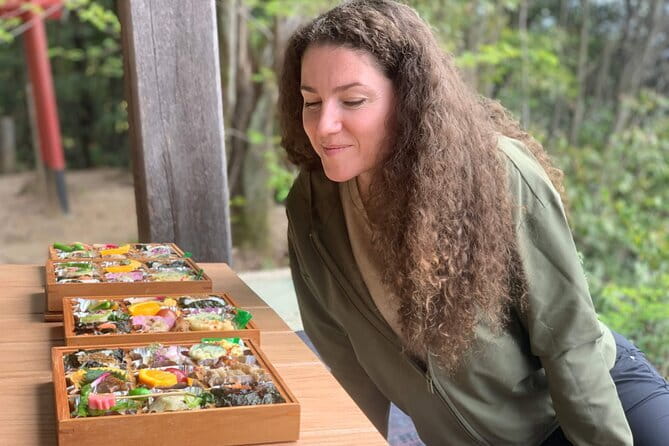
- Breakfast at Okugu Shrine: The meal is a special bento using local products, served with a memorable view.
- Forest bathing and nodate tea: The tour slows down for quiet time in the woods and an open-air tea ceremony.
- Private group of up to six: This is a personal experience, not a large bus tour.
Why Mt. Futaba adds something different to Hiroshima
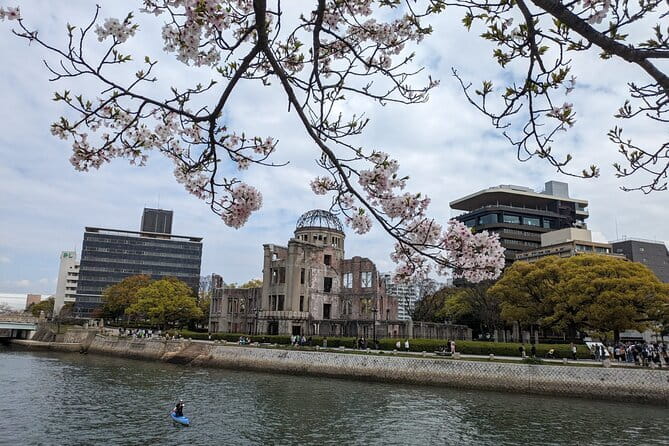
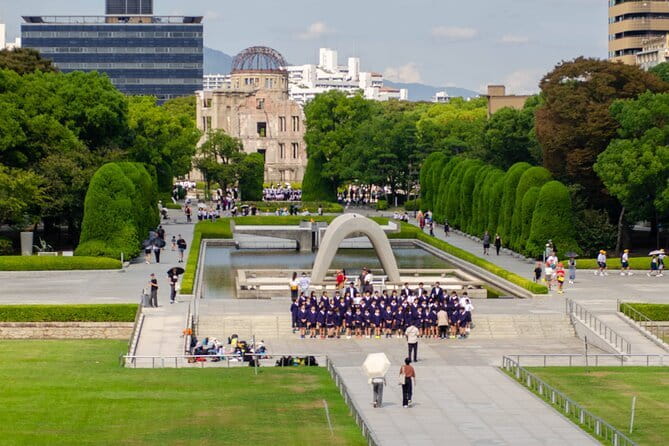
Most first visits to Hiroshima focus on the Peace Memorial Park, the Atomic Bomb Dome, and Miyajima. Those places matter, but Mt. Futaba lets you see another side of the city. From the mountain, Hiroshima spreads below you, with the Seto Inland Sea and Miyajima visible beyond the urban blocks.
That view gives the city’s story physical shape. You are not only hearing about Hiroshima as a place of destruction and rebuilding. You are looking across a living city, surrounded by hills, water, shrines, homes, and daily activity.
I especially like the tour’s order. You begin in the city, move through religious sites, then enter the forest before reaching the summit. The change happens gradually. Traffic and station noise give way to trees, stone steps, shrine buildings, and the sound of your own footsteps.
The route also shows why Hiroshima is more than its central sightseeing area. Mt. Futaba is close enough to reach on foot from the station, yet it feels far removed once the trail rises. That combination makes it a useful choice if you have limited time but want some exercise and a more local sense of place.
More Mountain and Summit Hikes in Japan
- Full Day Hiking Tour at Mt.Takao including Hot Spring
★ 5.0 · 52 reviews - Hike Japan Heritage Hakone Hachiri with certified mountain guide
★ 5.0 · 46 reviews - Explore Kiso Valley : Magome – Tsumago Mountain Trail Walk
★ 5.0 · 33 reviews
Meeting at Hiroshima Station at 7:30 a.m.
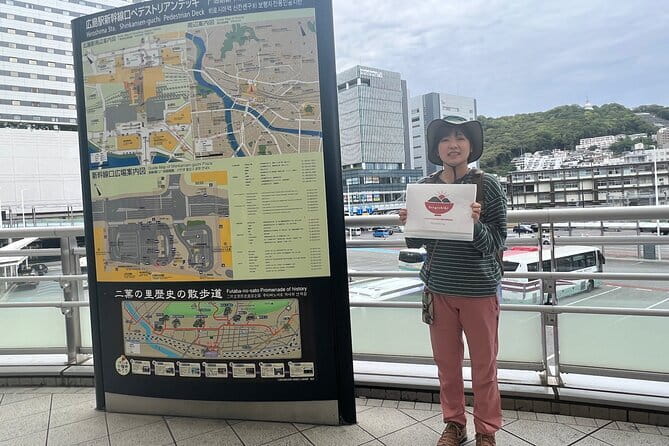
The meeting point is at Hiroshima Station, near the Shinkansen exit, at 1-2-37 Matsubaracho in Minami Ward. Your guide begins with introductions and an explanation of the route. This is useful because you can ask about the pace, the climb, and the plan for breakfast before leaving the station area.
The listed morning departure is 7:30 a.m. The schedule also displays a 10:00 a.m. time in places, so confirm your exact starting time when booking. The activity ends back at Hiroshima Station at about 11:00 a.m. for the early departure, making it easy to continue with lunch, the Peace Memorial Park, or another Hiroshima sight.
The station meeting point is one of the tour’s practical strengths. You do not need to find a remote trailhead or arrange a taxi into the hills. Hiroshima Station is well connected by rail and local transport, and you finish where you began.
At $157.60 per person, the price is not cheap for a three-and-a-half-hour outing. Its value depends on what you want. You are paying for a private guide, cultural interpretation, a small group limited to six, a bento breakfast, and a tea ceremony, not simply for access to a walking trail. For a solo visitor or couple who wants context and personal attention, that package can make sense. For someone happy to walk independently and read signs along the way, it is harder to justify.
Hiroshima Toshogu, where the cultural story begins
The first major stop is Hiroshima Toshogu, reached after the station introduction. Here your guide can explain the shrine’s architecture, customs, and cultural importance.
This is a good place to have questions ready. Japanese shrines can appear quiet and simple at first glance, but details in the buildings and decorative patterns carry meaning. The tour gives you time to notice those features rather than rushing past for a photograph.
The shrine visit is also a gentle beginning to the hike. You are not immediately thrown into the steepest part of the route. Instead, you get a cultural orientation before moving toward Mt. Futaba and its wooded paths.
If you are interested in religion, architecture, or Japanese customs, this may be one of the most valuable parts of the morning. Guides including Michi, Naomi, Michiyo, Kota, and Lisa have been associated with this experience at different times, and the guide is expected to explain the route and its religious sites in English. The exact guide is not guaranteed, but personal interpretation is central to the tour.
Kinko Inari Shrine and the red torii path
From Hiroshima Toshogu, the route continues to Kinko Inari Shrine. This section takes you farther into Mt. Futaba, with the city beginning to feel distant.
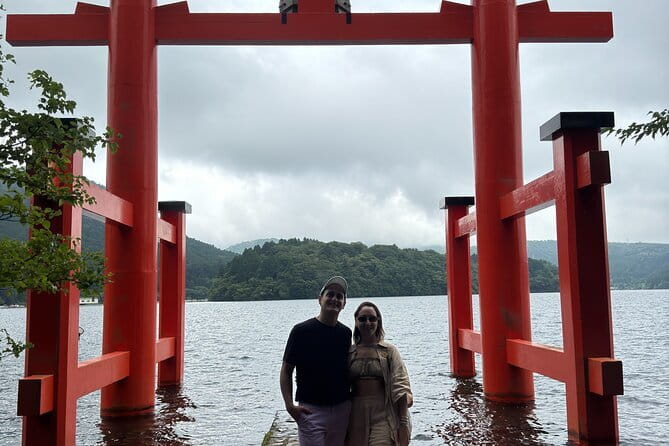
Inari shrines are closely associated with rows of red torii gates. Here, you pass through more than 100 of them as the trail climbs. The gates create a strong visual rhythm, but the important point is not only the photo opportunity. Your guide can explain how to behave respectfully at the shrine and what the gates signify.
This is one of the places where a guide adds real value. Without context, a shrine can become a quick stop for pictures. With an explanation of customs, architecture, and local beliefs, you begin to see the site as a living religious place.
The route is uphill. That warning appears repeatedly in the practical details of the experience, and you should take it seriously. The climb is considered easier than some other hiking routes around Hiroshima, but easy is not the same as level. Pace yourself, especially if you are traveling with young children or anyone unused to hills.
Children aged five and under can join free of charge. The tour states that most people can participate, but it does not promise a stroller-friendly or completely flat route. A child who can manage a steady uphill walk will have a better time than a child expecting a paved sightseeing route.
More Mountain and Summit Hikes in the world:
- Berber villages : Atlas Mountains Day Hike from Marrakech
★ 5.0 · 14,007 reviews - Bali: Sunrise Mount Batur Guided Hike with Breakfast
★ 4.8 · 9,660 reviews - Bali: Mount Batur Sunrise Guided Hike and Natural Hot Spring
★ 4.8 · 9,284 reviews - From Marrakech: Atlas Mountains Full-Day Hiking Trip w Lunch
★ 4.8 · 7,417 reviews
Mt. Futaba’s peace pagoda and the view
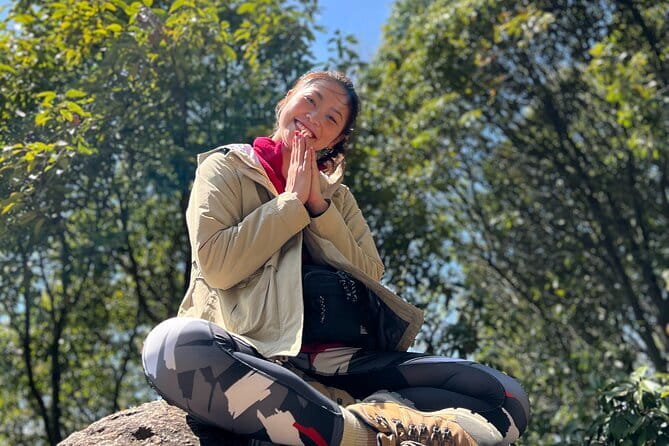
The mountain section culminates at Futabayama Peace Pagoda, also called the peace pagoda in the tour schedule. From here, you get a wide view over Hiroshima City, the Seto Inland Sea, and Miyajima.
This is the emotional center of the experience. The view connects the mountain’s quiet religious setting with Hiroshima’s modern city below. You can see the city not as a collection of memorial sites, but as a place that has continued to grow and recover.
Visibility matters. On a clear morning, the Seto Inland Sea and Miyajima should be much easier to pick out. Haze, rain, or low cloud can reduce the view, so the panorama is a welcome possibility rather than a guaranteed spectacle.
The summit stop is not a quick photo break. The schedule allows roughly two hours for the mountain portion, including the view, forest bathing, breakfast, and tea. That generous timing keeps the experience from feeling like a race to the top.
Forest bathing without a rush
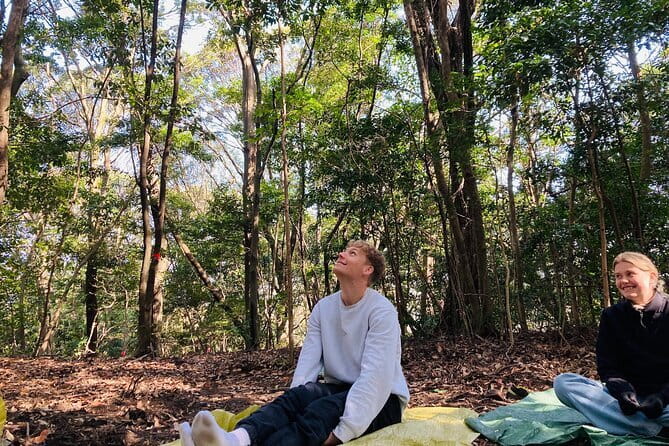
At the summit area, the tour includes shinrinyoku, or forest bathing. Here, the point is to slow down and pay attention to the woods rather than simply walk through them.
This can sound vague if you have never tried it. In practical terms, expect a guided pause in the forest, with time to breathe, notice the surroundings, and let the morning become quieter. The experience may appeal to you if you want a gentle outdoor activity rather than a fitness challenge.
The forest setting also balances the history-heavy parts of a Hiroshima visit. The city’s past is central to understanding it, but it can make for an intense day. A quiet period among the trees gives you room to reset before moving on to the rest of your sightseeing.
Season changes the mood. Spring flowers, summer greenery, autumn color, and crisp winter air can give the same route a different feel. One local participant returned for another season and found new views and details, which makes sense for a mountain close to the city.
Breakfast at Okugu Shrine
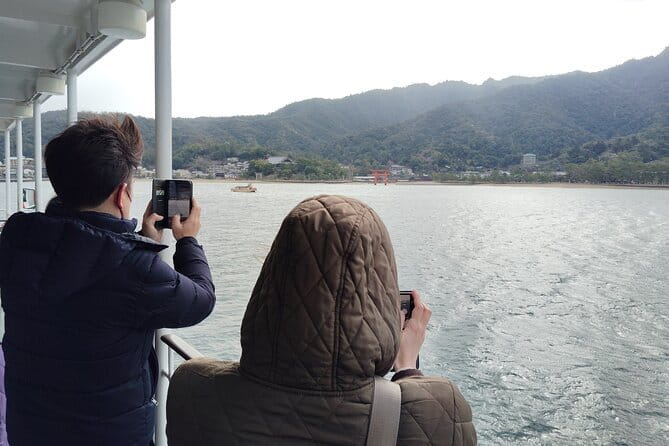
The breakfast is served at Okugu Shrine, also referred to as Okumiya Shrine in the itinerary. You receive a special bento box filled with local products while looking out over Hiroshima.
This is more than a meal stop. Eating at the shrine with the city below turns the summit into a place to linger. It also gives you a chance to rest after the climb, rather than descending immediately after reaching the view.
The bento format fits the setting. It is portable, distinctly Japanese, and suited to an outdoor morning. The food and drinks can be adjusted for food allergies, halal, Muslim-friendly, vegetarian, and vegan requirements, but you need to contact the operator before booking or as early as possible.
Do not assume you can make last-minute dietary changes on the morning itself. If food is a major concern, tell the operator in advance and ask what the adapted meal will include.
The breakfast is one reason the price may feel more reasonable to some people. You are not simply buying a guided walk. You are getting a prepared meal in a place that would be difficult to arrange as part of an ordinary sightseeing morning.
Nodate, an open-air tea ceremony
After breakfast, your guide performs a nodate tea ceremony outdoors. Nodate is tea prepared in an open-air setting, so the mountain, weather, and changing light become part of the experience.
I like this detail because it fits the route rather than feeling bolted on. The tour begins with shrine traditions, continues through the forest, and ends with tea in a quiet setting. You get a small introduction to Japanese culture that is tied to the place you are visiting.
The ceremony is also a slower finish to the active part of the morning. After walking uphill and eating breakfast, you can sit, watch the preparation, and enjoy the surroundings. It is a better fit for someone interested in customs and atmosphere than for someone who wants nonstop movement.
Keep your expectations realistic. This is an open-air tea experience led by your guide, not a formal performance in a dedicated tea house. Its appeal is the setting and the connection to the hike.
How hard is the hike?
The tour is described as an easy trek, and the route from the station to the mountain summit is relatively short. Still, several direct accounts make the same practical point: it is uphill.
You should wear shoes with a secure sole. Bring water, even though breakfast and drinks are included, and dress for the season. In mid-November, the temperature at the 7:30 a.m. start was reported at about 5 degrees Celsius, so early winter mornings can feel cold before the climb warms you up.
You do not need to approach this as a serious mountain expedition. The appeal is that the trail is manageable while still giving you a real sense of leaving the city. If you rarely exercise, expect to pause. The private format helps here, since the guide can keep the pace suited to your group.
Weather is important for both safety and the summit view. If poor conditions are expected to cancel the tour, contact the operator by the morning of the previous day. The experience is non-refundable and cannot be changed for any reason, so check the forecast before committing.
Who will get the most from this tour?
I would recommend it most strongly to someone visiting Hiroshima for the first time who wants a cultural activity beyond the central memorial sites. It also suits repeat visitors who have already seen the main attractions and want a quieter morning close to the station.
You are likely to enjoy it if you:
- Like walking but do not want a full-day mountain excursion.
- Want shrine customs explained rather than simply photographed.
- Prefer a private group to a large sightseeing party.
- Enjoy local food, tea, and time outdoors.
- Want a strong city view without traveling far from Hiroshima Station.
It may not suit you if you need a completely flat route, dislike early starts, or want to spend the morning indoors. It is also not the best choice if you are looking for a strenuous hike. The route is active but designed more around culture, scenery, and a relaxed pace than athletic achievement.
Practical booking advice
The maximum group size is six, which is small enough for questions and conversation. The activity uses a mobile ticket, and confirmation is issued within 48 hours, subject to availability.
Because the experience is non-refundable, read the date and time carefully before paying. The morning schedule is the clearest part of the description, but the itinerary also shows a 10:00 a.m. time in some places. Confirm which departure applies to your booking.
Tell the operator about dietary needs before you apply. This matters particularly for halal, Muslim-friendly, vegetarian, vegan, and allergy-sensitive meals.
Plan the rest of your day around an 11:00 a.m. return if you choose the early departure. Hiroshima Station puts you in a good position for lunch, transport, or a visit to the Peace Memorial Park. You may also want a dry layer in cool weather, since the morning begins at the station but spends much of its time outdoors.
Should you book the Mt. Futaba morning tour?
Book it if you want Hiroshima presented through its shrines, forest, city view, and living traditions, not only through its memorials. The strongest parts are the close guide contact, the red torii route, the view toward Miyajima, and the unusual combination of a bento breakfast with forest bathing and open-air tea.
Skip it if $157.60 feels too high for a half-day activity, if the uphill walk would be uncomfortable, or if you prefer to explore independently. For the right visitor, the cost buys more than a hike. It buys a carefully paced morning that shows how nature, religion, and Hiroshima’s recovery sit side by side.
FAQ
Where does the Mt. Futaba tour begin?
It begins at Hiroshima Station near the Shinkansen exit, at 1-2-37 Matsubaracho in Minami Ward.
Where does the tour end?
The activity ends back at Hiroshima Station, the same general meeting point.
How long does the experience last?
The tour lasts approximately 3 hours and 30 minutes. The early schedule runs from about 7:30 a.m. to 11:00 a.m.
How many people can join?
The tour is limited to a maximum of six people and is reserved for your group.
Is the hike difficult?
The route is described as an easy trek, but it includes an uphill walk on Mt. Futaba. Comfortable walking shoes are recommended.
Is breakfast included?
Yes. You receive a special bento box made with local products at Okugu Shrine. Food and drinks can be adapted for several dietary requirements if you contact the operator before booking.
Can children join the tour?
Children aged 0 to 5 can participate free of charge. The tour states that most people can participate, but the route is uphill and may not suit anyone unable to manage a walking trail.
More Early-Start Trips around the world
- Funchal: Pico do Arieiro Sunrise Hiking Transfer
★ 4.8 · 4,021 reviews - Bali: Mount Batur Sunrise Trek With Guide and Breakfast
★ 4.8 · 3,461 reviews - Mount Batur Sunrise Hike and Natural Hot Spring Option
★ 5.0 · 1,927 reviews - Mount Batur Sunrise Hike with Breakfast
★ 5.0 · 1,757 reviews
More History Tours around the world
- Hiking the Historic Nakasendo Trail [1 Day Tour from Nagoya]
★ 5.0 · 104 reviews - Hathipaown Heritage Walk – A guided walk to Mini Everest
★ 5.0 · 58 reviews - 1-Day Tour from Nagoya: Hiking the Historic Nakasendo Trail
★ 4.9 · 34 reviews - 3Hour Outdoor Budapest Normafa Hike&History With a Historian
★ 3.7 · 10 reviews
Recently reviewed hikes in the world
- Asheville: Yoga on a Mountain Hike★ 4.7 · 7 reviews
- Arequipa: 2-day Colca Canyon Trekking, Ending in Puno★ 4.8 · 8 reviews
- Arctic hike on Kvaløya Island with drinks and snacks★ 5.0 · 8 reviews
- Arctic Wilderness Hike from Rovaniemi (Day & Evening)★ 4.7 · 12 reviews
- Antelope Valley: Ligai Si Anii Canyon Hiking Tour★ 4.9 · 13 reviews
- Antigua: 2-Day Acatenango Volcano Hike w/Local Guide & Meals★ 4.3 · 43 reviews
- Delphi: Easy Hike on Ancient Path through the Olive Groves★ 5.0 · 9 reviews
- Antalya: Hiking in Termessos Ancient City★ 5.0 · 152 reviews
Mountain & Summit Hikes, compared.
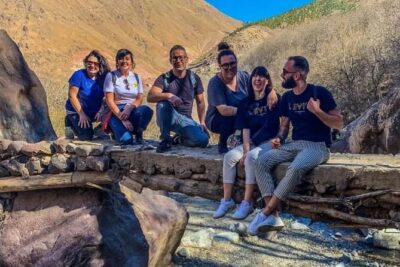
Berber villages : Atlas Mountains Day Hike from Marrakech
Read our review →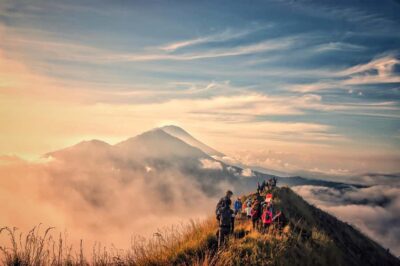
Bali: Sunrise Mount Batur Guided Hike with Breakfast
Read our review →
Bali: Mount Batur Sunrise Guided Hike and Natural Hot Spring
Read our review →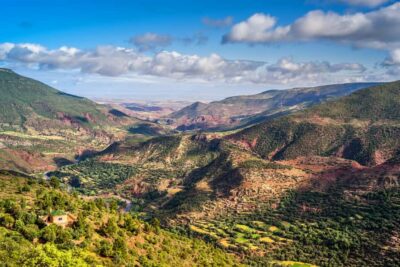
From Marrakech: Atlas Mountains Full-Day Hiking Trip w Lunch
Read our review →
Mount Etna: Summit Guided Hiking Tour up to 3,400 m
Read our review →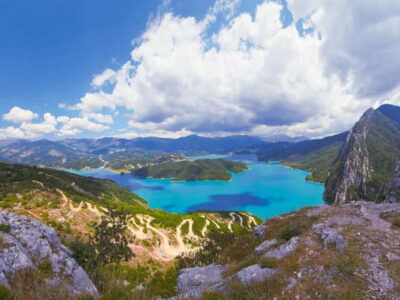
From Tirana: Bovilla Lake & Gamti Mountain Hiking Day Trip
Read our review →
Mount Etna: Trek to 3000m with cable car and 4×4
Read our review →
Bali: Mount Batur Sunrise Trek With Guide and Breakfast
Read our review →Other lists this hike appears in