
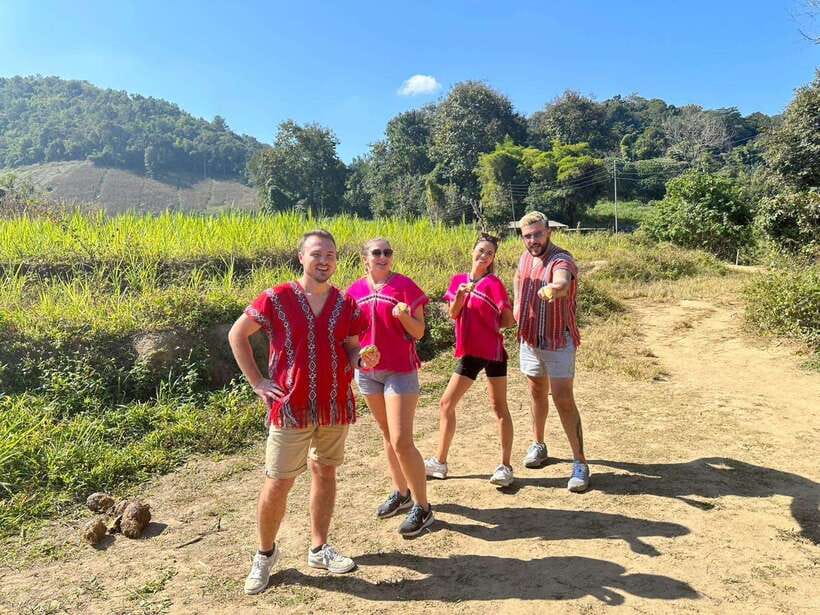
Review · CHIANG MAI
Chiang Mai Untouched Elephant: Nature Walk & Waterfall Trek
The best part of this Chiang Mai outing is its lack of a stage. You help prepare food, feed rescued elephants, walk beside them through the jungle, and follow their rhythm instead of watching a choreographed show. The no-riding, no-forced-performance rule gives the morning a more respectful feel.
I like two things here: the close contact is built around care rather than tricks, and lunch is prepared by local families. You also get a real taste of village life, with time to help out or simply slow down. The main catch is the journey. The sanctuary is far enough from Chiang Mai that the ride can feel rough and the full day may last longer than the advertised five hours.
Key points to know
- Elephant care comes first: Prepare food, feed the animals, walk with them, and join a river bath only if the elephants want to.
- A village setting, not a polished show park: The experience takes place in a traditional hill-tribe community where mahout families care for elephants as part of daily life.
- Expect a long transfer: Pickup is from Chiang Mai, followed by mountain roads and a change into a roofed 4×4 truck for the sanctuary.
- Lunch is part of the welcome: A local meal made with fresh ingredients is included, along with drinking water.
- Mae Wang Waterfall adds a second outdoor stop: You get about an hour for a walk and free time, but conditions can be busy.
- Bring swim gear: Sunglasses, a hat, sunscreen, insect repellent, a towel, a swimsuit, and dry clothes will make the day easier.
Why this elephant visit feels different
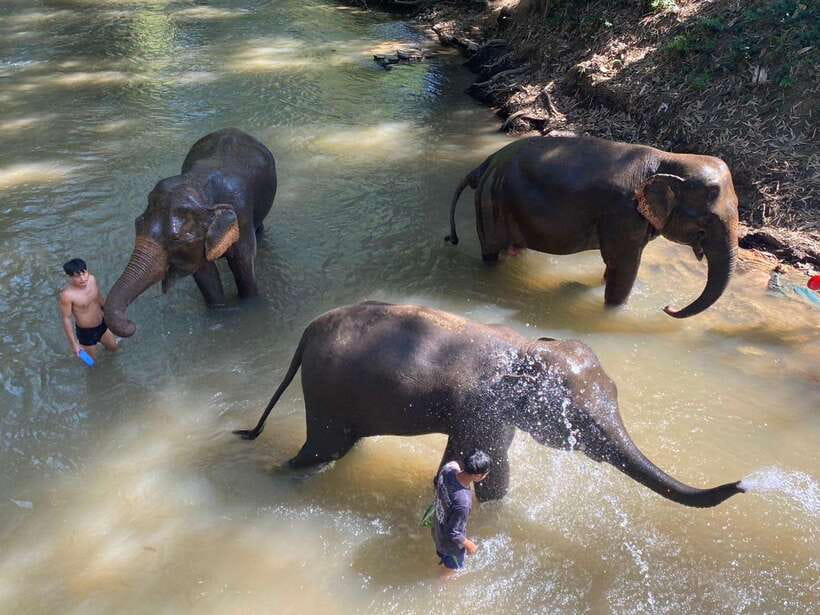
Many elephant outings around Chiang Mai are built around a fixed timetable. This one asks you to accept a slower, less polished day. The elephants are rescued, and there are no chains or hooks at the park. They are not made to perform, carry riders, or pose on command.
That changes the way you spend your time. You are not simply moving from one photo stop to the next. You may prepare elephant food, offer it by hand, and watch each animal react in its own way. The caretakers explain how these elephants have lived with local families over many years, and you get a closer look at the work behind their care.
The phrase mahout for a day should be taken in the spirit of the experience, not as a claim that you will become a trained elephant keeper in a few hours. You will take part in simple tasks under guidance. You will not be expected to control the elephants or direct every moment.
That is a good thing. The best elephant experiences leave room for the animals to behave like animals. If one wants to walk, feed, rest, or bathe, the plan can shift. The exact activities depend on what the elephants want to do that day.
More Waterfall Hikes in Chiang Mai
- Chiang Mai: 2-Days Jungle Trek, Waterfalls and Karen Village
★ 4.8 · 103 reviews - Chiang Mai ATV & White Water Rafting & Trekking to Waterfall
★ 4.7 · 84 reviews - Chiang Mai: Whitewater Rafting and Waterfall Trekking Tour
★ 4.9 · 58 reviews
The ride from Chiang Mai to the village
Pickup is available from hotels in and around Chiang Mai Old Town, with the free transfer area covering accommodations within about five kilometers of the Old City. You should wait in the hotel lobby from 10 minutes before the arranged pickup time.
Transport is part of the adventure, but also the part most likely to test your patience. You may ride in a 12-seat air-conditioned van or an open-air pickup truck, then change to a roofed 4×4 truck to reach the sanctuary. Mountain roads and the final rougher section add time and can make the ride uncomfortable.
Allow more than five hours in your schedule. The advertised duration is five hours, but the trip to the village can take about two hours each way according to the practical experience reported from the day. One person expected a short outing and found the day lasted about seven hours, causing a conflict with another booking.
I would not pair this with a fixed afternoon appointment. The experience follows village and elephant routines, not a stopwatch. That flexibility is part of its appeal, but it also means you need a free buffer around the tour.
Meeting the mahout families
At the village, you meet local caretakers and the elephants they look after. This is not presented as a modern attraction with a large menu of staged activities. The setting is a community where elephants and people have shared daily life for generations.
The cultural side matters. You see that elephant care is not just a short encounter for visitors. Feeding, preparing food, walking, and keeping watch are ordinary duties for the mahout families. You get to take part in a small portion of that routine.
The English-speaking guide helps explain what is happening, though you should not expect the formal style of a large, highly scripted tour. The experience provider identifies English as the tour language, and one guide named in the feedback is Jimmy. A good local host can make a big difference here, particularly when the schedule shifts or the weather changes.
You may have time after lunch to help with small village tasks, relax, or watch the daily work continue. That open space is valuable if you want a sense of rural life. It may feel too loose if you prefer a guide speaking continuously and directing every step.
Preparing food and feeding the elephants
The first hands-on task is preparing food with traditional methods. You then feed the elephants by hand, which gives you a close look at their habits and personalities.
This is one of the strongest parts of the outing because it shows care in practical terms. You are not just taking a picture beside an elephant. You are helping with one of the basic jobs that keeps the animals healthy.
Use care and patience. Large animals can move suddenly, even when they are gentle. Follow the guide and caretakers closely, keep your attention on the elephants, and avoid trying to force contact. The rules here are clear: no riding and no forced interaction.
The experience is especially well suited to people who care about animal welfare. It gives you a chance to support a rescue setting while learning what responsible contact can look like. It is less suited to anyone mainly seeking dramatic tricks, constant touching, or a guaranteed photo pose.
More Waterfall Hikes in Thailand
- Khao Sok: Private Waterfalls and Wildlife Half-Day Trek
★ 4.5 · 337 reviews
Walking through the jungle without saddles
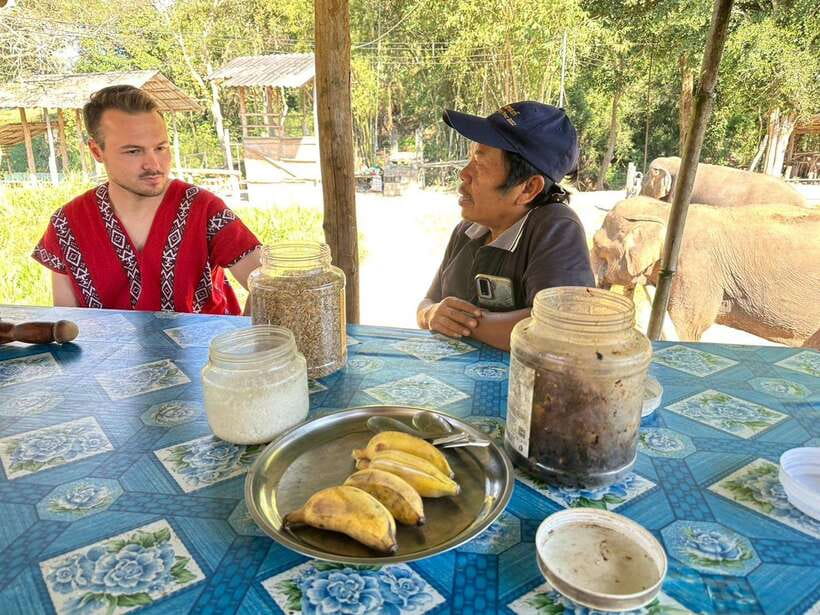
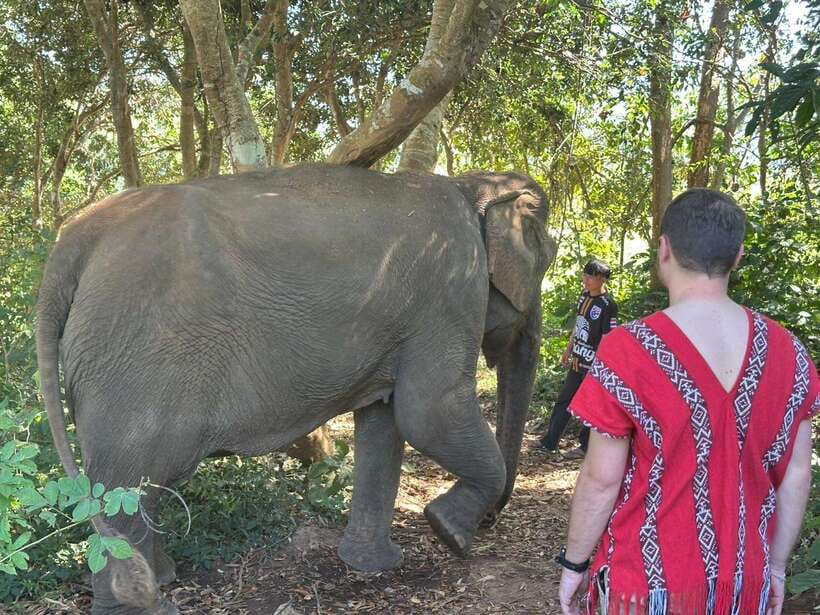
After feeding, you walk with the elephants through the surrounding jungle. There are no saddles or chains, and the animals are free to move at their own pace.
This part is quieter than the feeding session. You watch how the elephants respond to the forest, the path, and one another. The value is in the ordinary moments: an animal stopping, wandering, or choosing its own direction instead of being pushed through a performance.
You should expect uneven ground and outdoor conditions. The tour information calls for a moderate fitness level, so sensible shoes and steady footing matter. Bring insect repellent, sunscreen, a hat, and water. Drinking water is included, but you will still want to stay aware of the heat.
The walk may not feel strenuous to everyone, but it is not a fully paved attraction. If you have limited mobility or dislike muddy paths, ask for current conditions before booking.
The river mud bath and elephant swim
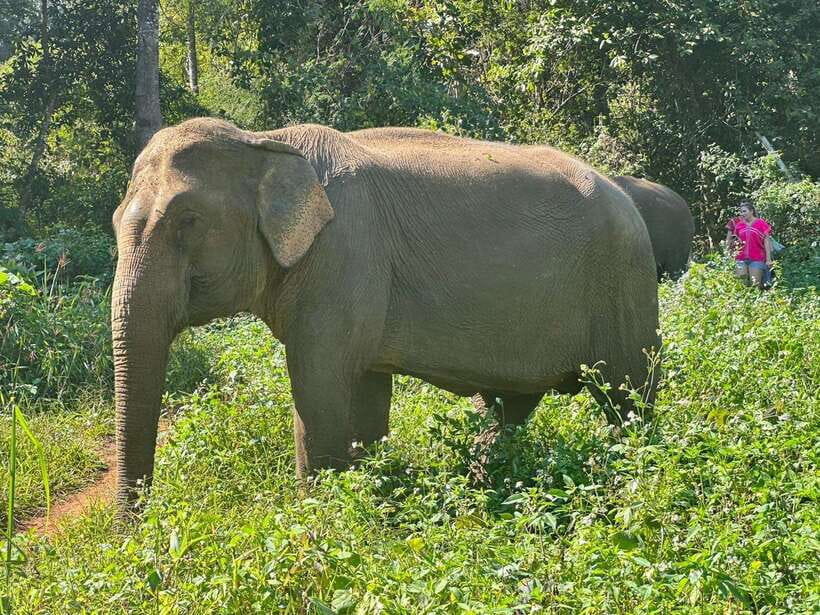
Later, the elephants may go to a river for mud and bathing. You can join them, splash water, and help scrub the animals if the caretakers allow it and the elephants are willing.
This is the most playful part of the day, but it is also where expectations need to stay realistic. The elephants are not forced into the water. If they are not interested, the activity may be shorter or change altogether.
Bring a swimsuit, towel, and a full change of clothes. These items are not listed in the basic packing advice, yet practical experience from the outing makes them important. Sunglasses can help with the sun, while a hat and sunscreen are useful during the open-air portions.
The river session can be messy, wet, and fun. It is not a spa treatment for visitors, and it should not be treated as a chance to climb on an elephant. The point is to share the space respectfully while the animals bathe in a natural way.
A home-cooked lunch in the village
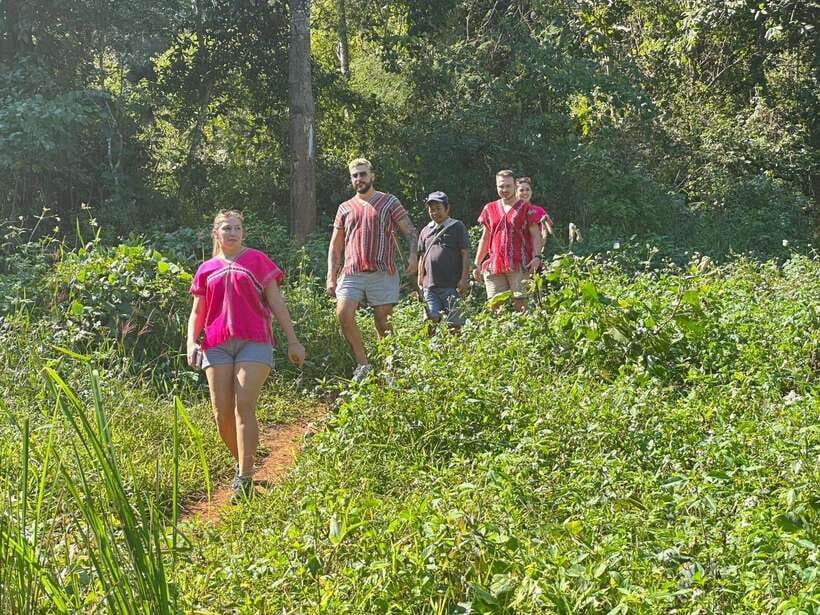
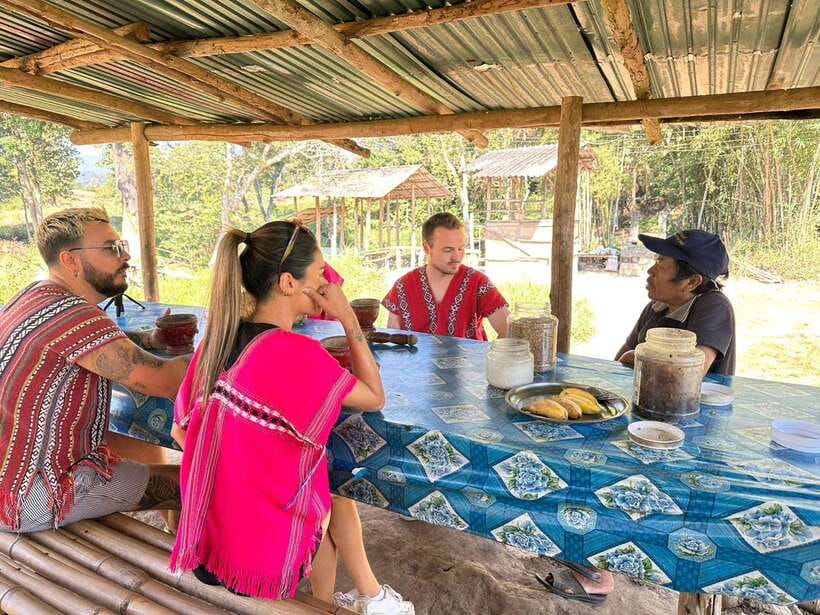
After the morning with the elephants, you return to the village for a local meal. Fresh ingredients and family cooking give lunch a stronger sense of place than a standard restaurant stop.
Food was one of the most praised parts of the experience, and that makes sense. A meal served by local families connects the elephant visit to the community that supports it. It also gives you a welcome pause after walking, heat, and water activities.
The meal is included, along with drinking water. Tell the provider about dietary restrictions in advance. Do not assume that every request can be handled on the spot in a remote village setting.
The meal may be simple rather than elaborate. That is part of the appeal. One useful note from the day is that some side dishes, including chips, may arrive less than hot. I would focus on the Thai food and the setting rather than expect a full restaurant service.
Mae Wang Waterfall for a final outdoor stop
The last major stop is Mae Wang Waterfall, where you have about an hour for a visit, a walk, and free time.
The waterfall adds variety. After spending time with elephants and village families, you get a short nature break before returning to Chiang Mai. It is a chance to stretch your legs, cool off, and take in another part of the province.
Do not assume this will be a private forest stop. Conditions can be busy, and one account found the waterfall more crowded than expected. That does not erase its appeal, but it does weaken the promise of a completely untouched day.
The waterfall also depends on timing and conditions. You may find the stop relaxing, or you may see it mainly as a useful pause after the long ride. Keep your expectations flexible and use the hour to enjoy the setting rather than chase a perfectly quiet scene.
Is $51 a fair price?
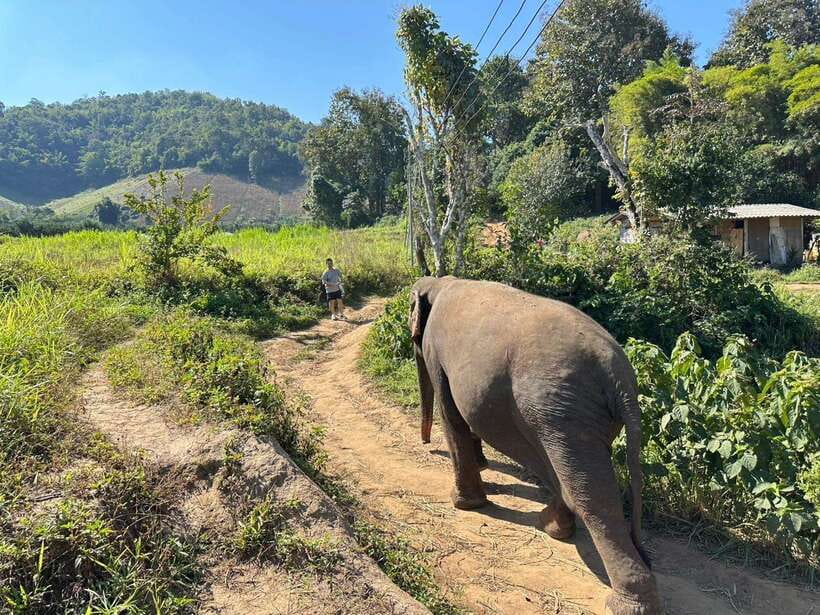
At $51 per person, the price is reasonable if you value a full rural outing rather than a quick elephant photo session. Hotel pickup and drop-off, an English-speaking guide, the local meal, drinking water, elephant care activities, and the waterfall visit are all part of the package.
The real value comes from the access to a working mahout community. You are paying for transport into the mountains, local hosting, food, and a chance to take part in daily care. The experience also supports a place that looks after rescued elephants.
The price feels less attractive if you mainly want a short, tightly managed sanctuary visit. A large part of your day can go to transport, and the long ride may be uncomfortable, especially in an open-air truck or an older minibus.
I would compare the price with your schedule, not just with other elephant tours. If you have only one free afternoon in Chiang Mai, this may be too unpredictable. If you can spare a loose half-day or longer and want a more personal village visit, the cost is easier to justify.
What to pack and who should book
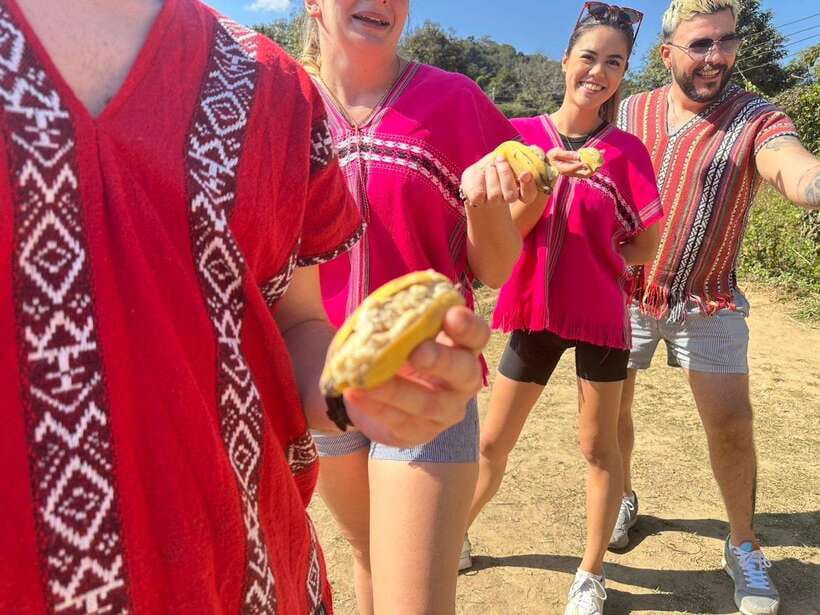
Pack for heat, mud, water, insects, and a long road journey. Your day will be easier with:
- A swimsuit, towel, and dry clothes
- Sun hat, sunglasses, and sunscreen
- Insect repellent
- Comfortable shoes with secure footing
- Any personal snacks or medication you need during the transfer
You should book this if you want to learn how mahouts care for elephants, enjoy local food, and accept that the animals set the pace. It suits couples, families with suitable older children, animal lovers, and anyone looking for a quieter connection with rural Chiang Mai.
I would skip it if you need a polished schedule, guaranteed bathing time, or a short transfer. The ride can be long, the waterfall can be crowded, and the day may stretch beyond the stated five hours.
Cancellation is free up to 24 hours before the experience, and you can reserve now and pay later. Pickup is included within the stated area around Chiang Mai Old Town, but locations farther away may require a surcharge.
Should you book this elephant experience?
Book it for the ethic and the setting, not for speed or perfect control. The best moments come from preparing food, feeding the elephants, watching them walk freely, and sharing a meal with the people who care for them.
The main question is simple: do you want a real village day, with rough edges, or a polished attraction that runs to the minute? If you choose the first, this $51 outing offers a memorable way to meet rescued elephants without riding, chains, hooks, or forced shows. Leave plenty of time, bring clothes you can get wet, and let the day unfold at elephant pace.
FAQ
How long does the Chiang Mai elephant and waterfall experience last?
The stated duration is five hours, including the elephant sanctuary visit and Mae Wang Waterfall. The full day can run longer because of pickup, mountain-road travel, and the transfer to the sanctuary.
Is hotel pickup included?
Yes. Pickup and drop-off are available from hotels in and around Chiang Mai Old Town. Free transfers cover accommodations within about five kilometers of the Old City, while farther locations may involve a surcharge.
Are the elephants chained or made to perform?
No. The elephants are rescued, and the park does not use chains or hooks. They are not forced to perform activities, and the exact schedule depends on what they choose to do.
Can I ride the elephants?
No. Elephant riding is not part of this experience. The activities focus on preparing food, feeding, walking, and respectful bathing.
Is swimming or bathing with the elephants guaranteed?
No. The elephants decide what they want to do that day. A river mud bath and bathing session may take place, but no activity is forced.
What should I bring?
Bring sunglasses, a sun hat, sunscreen, and insect repellent. You should also pack a swimsuit, towel, and change of clothes because the river activities can get you wet.
Is the tour suitable for all fitness levels?
No. The walks and outdoor activities require moderate fitness. The journey also includes mountain roads and a change into a roofed 4×4 truck to reach the sanctuary.
More Nature Walks in Chiang Mai
- Doi Inthanon National Park with Nature Trail Trekking 1-Day Tour
★ 4.5 · 230 reviews - Self guided Hike Trail to Nature Walk & Waterfall
★ 4.5 · 283 reviews - Semi-Private Montserrat Monastery, Funicular & Scenic Nature Walk
★ 5.0 · 172 reviews - Hill & Nature Hike – Discover Real Edinburgh With a Local Expert
★ 5.0 · 158 reviews
Recently reviewed hikes in Chiang Mai
- Chiang Mai: 2-Days Jungle Trek, Waterfalls and Karen Village★ 4.8 · 103 reviews
- Chiang Mai: Whitewater Rafting and Waterfall Trekking Tour★ 4.9 · 58 reviews
- Chiang Mai ATV & White Water Rafting & Trekking to Waterfall★ 4.7 · 84 reviews
- Chiang Mai: Hike on Monk’s Trail and Doi Suthep Private Tour★ 4.8 · 22 reviews
- Chiang mai Hike & Downhill Bike Adventure –Suthep National Park★ 4.5 · 204 reviews
- Doi Inthanon National Park with Nature Trail Trekking 1-Day Tour★ 4.5 · 230 reviews
- Doi inthanon National Park + 2Hour Fantastic Trekking with Lunch★ 4.5 · 233 reviews
- Chiang Mai Doi Suthep Temple and Wat Pha Lat Hike★ 5.0 · 299 reviews
Waterfall Hikes, compared.
From Marrakech: Ouzoud Waterfalls Guided Hike and Boat Trip
Read our review →
Marrakech: Ourika Valley Trip with Waterfall Hike
Read our review →Marrakech: ourika valley lunch & guided hike to waterfalls
Read our review →
Marrakesh: Ouzoud Waterfalls Trip with Hike & Boat Option
Read our review →
Small Group Waterfall and Rainforest Hiking Adventure on Maui
Read our review →
Rovaniemi: Korouoma Canyon Frozen Waterfalls Hike & BBQ
Read our review →
Reykjavik: Glacier Hike, Waterfalls and Black Sand Beach
Read our review →Marrakech: Atlas Mountains & Valleys Waterfall Hike w/ Lunch
Read our review →Other lists this hike appears in