
Review · CUSCO
Ancascocha Trek To Machu Picchu 4 Days And 3 Nights
Ancascocha is the choice for reaching Machu Picchu by a quieter mountain route, not the famous stone path most people picture. Your first day moves from Soqma to Perolniyoc waterfall, an Inca ruin, and the high Kuychiccasa Pass, with snow peaks and llamas filling the view.
I like the mix of waterfalls, ruins, villages, and high passes. I also like that camping, meals, national park fees, hotel transfers, and a night in Aguas Calientes are built into the $730 price. The catch is the altitude: the route reaches 14,599 feet, so this is a serious trek, not a casual walk with a famous finish.
I also like the small-company feel. Guides named Lino, Lina, Christian, and Eddy appear in past departures, though your assigned guide is not guaranteed. The main consideration is that the group can include up to 30 people, and the trip requires strong physical fitness.
Key details before you book
- The trail begins at 10,512 feet in Soqma, about 1 hour and 45 minutes from Cusco by vehicle.
- Perolniyoc waterfall and its cliff-top Inca site make a memorable opening to the trek.
- Kuychiccasa Pass reaches 14,599 feet, higher than many visitors expect from a Machu Picchu trip.
- Two nights are spent camping, followed by one night at a bed-and-breakfast in Aguas Calientes.
- Meals, camping equipment, park fees, guide service, and hotel transfers are included, but the Aguas Calientes to Machu Picchu bus is not.
- You avoid the busiest classic routes, though the group size can reach 30 people.
Why choose Ancascocha instead of the Classic Inca Trail?
The Ancascocha route suits you if the walk itself matters as much as the ruins at the end. The Classic Inca Trail is famous for its engineered stone paths and controlled permit system. Ancascocha gives you a more remote-feeling mountain trek, with broad views, small settlements, waterfalls, and long stretches where the scenery does the talking.
The trade-off is clear. You get less of the celebrated Inca Trail infrastructure and more demanding high-country walking. The supplied route information highlights ancient ruins and Andean villages, while the first day alone includes a steep climb of about three hours after lunch. You should choose this trip for the mountain experience, not simply as the easiest way to reach Machu Picchu.
The route also suits people who want a smaller operator. The company is Action Peru Treks, and the high praise centers on organization, guides, cooks, and horsemen. Past trip accounts give special credit to guides such as Lino and Eddy, as well as cooks and support staff who had camps ready and meals waiting. Those names may not match your departure, but they show the sort of team structure you can expect: guide, cooks, and people handling camp equipment and animals.
More Machu Picchu and Inca Trail Treks in Peru:
- Salkantay Trek Challenge – 3 Days / 2 Nights
★ 5.0 · 101 reviews - Choquequirao Trek 4 days and 3 nights
★ 5.0 · 81 reviews - Machu Picchu: 5-Day Salkantay Trek with Panoramic Train
★ 5.0 · 79 reviews
Day 1: Soqma, Perolniyoc, and the 14,599-foot pass
Your day starts with hotel pickup in Cusco and a drive of about 1 hour and 45 minutes to Soqma, at 10,512 feet. That starting point is already high, so you do not get a long, gentle warm-up at low elevation.
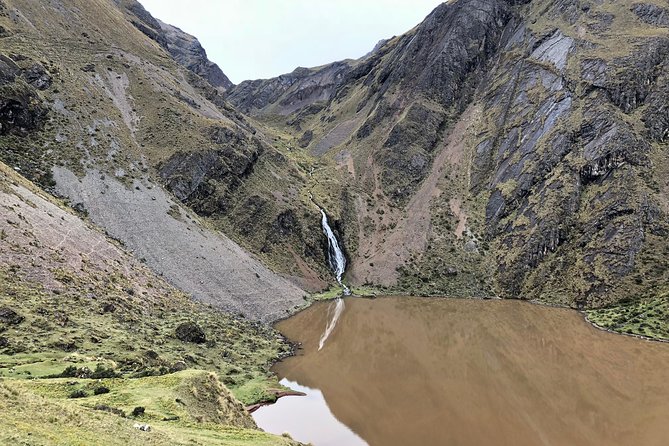
The first walk takes about two hours to a lookout for Perolniyoc waterfall. The waterfall is the first major visual reward, and the lookout gives you a good reason to pause before the more demanding section. Water, cliffs, and mountain views make this a stronger opening than a simple road-side trailhead.
After another 45 minutes, you reach the Inca site of Perolniyoc. It sits on a cliff above the valley, with wide views around the ruins. Your guide explains the site, then you have time to walk around on your own. That combination matters. You get context without being hurried through every stone.
The route then climbs steeply for about an hour to Rayan, at 12,139 feet, for lunch. Food is one of the repeatedly praised parts of the operation, and a cooked lunch at this point is more than a pleasant extra. It gives you a proper pause before the hardest climb of the day.
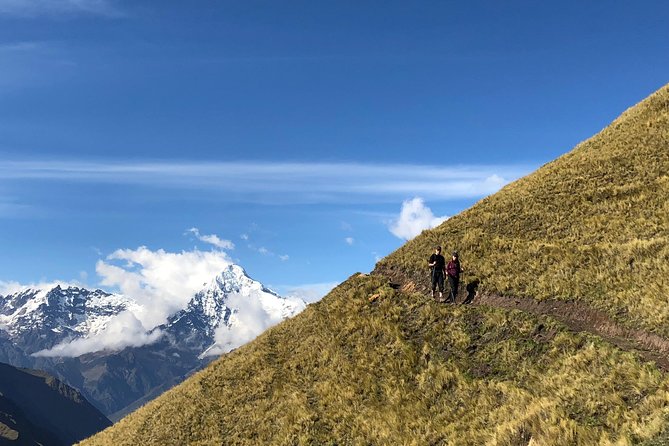
The afternoon is the real test. You climb for about three hours toward Kuychiccasa Pass, at 14,599 feet. The route passes rustic farmhouses, llamas, and views toward snow-capped peaks. The scenery should be excellent, but at this altitude each uphill section can feel slow. You need patience, steady pacing, and warm layers.
At the pass, you stop for views over the Chancachuco Valley. The descent to camp takes about 45 minutes and is easier on the lungs, though tired legs will still notice it. Camp is in Chancachuco Valley at about 14,147 feet. The campsite is prepared before you arrive, allowing you to change into warmer clothing rather than help set up tents after a long day.
That first day is unusually full. The stated walking times add up to roughly eight hours, before breaks and meal stops. The route description does not provide exact mileage or a complete hour-by-hour schedule, so you should treat the timing as an estimate.
Days 2 and 3: Remote mountain walking and camping
The supplied details do not give a full stop-by-stop plan for days two and three. What is clear is that these are camping days on the Ancascocha route, with meals and guide support included. You should ask Action Peru Treks for the final daily distances, elevations, camp locations, and walking times before departure.
That missing detail is worth checking. On a high-altitude trek, the difference between a six-hour walking day and an eight-hour walking day affects how much you pack, how you pace yourself, and how much recovery time you get at camp.
The broader route description promises a changing setting of Inca ruins, traditional Andean villages, mountain scenery, and high peaks. One account also describes moving through jungle, alpine areas, and green fields. These changing zones are part of the appeal: you are not repeating the same view each morning.
Camping equipment is included, and past departures received strong praise for camps being ready when the group arrived. Food also receives repeated approval, with cooks preparing varied meals rather than leaving you to rely on snacks. Still, camping at more than 14,000 feet can be cold. Bring warm clothing, and do not assume that included equipment means you can pack lightly without checking what is supplied.
The group limit is 30 people. That is not a tiny private trek, but it is still more manageable than a large mass departure. The company describes the experience as small-group, and the guide can give more attention than on a very large trip. If your priority is personal pacing or a private itinerary, confirm the actual group size for your date.
Reaching Machu Picchu after the trail
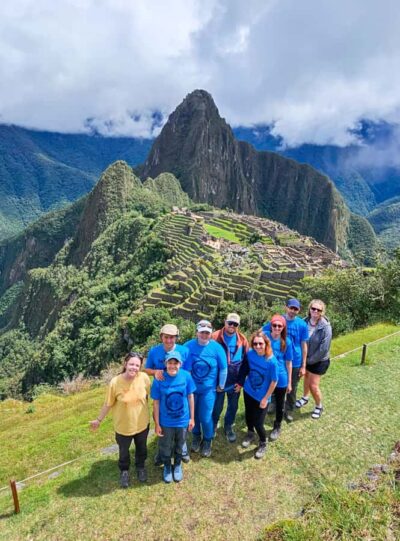
The final reward is Machu Picchu, the UNESCO World Heritage Site and one of the New Seven Wonders of the World. The trip includes a guided visit to the ruins, so you are not simply dropped at the entrance with a ticket and left to figure out the site alone.
That guide matters. Machu Picchu is beautiful at first glance, but the terraces, temples, gateways, and stonework make more sense when someone explains how the site fits into Inca history. You should expect a structured visit rather than unlimited wandering, since entry rules and visiting times can affect how the ruins are seen.
One night at a bed-and-breakfast in Aguas Calientes is included. This is a useful end to a demanding trek. You get a bed, a shower, and a town base instead of having to finish the walk and immediately leave the area.
The round-trip bus from Aguas Calientes to Machu Picchu is not included. Budget for it separately. The information provided also does not clearly state every transfer detail for the final approach, so confirm how the train, walking sections, and Machu Picchu entrance timing fit together before you pay.
More Four-Day Trips around Peru:
- 4 days/3 nights: Inka Jungle Trek to Machu Picchu
★ 4.7 · 25 reviews - Pokhara: 4-Day Ghorepani, Poonhill & Ghandruk Mountain Trek
★ 5.0 · 132 reviews - 4 Day Wild Tasmania Tour / Wildlife, Nature, Hiking / Inc. Accom
★ 5.0 · 126 reviews - 4 Days Poon Hill Trek
★ 5.0 · 94 reviews
Food, staff, and the value of the $730 price
At $730 per person, this is not a bargain-priced day trip, but it covers several costs that quickly add up in Peru. You receive two nights of camping, meals, national park fees, a local guide, hotel pickup and drop-off, camping gear, and one night in Aguas Calientes.
The food is a strong part of the value. Lunch and dinner are described as buffet meals, and the cooks receive some of the most enthusiastic praise in the available feedback. Past groups specifically singled out the cooks and the way meals helped make difficult days more comfortable.
The support team is another reason the price may feel fair. Guides, cooks, and horsemen or mule handlers have been part of past departures. You are paying for the work that happens out of sight: carrying equipment, preparing camp, cooking, and keeping the route organized.
You still need to budget for alcoholic drinks, any food and drinks not specified, excess luggage charges where applicable, and the Machu Picchu bus. The trip does not claim to cover every personal expense, so arrive with cash or another accepted payment method for extras, though the supplied information does not specify payment options.
How difficult is the trek?
The answer is difficult enough to take seriously. The trip requires a strong physical fitness level, and the highest point is 14,599 feet. The first day includes a long uphill section after lunch, followed by camping at more than 14,000 feet.
You should be comfortable with sustained uphill walking and several days on your feet. The details do not provide a medical acclimatization plan, so you should not assume the company will adjust the route for altitude problems. If you are worried about elevation, ask the operator how it handles symptoms and what support is available.
Altitude is the main issue, not technical climbing. Nothing in the supplied information describes ropes, scrambling, or mountaineering equipment. Even so, high elevation can make ordinary walking feel much harder. Children must be accompanied by an adult, and the physical fitness requirement applies to every member of your party.
Pack for changing temperatures. The route moves from waterfall country and green fields to exposed passes and very cold camps. You will want warm clothing for the evenings, comfortable hiking footwear, sun protection, and a small day bag for water and personal items. The operator should confirm the exact packing list and what the camping gear includes.
What makes the experience authentic?
The strongest feature is the contact with ordinary Andean settings. You pass rustic farmhouses, villages, llamas, and working mountain country rather than walking only between major archaeological sites.
The Perolniyoc ruin is especially appealing because it is part of the walk, not the sole purpose of a crowded excursion. You can hear the site explained, then look across the valley and picture how remote the setting must have felt in Inca times.
The trail also provides space for quiet. The Ancascocha route is promoted as an alternative to the busier Inca and Salkantay routes. That does not mean you will be alone, especially with a possible group of 30, but it should feel less pressured than the most famous corridors.
The company’s local staff add another layer. A guide from the area can explain more than dates and names, especially when you are walking past farms, mountains, and village routes. Past departures included guides such as Lino, Lina, Christian, and Eddy, but you should ask who will lead your specific group.
Who should book this trek?
I would recommend it to you if you want a demanding trek with Machu Picchu as the finish, prefer mountain scenery to a famous route, and value having meals and camp logistics handled for you.
It is a good fit for active adults, strong walkers, and families with older children who meet the fitness requirement. It also suits people who like a company with guides, cooks, and support staff rather than a self-guided outing.
I would hesitate if you want a relaxed holiday, dislike camping, struggle with steep climbs, or are mainly interested in the stonework of the Classic Inca Trail. The high pass and high camps are not minor details. They shape the whole trip.
You should also clarify the final transport plan, exact day-by-day itinerary, group size, guide assignment, and included camping equipment before booking. Those questions are especially important because the published details give a strong first-day outline but less information about the middle days.
Cancellation is flexible only up to 24 hours before the start time. Cancel at least 24 hours ahead for a full refund. Cancellations or changes within 24 hours are not refunded or accepted.
My booking verdict
I would book this trek if your priority is a quieter, physically serious route to Machu Picchu with good support and substantial scenery. The waterfall, cliff-top ruin, llamas, snow peaks, and Kuychiccasa Pass give the journey its own identity rather than making it a simple substitute for the Classic Inca Trail.
I would not book it without preparing for altitude or confirming the missing practical details for days two through four. At $730, the included staff, meals, camping, fees, and Aguas Calientes night offer solid value, but the trip earns that price through hard walking. Go for the mountains first, Machu Picchu second, and you are likely choosing the right experience.
FAQ
Where does the Ancascocha trek begin?
The trek begins in Soqma, about 1 hour and 45 minutes from Cusco by vehicle. Soqma sits at approximately 10,512 feet.
How long is the experience?
The trek lasts four days and three nights. It includes two nights of camping and one night at a bed-and-breakfast in Aguas Calientes.
Is hotel pickup included?
Yes. Hotel pickup and drop-off are included.
What is the highest point on the route?
The highest stated point is Kuychiccasa Pass, at approximately 14,599 feet.
Is camping equipment included?
Yes. Camping gear is included, along with two nights of camping.
Are meals included?
Breakfast, lunch, and dinner are included. The meals are described as buffet meals. Food and drinks outside the specified inclusions are not covered.
Is the Machu Picchu bus included?
No. Round-trip bus tickets between Aguas Calientes and Machu Picchu are not included.
Does the tour include a guided visit to Machu Picchu?
Yes. The experience includes a guided tour of the Machu Picchu ruins.
How large can the group be?
The maximum group size is 30 people.
What fitness level is required?
A strong physical fitness level is required. The route includes steep uphill walking and reaches very high altitude.
Can children join the trek?
Yes, but children must be accompanied by an adult.
Are service animals allowed?
Yes. Service animals are allowed.
Can I cancel for a full refund?
Yes, if you cancel at least 24 hours before the experience start time. Cancellations within 24 hours are not refunded, and changes within 24 hours are not accepted.
Recently reviewed hikes in Peru
- Arequipa: 2-day Colca Canyon Trekking, Ending in Puno★ 4.8 · 8 reviews
- Ancash: Trekking to Paron Lagoon with Entrance | Full day|★ 4.1 · 9 reviews
- 4-hour excursion: Sillar Route with Hiking in Culebrillas★ 4.0 · 21 reviews
- 4 days/3 nights: Inka Jungle Trek to Machu Picchu★ 4.7 · 25 reviews
- Choquequirao Trek 4 days and 3 nights★ 5.0 · 81 reviews
- Machu Picchu: 5-Day Salkantay Trek with Panoramic Train★ 5.0 · 79 reviews
- Full-Day Trek to Humantay Lake from Cusco with Guide★ 4.5 · 66 reviews
- Humantay Lake Full Day Hike★ 5.0 · 75 reviews
Machu Picchu & Inca Trail Treks, compared.
Machu Picchu: 5-Day Salkantay Trek with Panoramic Train
Read our review →
4 days/3 nights: Inka Jungle Trek to Machu Picchu
Read our review →Other lists this hike appears in