Review · JORDAN
Dana to Petra Trek + Wadi Rum & the Dead Sea – 9 Days
Jordan’s best walking route is not a city tour or a quick photo stop. It is the long way from Dana Nature Reserve to Petra, across bare mountains, deep valleys, shepherd paths, and red sandstone. You sleep in simple camps, eat meals prepared along the way, and reach Petra by a route that avoids the usual entrance crowds.
I like two things right away: the group size is capped at 14, and luggage is moved by pickup truck while you hike with only what you need. I also like the finish, which gives your legs a proper reward: a 4×4 outing in Wadi Rum followed by time to float in the Dead Sea.
The main caution is simple: this is a serious trek, not a gentle sightseeing holiday. Daily walks cover 15 to 17.1 kilometers, with up to 920 meters of descent and 750 meters of ascent. You need strong fitness, comfort with rough trails, and a willingness to camp in remote places.
Key points to know before booking
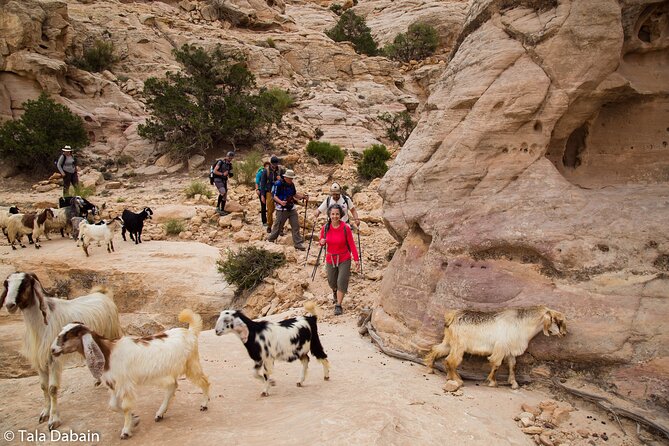
- The trek uses a back route into Petra: You approach the Monastery from Wadi Ghurab, then continue into the ancient city by a Nabataean route.
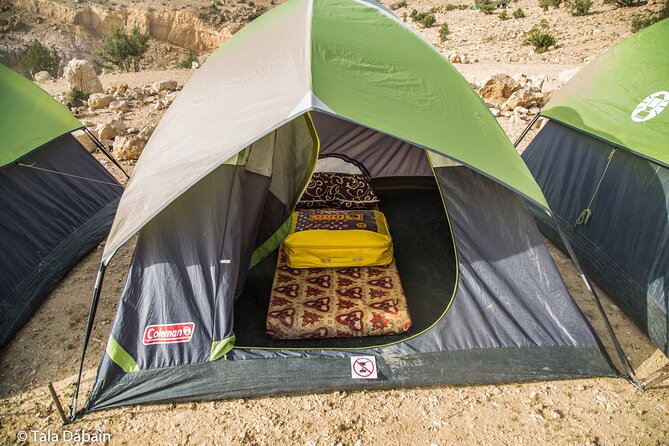
- Four nights are spent in wilderness camps: Mansoura, Furon, Ghbour Whedat, and the Little Petra area provide a much more basic stay than a hotel.
- Daily walking is demanding: The longest stated day is 17.1 kilometers, with steep climbs, descents, narrow trails, and uneven ground.
- Your main bag travels separately: Luggage transfers by pickup truck mean your walking pack can stay light.
- The group is small: A maximum of 14 people allows the guide to keep an eye on the pace and offer hands-on help.
- The finish changes the rhythm: Wadi Rum adds a jeep safari and desert camp, while the Dead Sea provides a low-key final day.
Why this Dana to Petra route is special
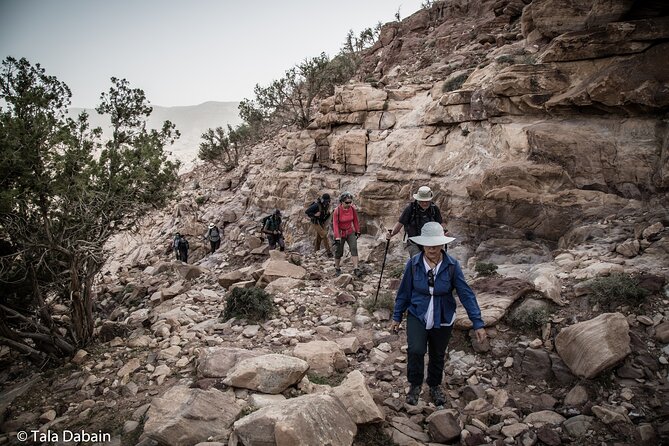
Most first visits to Petra begin at the famous Siq, the narrow passage that leads to the Treasury. This trip takes a different approach. You walk into Petra from the south and reach the Monastery first, using an old Nabataean route that runs through the mountains.
That approach matters because Petra feels less like a single monument and more like a vast mountain city. You see the stone walls, cliffs, water channels, and carved spaces in the setting that made the site possible. The route also gives you a sense of arrival. After several days on foot, the sudden view of the Monastery has real force.
The Dana section adds another layer. Dana Biosphere Reserve contains four ecological zones, so the scenery changes as you descend. The walk begins high above Dana Valley, then drops into Al Khashasha Valley. You move from mountain views to dry valleys and desert edges rather than seeing the same type of terrain all day.
I also value the human scale of the trip. The guide, local hiking support, camp team, drivers, and Bedouin hosts all have clear roles. A local hiking guide travels with a donkey on days two through four as a safety measure, and luggage moves by pickup truck. You are not carrying a full expedition load, but you are still walking through places where support matters.
More hikes and treks around the world:
- From Marrakech: Ouzoud Waterfalls Guided Hike and Boat Trip
★ 4.7 · 33,630 reviews - Berber villages : Atlas Mountains Day Hike from Marrakech
★ 5.0 · 14,007 reviews - Bali: Sunrise Mount Batur Guided Hike with Breakfast
★ 4.8 · 9,660 reviews
Day 1 in Amman: a soft landing
The first day is deliberately light. You arrive in Amman, check into your hotel, and have time to settle in. Depending on your flight, you may also have time to explore downtown Amman, known locally as Al Balad.
This is useful planning. You do not begin a demanding hike immediately after landing. You can eat Jordanian food, sleep in a proper bed, and meet the group before the early start. Amman is an old city with Bronze Age roots, but it is also a modern capital, so this opening day gives you a quick taste of both sides.
The first pickup is scheduled for about 7:30 a.m. after breakfast on day two. The stated meeting start time is 7:00 a.m., so confirm the exact pickup details before setting your alarm.
Days 2 and 3: Dana’s valleys and the first wilderness camps
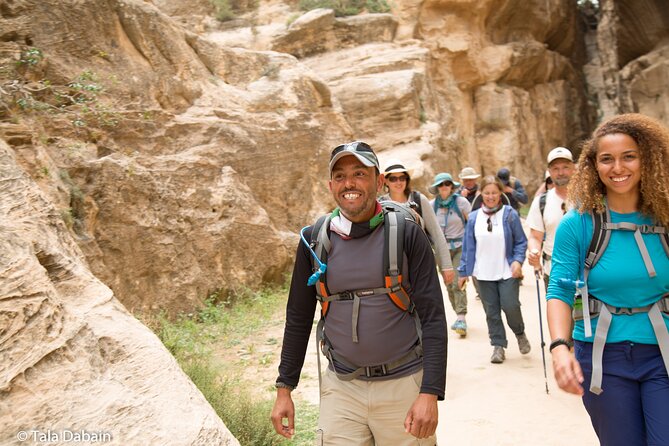
The drive from Amman to the trailhead takes about two and a half hours. That transfer is not wasted time. You can rest, get acquainted with the group, or watch Jordan change outside the window.
The first walk covers about 15 kilometers and takes five to seven hours. You follow mountain trails above Dana Valley before descending into Al Khashasha Valley. The figures tell you what to expect: about 260 meters of ascent and 690 meters of descent. The downhill work may sound easier, but long descents can be tough on knees and feet.
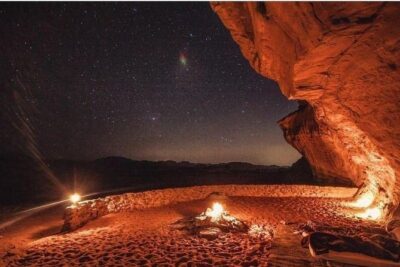
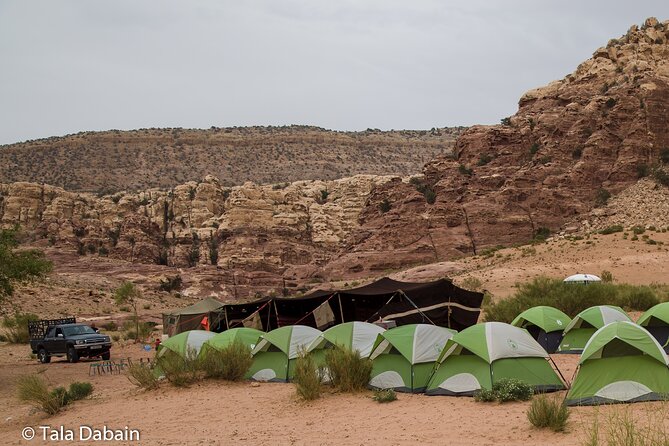
The camp at Mansoura is on the edge of the valley and is described as wilderness camping. Expect a basic night rather than hotel comfort. Your reward is a quiet setting and a proper break from towns, traffic, and bright city lights.
Day three starts early and heads toward Furon. The route climbs through the mountains for about an hour before opening to views of the Sharah Mountains and the wide Wadi Araba Desert. At 16 kilometers, with 563 meters of ascent and 170 meters of descent, this is a more uphill-focused day.
The Furon camp gives you time to sit with tea and look out over the desert before dinner. That pause is part of the appeal. The trip is not only about reaching the next site. It gives you evenings in places where the view is the entertainment.
Day 4: the hardest and wildest walking
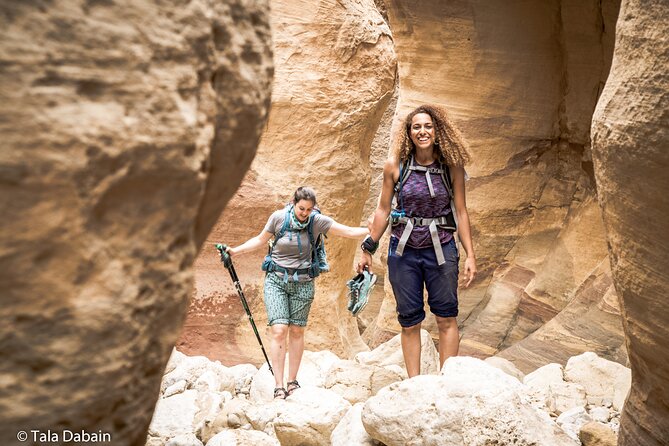
The fourth day runs past Ras Al-Feid toward Ghbour Whedat. The route uses small, connected Bedouin shepherd paths while contouring the Sharah Mountains. You should expect rough footing, exposed mountain sections, and drops into canyons.
The numbers make this a demanding day: 17.1 kilometers, 750 meters of ascent, and 920 meters of descent. The total climbing and descending is more important than the distance alone. You will want sturdy footwear, walking poles if you use them, and enough water capacity for a long day outdoors.
The scenery becomes more unusual as you go. Black, rugged peaks rise above the route, then the terrain gradually softens near camp, where mushroom-shaped rock formations appear. This is one of the days when the trek earns its place as the central part of the trip.
The remote setting also explains the support system. A local hiking guide and donkey accompany the group during this section, and the main guide keeps the group moving together. Guides named in past departures include Motaz Zghoul and Mutaz Jarrar. The actual guide can vary, but the qualities you should expect are route knowledge, pace management, and practical care when someone needs help.
Same mountains, a different route up:
- Bali: Mount Batur Sunrise Guided Hike and Natural Hot Spring
★ 4.8 · 9,284 reviews - Cinque Terre Day Trip with Optional Hiking or Pisa
★ 5.0 · 8,486 reviews - From Marrakech: Atlas Mountains Full-Day Hiking Trip w Lunch
★ 4.8 · 7,417 reviews - Marrakech: Ourika Valley Trip with Waterfall Hike
★ 4.6 · 6,792 reviews
Day 5: approaching Little Petra
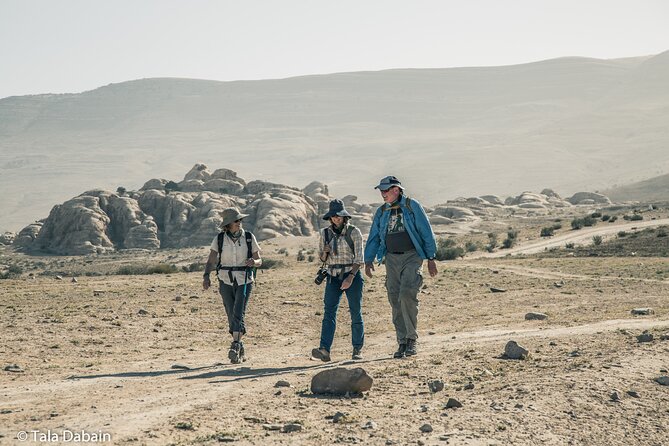
After the most remote walking, the route begins to show more signs of settlement. You pass Bedouin camps, sheep pens, and small agricultural plots. These details help you understand how people use this dry country today, not just how ancient cultures used it centuries ago.
You also encounter early Nabataean remains, including wine and olive presses, aqueducts, and other water systems. In Jordan, water is never a minor detail. These structures show how the Nabataeans supported farming, trade, and settlement in a difficult climate.
The route then climbs through a canyon lined with soft sandstone. A steep flight of stairs leads down into Little Petra, also called Siq al-Barid, or the Cold Canyon. Archaeologists believe it served as a kind of outer settlement or suburb of Petra.
Little Petra is smaller than the main archaeological site, but that is part of its value. It gives you a quieter introduction to Nabataean stone carving and canyon architecture before the larger experience the next day. The published schedule is less specific about the day’s distance and elevation than the earlier stages, so ask the operator for the current route details if you want to plan around exact mileage.
Day 6: entering Petra through the Back Door
This is the trip’s great payoff. After breakfast, you walk through Wadi Ghurab among sandstone mountains and follow a Nabataean route toward Petra. The trail runs along a natural rock terrace that was improved to make walking safer.
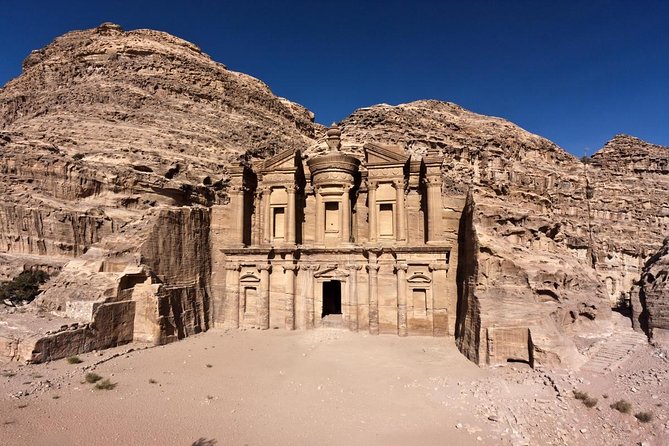
The path narrows in places before reaching a high plateau above Wadi Siyyagh. Then the Monastery appears in the cliff face. The view is powerful because it arrives after a sustained walk through empty mountain country, not after a short ride and a crowded approach.
A Bedouin café near the Monastery offers a place to stop for refreshments. Nabataean steps then lead onward into Petra. The route avoids much of the traffic associated with the standard entrance, but it is not effortless. Steps, uneven surfaces, heat, and exposure remain part of the day.
The description gives this day about 12 hours of activity, although actual walking time can vary with the group and stops. Treat it as a full day outdoors. Carry sun protection, water, and a small snack, even though meals and support are included.
Day 7: from Petra to Wadi Rum
After breakfast, the group leaves Petra for Wadi Rum. The change is dramatic. The mountain city gives way to wide desert, sandstone formations, narrow gorges, and open valleys.
A Bedouin 4×4 takes you into the desert for a jeep safari. You can see ancient rock inscriptions, climb sand dunes, explore rock bridges, and walk or scramble at your own pace. This is not another long trekking day, so it gives your legs a break while keeping the trip active.
The timing also works well. You can watch the sunset before returning to camp for dinner and tea. The night is spent at a Bedouin camp under the desert sky. Accommodation here is still part of the outdoor experience, so do not expect the same setup as your Amman hotel.
I like this extension because it prevents the Dana to Petra walk from feeling like the entire purpose of the holiday. You get a second major setting, a different way to move through it, and a chance to meet Bedouin hosts. If your priority is only ancient sites, the jeep outing may feel like an add-on. If you want a broader view of southern Jordan, it is well chosen.
Day 8: the Dead Sea as a recovery day
The final full day heads to the Dead Sea, the lowest point on earth. After several days of walking, the change of pace is welcome. You can float in the salty water, try the mineral-rich mud, use the pool, or book spa treatments.
The Dead Sea is not a substitute for the trek, and it is not an extended sightseeing day. It is a recovery stop. Give yourself time to sit, rest, and enjoy the contrast between the desert and the water before the bus returns to Amman in the late afternoon.
Because the salt and mud can irritate cuts or sore skin, you should be sensible about how long you stay in the water. The supplied plan does not promise a specific resort or spa treatment, so check what is included at your departure date if those details matter to you.
You spend the final night at a hotel in Amman. That return to a proper room is well timed after four wilderness camps and a full week of movement.
Accommodation, meals, and what you carry
Eight nights are included. The exact accommodation mix includes a hotel in Amman, wilderness camps during the trek, a Bedouin camp in Wadi Rum, and a hotel in Amman at the end.
The camping is a central part of the experience, not a minor detail. You should be comfortable with simple facilities and changing conditions. Ask in advance about bedding, showers, electrical outlets, and the exact camp setup, since those details are not specified.
Breakfast is included on all eight mornings. Lunch is included on seven days, and dinner is included on six. That covers most of the route, but personal snacks and drinks outside the provided meals are your responsibility.
Luggage transfers by pickup truck are included. I would still pack a small, practical walking bag with water, sun protection, a warm layer, rain protection if needed, personal medication, and anything you need during the day. Keep your main bag organized so the transfer team can handle it easily.
What the $1,595 price really covers
At $1,595 per person, the price is not just paying for a guide and a few transfers. It includes eight nights of accommodation, transportation throughout the route, meals listed above, luggage transfers, an English-speaking licensed guide from days two through eight, local hiking support, the Wadi Rum jeep outing, and the Dead Sea stop.
That is a solid package for a nine-day trip with several remote camping nights. The value is strongest if you want one company to coordinate transport, food, camps, route support, and the transition between Dana, Petra, Wadi Rum, the Dead Sea, and Amman.
The price does not include the Jordan Pass, visa and entrance fees, flights, airport transfers, insurance, tips, personal expenses, or hiking gear. Budget for these separately. The Jordan Pass is especially important to check before booking, since it covers visa and attraction arrangements depending on your eligibility and chosen option.
Who should book this trek
You should consider it if you want:
- Several consecutive days of walking rather than short hikes
- A small group with a maximum of 14 people
- Remote camps and simple outdoor living
- Petra by a less-used approach
- A guide and support team rather than a self-guided route
- Wadi Rum and the Dead Sea added to the same Jordan trip
I would not choose it if you want daily hotel comfort, flexible late starts, or only light walking. The route demands good physical fitness, and the long descents may be harder than the distance suggests.
Solo travelers can also fit well into this format. The small group gives you company without the scale of a large coach tour. Past departures have included solo participants, and the guide’s role in keeping people together while allowing reasonable space matters on a route this long.
Booking, cancellations, and practical checks
Confirmation is sent within 48 hours, subject to availability. The experience can be canceled if the minimum group size is not reached or if weather makes the route unsafe. In either case, you are offered another date or experience, or a full refund.
For your own cancellation, a full refund requires cancellation at least six full days before the start time. Cancellation two to six full days ahead receives a 50 percent refund. Less than two full days means no refund. Cutoff times use Jordan’s local time.
Before paying, I would confirm the exact hotel names, camping facilities, baggage limits, daily water arrangements, current guide, and Jordan Pass advice. Those details can make a real difference to comfort and preparation.
Should you book the Dana to Petra trek?
Book it if you want Jordan by foot, not just from a vehicle window. The route combines Dana’s changing terrain, remote Bedouin paths, Little Petra, Petra’s Monastery, Wadi Rum, and the Dead Sea in a tidy nine-day plan.
Skip it if you are not ready for long hiking days and basic camps. For fit walkers who value quiet routes, good local support, and a small group, this is a strong way to see southern Jordan. The best reason to choose it is not simply that it reaches Petra. It gives you time to earn the arrival.
FAQ
How long is the tour?
The experience lasts approximately nine days, including arrival and departure time in Amman.
Where does the tour start and end?
It starts in Amman, Jordan, and ends back at the meeting point in Amman.
What time does the tour start?
The listed start time is 7:00 a.m. The day two pickup is described as taking place at about 7:30 a.m. after breakfast, so confirm the exact meeting time before departure.
How many people can join the group?
The group has a maximum of 14 travelers.
How fit do I need to be?
You should have a strong physical fitness level. Walking days range from about 15 to 17.1 kilometers, with substantial ascents and descents.
Is a guide included?
Yes. An English-speaking licensed guide is included from days two through eight. A local hiking guide with a donkey is also included for safety on days two through four.
Is luggage transportation included?
Yes. Luggage transfers by pickup truck are included.
How many nights are included?
Eight nights of accommodation are included, covering hotels in Amman, wilderness camping, and a Bedouin camp in Wadi Rum.
Are meals included?
Yes. The package includes eight breakfasts, seven lunches, and six dinners.
Are entrance fees and the Jordan Pass included?
No. The Jordan Pass, visa and entrance fees, airport transfers, airfare, travel insurance, tips, personal expenses, and hiking gear are not included.
What happens if bad weather cancels the tour?
If poor weather causes cancellation, you are offered a different date or a full refund.
What is the cancellation policy?
You can receive a full refund by canceling at least six full days before the start time. A cancellation two to six full days ahead receives a 50 percent refund. Cancellations less than two full days before the start time are not refunded.
Recently reviewed hikes in the world
- Asheville: Yoga on a Mountain Hike★ 4.7 · 7 reviews
- Arequipa: 2-day Colca Canyon Trekking, Ending in Puno★ 4.8 · 8 reviews
- Arctic hike on Kvaløya Island with drinks and snacks★ 5.0 · 8 reviews
- Arctic Wilderness Hike from Rovaniemi (Day & Evening)★ 4.7 · 12 reviews
- Antelope Valley: Ligai Si Anii Canyon Hiking Tour★ 4.9 · 13 reviews
- Antigua: 2-Day Acatenango Volcano Hike w/Local Guide & Meals★ 4.3 · 43 reviews
- Delphi: Easy Hike on Ancient Path through the Olive Groves★ 5.0 · 9 reviews
- Antalya: Hiking in Termessos Ancient City★ 5.0 · 152 reviews
Jordan Hiking Tours, compared.
From Amman: Wadi Mujib Siq Trail Private Hiking Tour
Read our review →