Review · MARRAKECH
From Marrakech: Atlas Mountains 4-Day Hike with Hotels
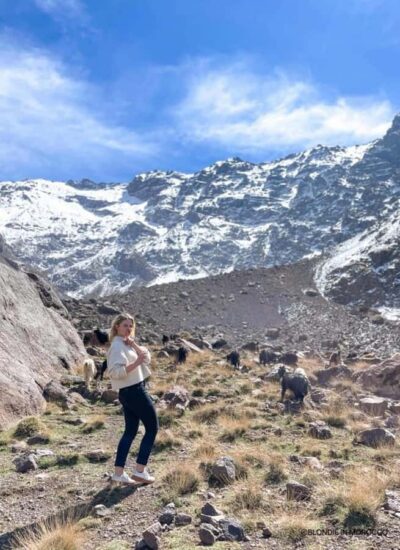
The best part of this four-day Atlas Mountains trek is its steady change of scenery. You move from green valleys and walnut groves to oak woods, juniper forests, red mountain slopes, and remote Amazigh villages, rather than simply hiking one trail and turning back.
I like the small-group format, limited to 10 people, and the way the mule carries luggage and kitchen supplies. I also like the human side: guides such as Mostafa, Houssain, and Mohamed are praised for adjusting the pace, explaining village life, and keeping hikers comfortable. The main caution is simple: this is a real mountain trek, not a gentle sightseeing walk. The guesthouses are basic, evenings can be cold, and loose rock can make some descents slippery.
Key points to know before you book
- Three valleys, four mountain days: Walk through the Imnane, Azzaden, and Imlil valleys, with a different setting almost every day.
- About 5 hours of hiking daily: Expect repeated climbs and descents, including passes at roughly 2,300 and 2,500 meters.
- A mule carries your main luggage: You hike with a lighter day bag while the support team moves supplies between villages.
- Local guesthouses, not polished hotels: Rooms are welcoming and often supplied with plenty of blankets, but comfort is basic.
- Meals are a major strength: A cook prepares generous Moroccan meals, including lunches served outdoors near mountain passes.
- Good for active families and confident beginners: The route is non-technical, but you need reasonable fitness, proper shoes, and warm layers.
What the four-day Atlas trek is really like
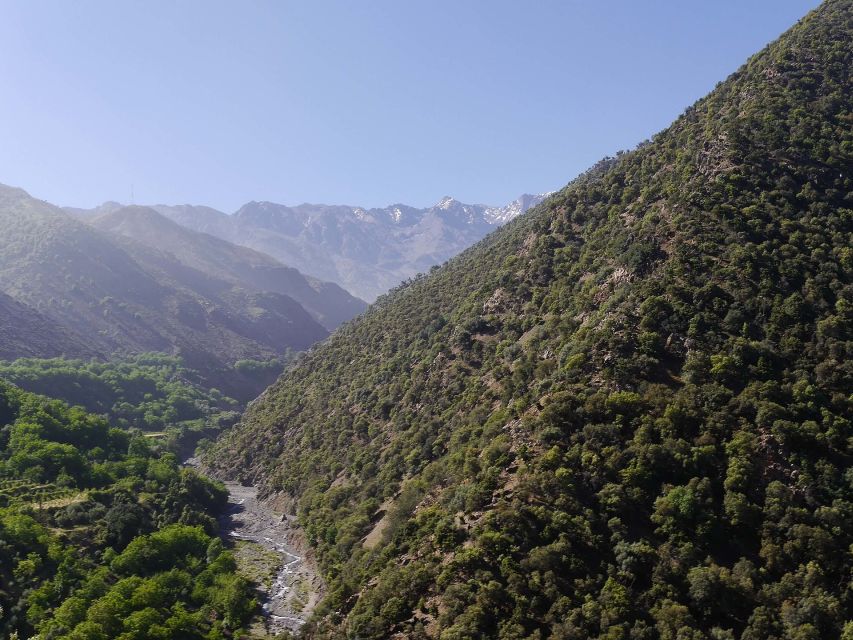
This trip gives you a close look at the High Atlas without asking you to climb Mount Toubkal. You cross mountain passes, follow old paths between villages, and sleep in places that are difficult to reach by road.
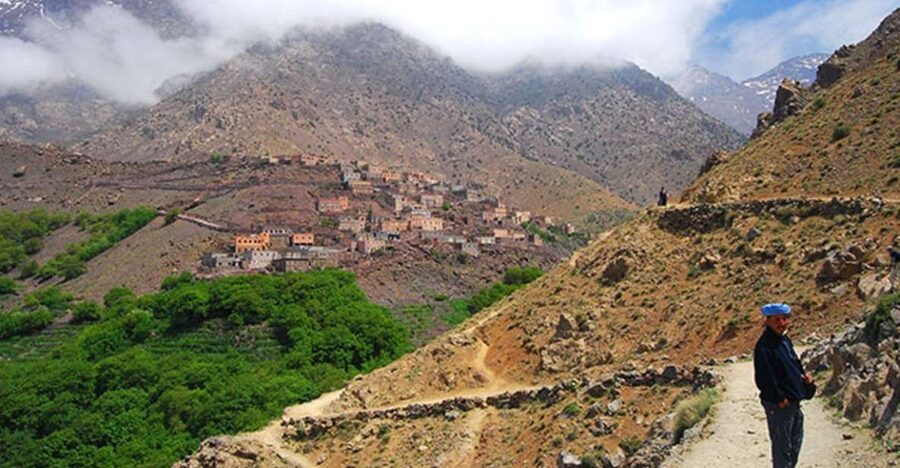
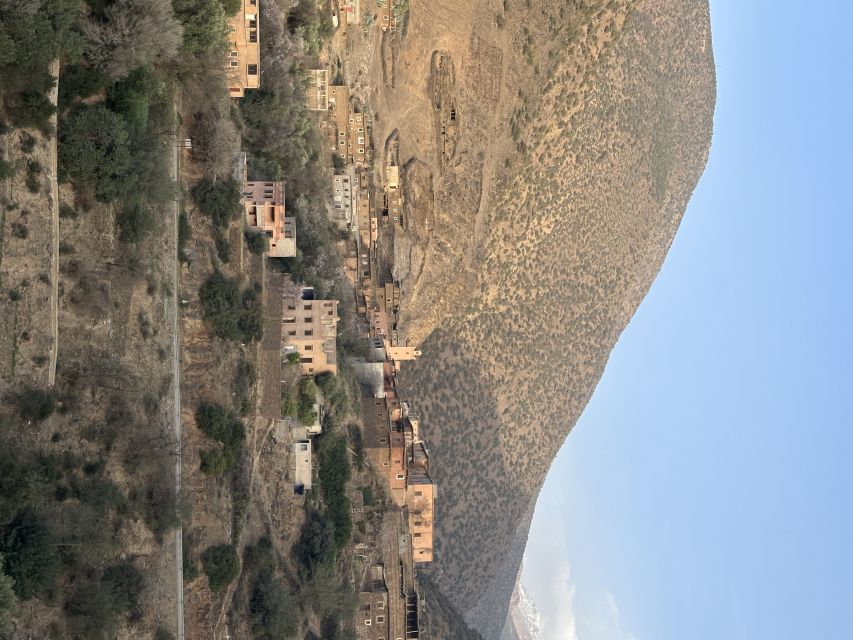
The route covers three green valleys and several Berber, or Amazigh, communities. You’ll see terraced plots of corn and barley, walnut and cherry trees, herds on the hillsides, and houses scattered along steep valley walls. The guide adds the part you cannot get from scenery alone: how farming and herding shape daily life, how the villages connect, and what you are seeing along the trail.
The hiking days generally last about five hours. Some reports describe the full route as close to 50 kilometers, with four passes near 2,000 meters. That distance is manageable for an active person, but the repeated up-and-down pattern can tire your legs more than one long climb.
You do not need technical mountaineering skills for the planned route. You do need to walk on uneven ground for several hours, handle moderate altitude, and stay comfortable with simple accommodation. In winter, snow and alpine conditions can alter the route, so your guide may choose a safer or more suitable path.
More Guided Day Hikes in Marrakech
- From Marrakech: Ouzoud Waterfalls Guided Hike and Boat Trip
★ 4.7 · 33,630 reviews - From Marrakech: Atlas Mountains Full-Day Hiking Trip w Lunch
★ 4.8 · 7,417 reviews - Marrakech: ourika valley lunch & guided hike to waterfalls
★ 4.9 · 3,737 reviews
Day 1: Imlil to Tachdirt over Tizi N’tamater
Your Marrakech pickup takes you toward the Imlil area, the main starting point for this mountain circuit. If your riad sits on a road that cars cannot reach, the operator contacts you by WhatsApp or email to confirm a meeting point.
The first day usually runs five to six hours. From Imlil, you head toward the Imnane Valley and climb to Tizi N’tamater at about 2,300 meters. This is your first clear taste of the route: mountain air, broad views, and village paths that quickly feel far removed from Marrakech.
Lunch is prepared on the trail by the local cook. That detail matters. You are not stopping at a café or relying on snacks from town. A fresh, three-course meal appears near the pass, which gives you time to rest before the descent toward Tachdirt.
Tachdirt is your first overnight village. The guesthouse is basic, but the setting is the point. You sleep in a working mountain community rather than returning to a city hotel each evening. Bring warm clothing, even if Marrakech felt hot when you left.
Day 2: Following the Imnane Valley to Imi Oughlad
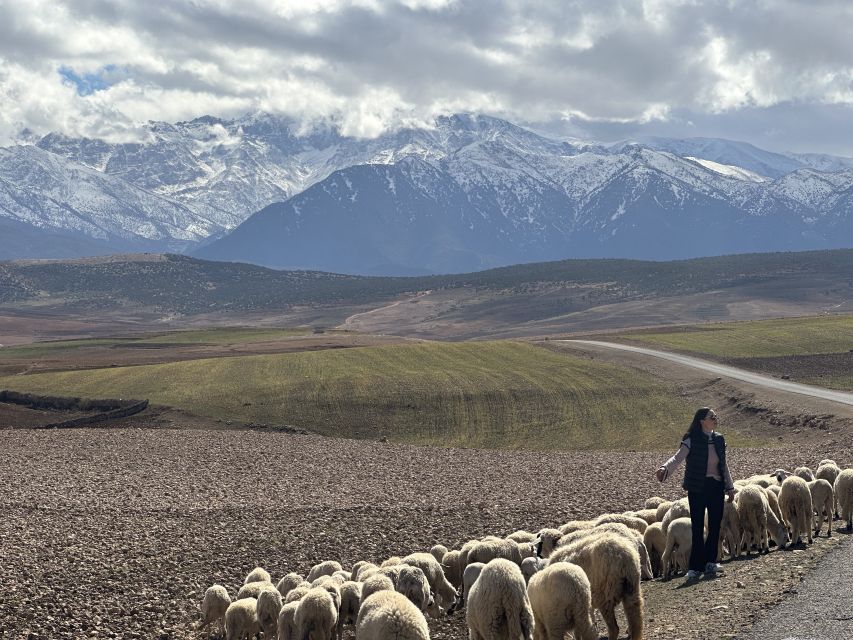
After breakfast, you continue through the Imnane Valley toward Imi Oughlad. The route passes several Amazigh villages, giving you a close view of terraced fields, small hamlets, and the narrow paths linking homes and farms.
This is a particularly good day for asking questions. The guide can explain the customs, farming practices, and local history that you would miss if you walked alone. English, French, and Arabic are available, though the exact language depends on the guide assigned to your group.
The day takes about five hours. It is not just a march from point A to point B. The interest comes from the gradual change in the valley and the chance to watch ordinary village life at walking speed.
You spend the night in a local guesthouse in Imi Oughlad. You may be invited to help the cook prepare dinner. That is a small but worthwhile part of the trip, especially if you want contact with the people running the mountain operation rather than a standard hotel routine.
Be respectful in the villages. Clothing that covers your knees and shoulders is a sensible choice, particularly in remote communities. It is practical, polite, and more comfortable when the weather turns cool.
Day 3: The red Azzaden Valley and Tizi n’Lbour
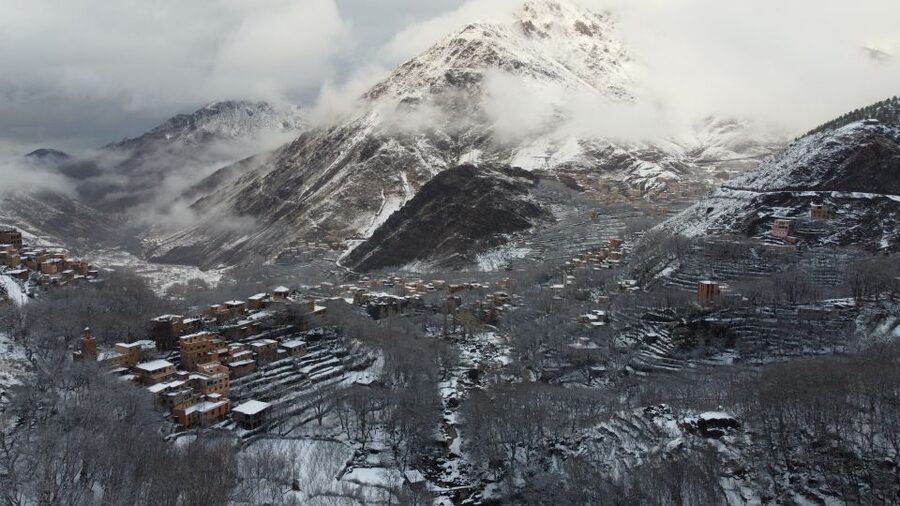
The third day brings a change in color and mood. You leave Imi Oughlad and head toward Tizi Oussem in the Azzaden Valley, often called the red valley. The scenery feels different from the greener Imnane side, which is one reason the four-day route offers more variety than a short out-and-back hike.
The trail passes through an oak park before climbing toward Tizi n’Lbour. Lunch is served outdoors, usually in the quiet of the mountain rather than inside a restaurant. After eating, you follow a dirt road toward the guesthouse in Tizi Oussem.
This day takes about five hours, with another sustained climb and descent. The route is not technically difficult, but the ground can be uneven. Good grip matters more than expensive hiking equipment. Several people found loose stones and slippery sections worth taking seriously.
At Tizi Oussem, you can pay an extra €4 for a Berber hammam. Tell your guide in advance if you want to try it. This is optional, and it is not a luxury spa treatment. Think of it as a local bathing tradition and a chance to warm up after a day outside.
The guesthouse can be rustic, but the welcome and the views are part of the appeal. You may get plentiful blankets, yet you should still bring thermal layers. Winter nights in the mountains are cold, and not every guesthouse supplies towels, so pack a small one.
More Guided Day Hikes in Morocco
- From Marrakesh: Atlas Mountains Talamrout Summit Day Hike
★ 4.9 · 835 reviews - Marrakech: Tedli Summit Atlas Mountains Day Hike & Lunch
★ 4.9 · 668 reviews - Berber villages : Atlas Mountains Day Hike from Marrakech
★ 5.0 · 14,007 reviews - Ouzoud Waterfalls Guided Hike and Boat Trip from Marrakech
★ 4.5 · 1,755 reviews
Day 4: Juniper forest, Tizi Mezik, and the return to Marrakech
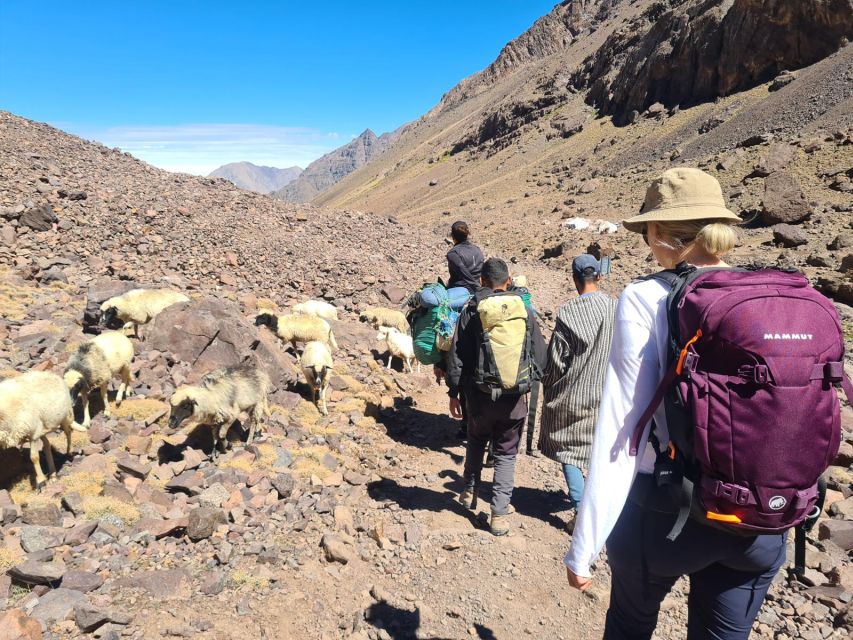
The final day follows the route back toward Imlil. The trail passes through a wide juniper forest, with opportunities to see local people moving with their herds. The setting feels wilder than the village sections, but the route still connects back to daily mountain life.
This is described as the most challenging day in a few parts. Your guide should keep an eye on footing, pace, and comfort, but you still need to take responsibility for each step. Loose rock is easier to manage when your shoes have firm soles and a good tread.
Lunch is served at Tizi Mezik, around 2,500 meters. It is a fitting final mountain meal, with a high pass, open views, and the satisfaction of having crossed the valleys on foot. After lunch, you walk downhill to the end point before the transfer back to Marrakech.
The return drive is included, along with pickup at the start. Exact timing can vary with weather and trail conditions. In snowy or especially difficult conditions, the guide may change the planned route for safety.
Food, guesthouses, and the mule support
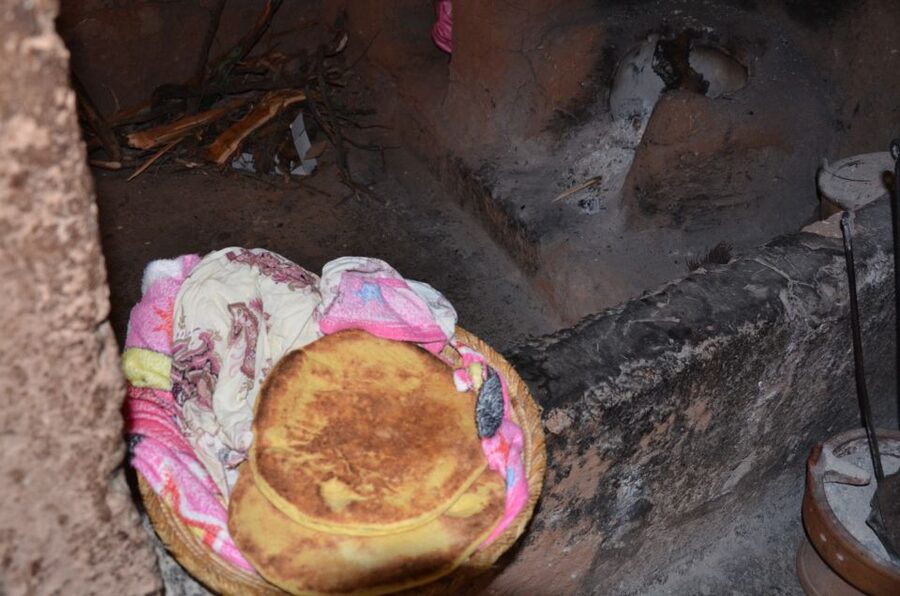
The cooking receives some of the strongest praise connected with this trip. The cook travels with the mule and prepares breakfast, trail lunches, and dinners. Meals are described as fresh, generous, and varied, which is welcome after five hours of mountain walking.
Tea is a regular comfort, often served with mint or wild thyme. The cook may also prepare lunch near a pass, so your midday break becomes part of the experience rather than a rushed snack stop.
Your main luggage is carried by mule, along with cooking supplies. You will still need a daypack for water, layers, sunscreen, and personal items, but you should not have to carry all your belongings over the passes.
Accommodation is in village guesthouses. Standards vary from rustic to quite pleasant. Rooms may have several blankets, but heating, towels, and hot water should not be assumed. The remote setting is a major benefit, yet it comes with fewer comforts than a Marrakech hotel.
If you need polished rooms, private facilities, or predictable heating, this is not the right trip. If you can accept simple lodging in exchange for quiet villages and mountain views, the tradeoff is worthwhile.
How hard is the hiking?
The route is best described as moderate mountain hiking with some demanding sections. Daily walking is around five hours, but the effort comes from climbing a pass, descending, then climbing again on another day.
You do not need to summit Toubkal, and the planned route is non-technical. Still, several strong ratings came with a clear warning: the hike is hard if you are very unfit. Beginners with some walking experience may manage it, especially when the guide slows the pace or adjusts the route.
The guide’s flexibility is important. Houssain, Mostafa, Mohammed, and other guides have been praised for checking comfort, explaining the route, and offering easier or harder options when conditions allow. That does not remove the need for fitness, but it makes the trip more adaptable than a rigid group hike.
Wear proper hiking shoes, not smooth-soled trainers. Bring warm clothes for the evenings and higher passes, even in warmer months. A walking stick is not included, so bring one if you normally use it. Mountain gear, warm clothing, footwear, and tips are your responsibility.
Pregnant people and wheelchair users should not book this activity. Check the weather before reserving, since rain, snow, or ice can change the character of the trail.
The guide makes the difference
A good guide is especially valuable here because the route is not only about reaching the next village. Paths can be remote, local communication may be difficult, and the cultural details are easy to miss without someone from the area.
The operation has used guides including Mostafa, Houssain, Mohamed, Kamal, Hassan, Hamid, and Ibrahim at different times. Mostafa is noted for patience and clear communication. Houssain is praised for his warmth, humor, and explanations of Amazigh culture. Mohamed Bewajamor is credited with using older village routes and adapting the pace to the group.
You should not assume you will receive a particular guide unless the operator confirms it. What you can reasonably expect is a local guide speaking Arabic, English, or French, plus a muleteer and cook supporting the route.
The small-group limit of 10 is a real advantage. It keeps the pace easier to manage and gives you more time to ask questions. In quiet periods, the group may be much smaller, even just two people, though that depends on bookings.
Is $176 good value?
At $176 per person, the price covers four days of guiding, Marrakech pickup and drop-off, three nights of accommodation, all meals, a mule for luggage, and the support team. That is strong value if you plan to hike the Atlas independently but would otherwise need to arrange transport, food, lodging, and route finding yourself.
The price also covers access to village paths and overnight stops that are not simple to organize on your own. You are paying for the system around the hike, not only for a person walking ahead of you.
Budget for items not included: hiking shoes, warm clothes, walking sticks, and tips. The optional hammam costs €4 extra. You may also want a towel and a lightweight sleeping bag, particularly for winter. One winter hiker found a sleeping bag useful during very cold nights.
There is one practical point to clarify before departure: ask exactly where your luggage will be transported and whether any extra hotel night is included. A past booking involved confusion over those details, so a quick written confirmation can prevent trouble.
Who should book this four-day route?
I would choose this trip if you want an active introduction to the Atlas Mountains, enjoy rural communities, and prefer local guesthouses to resort-style accommodation. It suits families with older children who can handle long walking days, couples, friends, and solo hikers comfortable joining a small group.
It is also a good option if you want a fuller circuit instead of a one-day excursion from Marrakech. Four days gives you time for three valleys, changing scenery, village nights, and unhurried conversations with the guide.
I would choose a shorter hike if you have limited fitness, dislike repeated climbs, or want more time in Marrakech. I would also reconsider if you need private hotel-standard rooms, reliable heating, or a fixed route regardless of weather.
The route does not focus on summiting Toubkal. If your main goal is a high peak, ask about a Toubkal itinerary instead. If your goal is to understand how people live in the valleys while walking through the mountains, this route is the better match.
Should you book it?
Book this trek if you want real mountain walking with local support, not a sightseeing tour with a few easy trails added on. The food, guide care, mule support, changing scenery, and village stays give the trip more substance than its low price suggests.
Go prepared for cold nights, basic guesthouses, loose rock, and five-hour walking days. Pack shoes with grip, warm layers, a towel, and possibly a light sleeping bag. With those basics covered, the four-day route offers a rewarding way to see the Atlas Mountains at a human pace.
FAQ
How long does the hiking last each day?
The planned hiking days last about five hours, with the first day listed at five to six hours.
How many people can join the group?
The activity uses small groups limited to 10 participants. In quieter periods, the group may be smaller.
What languages does the guide speak?
Guides are available in Arabic, English, and French.
Is luggage carried during the hike?
Yes. A mule transports luggage and cooking supplies, so you can hike with a lighter daypack.
Where do you sleep?
You spend the nights in local guesthouses in mountain villages, including Tachdirt, Imi Oughlad, and Tizi Oussem. Accommodation is basic and blankets are available, but towels and consistent heating should not be assumed.
Are meals included?
Yes. All meals are included, with a local cook preparing breakfast, lunches, and dinners. Trail lunches may be served near mountain passes.
What should you bring?
Bring a passport, comfortable clothing, warm layers, hiking shoes, and comfortable shoes. A walking stick, towel, and lightweight sleeping bag may also be useful, but mountain gear is not included.
More Mountain and Summit Hikes in Morocco
- From Marrakech: 3-Day Mount Toubkal Climbing Trek
★ 4.7 · 597 reviews - From Marrakesh: 2-Day Mount Toubkal Trek
★ 4.7 · 591 reviews - 2 Days Mount Toubkal ascent trek via Ait Mizane Valley
★ 4.3 · 45 reviews - 2 Days Desert Agafay and Atlas Mountains Trek From Marrakech
★ 3.8 · 33 reviews
More Mountain and Summit Hikes in Marrakech
- Marrakech: Atlas Mountains & Valleys Waterfall Hike w/ Lunch
★ 4.8 · 1,236 reviews - Marrakesh: 2-Day Mt. Toubkal Trek with 1-Night Stay & Meals
★ 4.7 · 795 reviews - Marrakech: 2-Day Atlas Mountains Trek with Village Stay
★ 4.8 · 717 reviews - From Marrakesh: Zip-Line & Hike in the Atlas Mountains
★ 4.8 · 605 reviews
Recently reviewed hikes in Marrakesh
- Marrakech: 2-Day Atlas Villages Trekking Tour★ 4.5 · 76 reviews
- 2 Days Desert Agafay and Atlas Mountains Trek From Marrakech★ 3.8 · 33 reviews
- 2 days Mount Toubkal hike★ 4.4 · 8 reviews
- 2 Days Mount Toubkal ascent trek via Ait Mizane Valley★ 4.3 · 45 reviews
- From Marrakesh: 2-Day Mount Toubkal Trek★ 4.7 · 591 reviews
- From Marrakech: 3-Day Mount Toubkal Climbing Trek★ 4.7 · 597 reviews
- From Marrakesh: Zip-Line & Hike in the Atlas Mountains★ 4.8 · 605 reviews
- Marrakech: 2-Day Atlas Mountains Trek with Village Stay★ 4.8 · 717 reviews
Atlas Mountains Treks, compared.
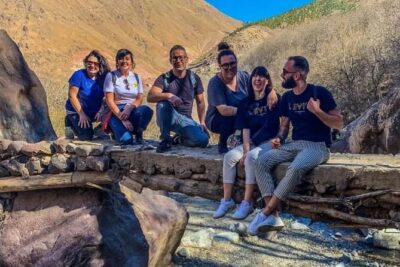
Berber villages : Atlas Mountains Day Hike from Marrakech
Read our review →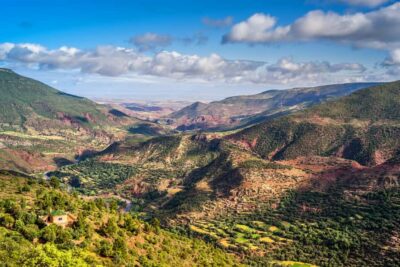
From Marrakech: Atlas Mountains Full-Day Hiking Trip w Lunch
Read our review →Marrakech: Atlas Mountains & Valleys Waterfall Hike w/ Lunch
Read our review →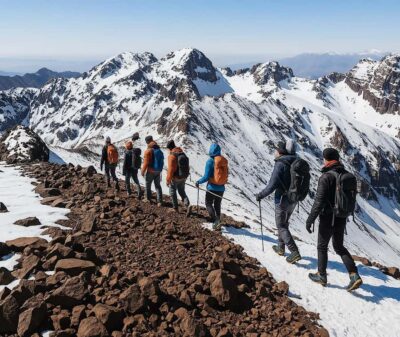
Mt Toubkal Ascent Express Trek 2 Days 1 Nights
Read our review →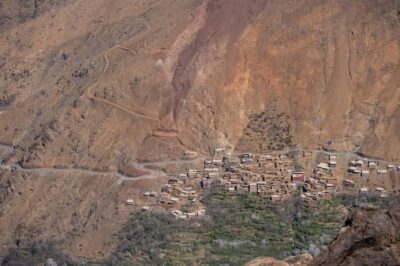
From Marrakesh: Atlas Mountains Talamrout Summit Day Hike
Read our review →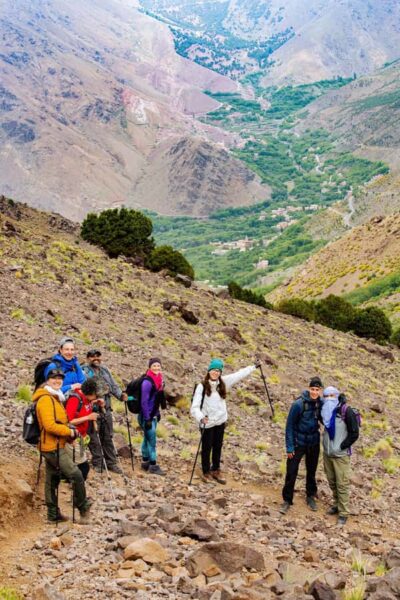
Marrakesh: 2-Day Mt. Toubkal Trek with 1-Night Stay & Meals
Read our review →
Marrakech: 2-Day Atlas Mountains Trek with Village Stay
Read our review →