
Review · PRAIA
Santiago: Calabaceira Valley Trek & Visit to Cidade Velha
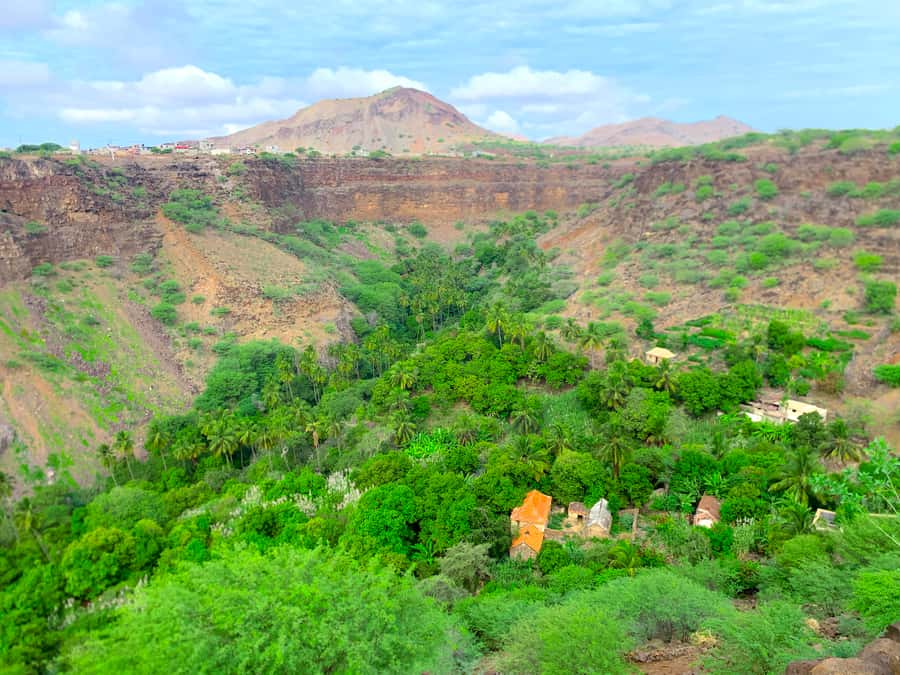
The best part of this outing is the sharp change of scene: you leave Praia’s dry hills and soon walk into Calabaceira Valley, a green corridor of sugar cane, banana plants, mango trees, cassava, and towering baobabs. Then you shift from nature to the hard history of Cidade Velha, the first European-built city in sub-Saharan Africa. It is a lot of Santiago in four hours.
I like the local scale of the experience, especially the stop at a small rum distillery where farmers work with sugar cane. I also like the way the tour links the valley’s former escape routes for enslaved people with the slave market and fortifications in Cidade Velha. The main caution is the word easy: the trail is accessible for many hikers, but its narrow opening, downhill grade, and loose or bouldery sections may be tough for older people or anyone unsteady on their feet.
Key points at a glance
- A downhill walk through a rare green pocket: The route drops about 186 meters from roughly 200 meters to 14 meters.
- Baobabs with a Darwin connection: The valley’s large trees are linked with Charles Darwin’s observations.
- A working rural stop: You can see sugar cane farming and local rum production rather than only a staged cultural display.
- Cidade Velha’s essential sights: The route includes Banana Street, São Francisco Convent, Nossa Senhora do Rosário church, the old slave market, cathedral ruins, and São Filipe Fortress.
- A practical half-day from Praia: Hotel pickup, transport, guiding, and return are included, but lunch and the fortress entrance fee are extra.
- Guide quality matters: Guides including Katia, Mario, Ivana, Soraya, and Riccardo have been singled out for warmth, language skills, and strong knowledge of Santiago.
From Praia to Calabaceira’s green valley
This tour begins with pickup at your hotel in Praia. You travel toward the small village of Calabaceira, where the walking portion starts near the top of the valley. The change is striking. Santiago is often pictured as dry and sun-baked, yet this valley gathers enough water and shelter to support thick plant growth.
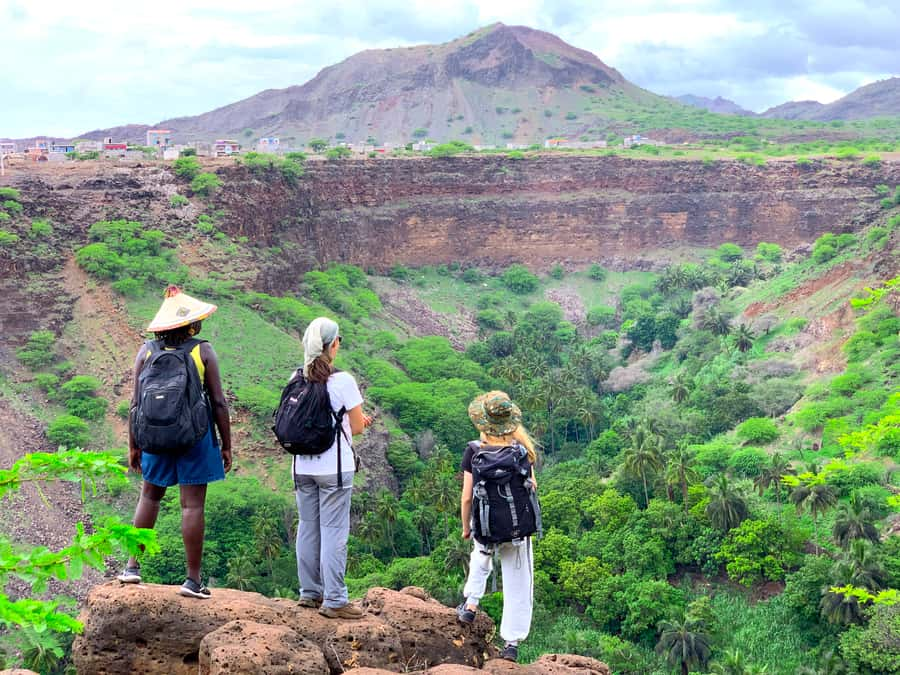
The trail covers about 5 kilometers and is one way, not a loop. The route gradually drops from around 200 meters to about 14 meters, with only about 3 meters of gain but close to 186 meters of loss. That matters more than the modest distance. Downhill walking can be harder on knees and ankles than a flat stroll, especially on a narrow path.
The trail is described as having medium quality. The beginning is narrow but considered safe, and the overall difficulty is listed as easy. I would read that as easy for a reasonably fit person with steady footing, not easy in the city-park sense. One account describes steep ground and boulders, so I would not bring anyone who struggles with uneven surfaces or downhill steps.
You will want proper footwear, water, sunscreen, and a hat. Hiking pants are especially sensible from August through November, when vegetation can make bare legs uncomfortable. The trail is not suitable for people with mobility impairments.
More hikes and treks around the world:
- From Marrakech: Ouzoud Waterfalls Guided Hike and Boat Trip
★ 4.7 · 33,630 reviews - Berber villages : Atlas Mountains Day Hike from Marrakech
★ 5.0 · 14,007 reviews - Bali: Sunrise Mount Batur Guided Hike with Breakfast
★ 4.8 · 9,660 reviews
Baobabs, farms, and a local rum distillery

Calabaceira is valuable because it lets you see Santiago as a working place, not just as a scenic backdrop. Along the route, your guide points out local plants and animals, while cultivated plots show how people use the valley. Sugar cane, mango, cassava, and bananas are among the crops you may see.
The valley is also linked to the history of slavery. Its vegetation and folds in the land once offered routes for enslaved people trying to escape. That detail gives the walk a darker edge. You are not simply admiring a pretty ravine. You are walking through a place shaped by survival, farming, and forced labor.
The baobab trees are another reason to pay attention. Their unusual forms make them easy to recognize, and the connection with Charles Darwin gives the guide a useful starting point for explaining the valley’s natural character. The experience is strongest when you take time to look closely at the plants and trees rather than treating the trek as a quick transfer to the next stop.
At the heart of the valley, you have the chance to visit a local rum-making distillery. This is a small-scale encounter tied to the nearby sugar cane fields. You can learn how the crop connects farming with a familiar Cape Verdean drink and meet people involved in the work.
Do not expect a polished factory tour. The appeal is the local setting and the link between agriculture and food or drink production. It also gives your legs a break before the town visit. If the group is large, the time available for questions may depend on the guide and the pace of the morning.
The shift from nature to Cidade Velha
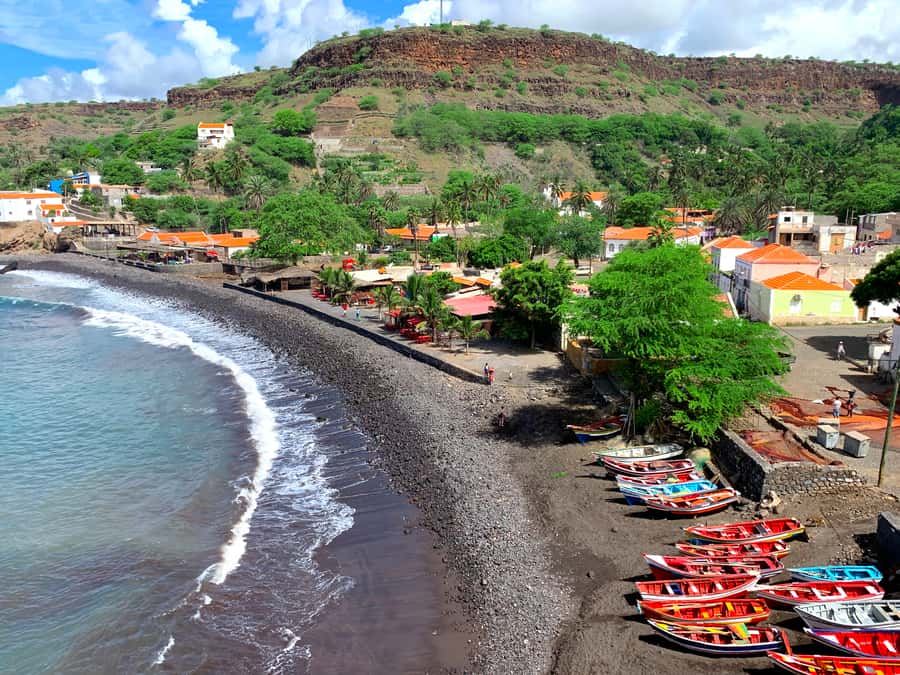
After the walk, the tour moves to Cidade Velha, a UNESCO World Heritage Site on the coast. The town was the first city built by Europeans in sub-Saharan Africa, and its surviving buildings and ruins make Santiago’s colonial past plain to see.
This is where the day becomes more demanding in an intellectual sense. The valley showed how people lived with the land and resisted oppression. Cidade Velha shows the institutions that supported overseas trade, religious power, and slavery. A good guide can connect those parts without turning the visit into a string of unrelated monuments.
The first stops include São Francisco Convent, Banana Street, and Nossa Senhora do Rosário church. Each adds a different piece to the old town. The church is especially important as one of the early religious buildings in the settlement, while Banana Street gives you a feel for the town’s historic core.
The scale of Cidade Velha is manageable, but the meaning of the place is not light. This was a major center in the Atlantic slave trade. The former slave market is one of the most important stops because it forces the history out of the realm of grand churches and scenic ruins. It shows the human cost behind the town’s early wealth and importance.
The slave market and cathedral ruins

The former slave market is not a decorative old building to check off a list. It is the place where the tour’s history becomes direct and uncomfortable. Your guide’s explanation matters here, since the remaining structures alone cannot tell you how the market functioned or how it fitted into the wider system.
You also visit the ruins of the Sé Catedral. The cathedral’s remains help you picture the size and ambition of Cidade Velha during its more powerful years. Ruins can be hard to read without context, so this is another point where a guide such as Mario, who has been praised for explaining both the sites and Cape Verde more broadly, can make a real difference.
The strongest guide feedback centers on warmth and clear answers. Katia, Ivana, Soraya, and Riccardo have all been identified as friendly and well prepared, while Mario has been noted for his detailed understanding of the places visited. Since guides may vary by date and language, you should not book on the assumption that one particular person will lead your tour. Still, the range of languages is useful: English, French, Portuguese, and Spanish are available.
Same mountains, a different route up:
- Bali: Mount Batur Sunrise Guided Hike and Natural Hot Spring
★ 4.8 · 9,284 reviews - Cinque Terre Day Trip with Optional Hiking or Pisa
★ 5.0 · 8,486 reviews - From Marrakech: Atlas Mountains Full-Day Hiking Trip w Lunch
★ 4.8 · 7,417 reviews - Marrakech: Ourika Valley Trip with Waterfall Hike
★ 4.6 · 6,792 reviews
São Filipe Fortress and the view over town

The final major stop is the Royal Fortress of São Filipe. Built above Cidade Velha, it gives you a broad view over the old town and the coast. The height explains the fort’s purpose at once. From here, you can see why defenders chose the site and how the position helped protect the settlement from pirate attacks.
You pay an additional €5 to enter the fortress. That fee is small, but you should bring the money because it is not included. The view is the main reward, while the walls and defensive layout give useful physical context to the town below.
The climb and uneven surfaces may add to the day’s physical demand. If you found the valley descent awkward, take care here and let the guide know. The tour is not designed for people with mobility impairments, and the fortress visit is not a good place to test uncertain balance.
After the fortress, you return to Praia by vehicle and are dropped at your accommodation. The published schedule calls the experience four hours, with a three-hour trek described in the main plan and about two hours of actual walking in the trail details. Those figures do not line up perfectly, so I would keep the rest of your day flexible. One booking ran close to eight hours, apparently because of the walking and group pace. That may not be typical, but it is a useful warning if you have a flight, dinner reservation, or other fixed plan.
Lunch, transport, and what the $82 covers
The price is $82 per person. For a four-hour experience, that is not the cheapest way to visit Cidade Velha, but the value improves if you want a single outing that combines transport, a guided valley walk, the distillery visit, and the main historic sights.
Hotel pickup and drop-off in Praia are included, along with transport, a guide, and liability insurance. You avoid arranging a separate ride to Calabaceira, finding the trailhead, and organizing a second vehicle from the valley to Cidade Velha. That convenience is important because the route is one way.
Lunch is not included. You stop at a typical restaurant by the sea and can buy local food there, but you should budget separately. The €5 fortress entrance is also extra. Bring water and money for both your own meal and the fort fee.
You can select a shared group or private option. The shared trek needs at least two participants. If that minimum is not met, the operator may offer another date, charge an extra fee to run it privately, or cancel with a full refund. A private outing costs more, but it may be worthwhile if you need a slower pace or want more time for questions.
Pickup instructions are simple: wait in your hotel lobby 10 minutes before the scheduled time. The driver carries a sign with your last name and waits no more than five minutes after pickup time. That short waiting window makes it wise to be ready early.
Who will enjoy this Santiago outing
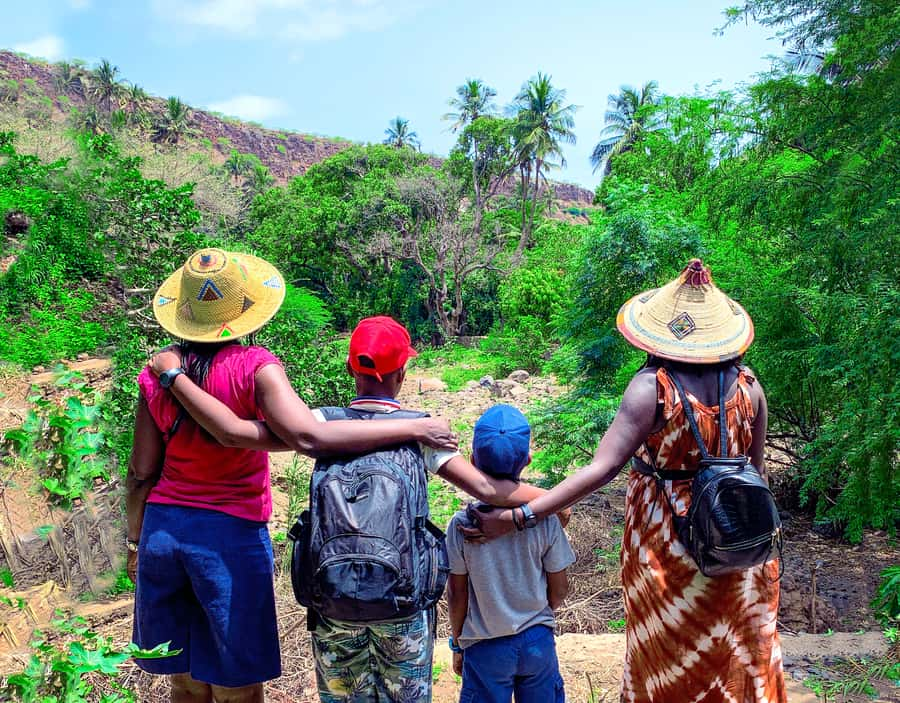
I would choose this tour if you want both sides of Santiago in one morning or afternoon: a green rural valley and a major historic site. It suits people who enjoy walking but do not want a full-day mountain trek. The trail distance is moderate, and the listed difficulty is easy, provided you are comfortable with downhill ground and a narrow path.
It is also a good choice for first-time visitors staying in Praia. You get transport beyond the capital, a guide who can explain the island’s past, and a sensible introduction to Cidade Velha. The combination is more useful than seeing the old town alone, since the valley helps explain the island’s farming and escape routes.
I would think twice if you have weak knees, balance problems, or trouble walking over stones. The advertised easy grade should not be treated as a promise of a smooth path. Hiking shoes, water, sun protection, and long trousers are practical choices, not optional extras.
The tour is also less suitable for anyone who wants a slow, highly flexible day. There are many stops, a descent, lunch, a fortress visit, and a return transfer packed into a short window. A private booking may help, but it cannot remove the basic downhill route or the distance between the sites.
Should you book it?
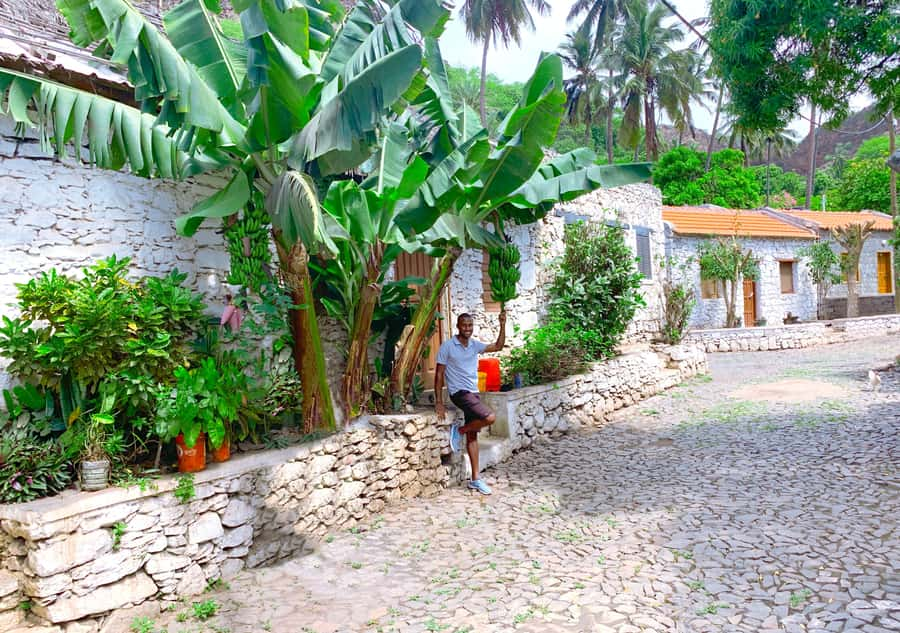
Book this tour if you want an efficient, well-rounded introduction to Santiago and can handle about 5 kilometers of uneven downhill walking. The best reasons are the rare greenery of Calabaceira, the working rum distillery, and the way the guide can connect the valley’s escape routes with Cidade Velha’s slave market and fortifications.
Skip it if you need genuinely flat walking, strict timing, or a quiet day with no physical strain. For most fit visitors based in Praia, the $82 price is reasonable because it covers transport, guiding, and two very different parts of the island in one trip. Just plan for extra money at lunch and the fortress, and do not let the word easy talk you into wearing sandals.
FAQ
How long does the tour last?
The scheduled duration is four hours. The plan includes a three-hour trek, while the trail information gives about two hours of walking. Actual timing can vary with the group and trail conditions, so leave some flexibility afterward.
How far is the trail?
The trail distance is approximately 5 kilometers. It is a one-way route through Calabaceira Valley.
Is the hike difficult?
It is classified as easy, but the path is narrow at the beginning, has medium quality, and descends about 186 meters. It may be uncomfortable for anyone who is not steady on uneven or steep ground.
Is the tour suitable for people with mobility impairments?
No. The experience is not suitable for people with mobility impairments.
What should I bring?
Bring decent footwear, water, a hat, sunscreen, and €5 for the São Filipe Fortress entrance. Hiking pants are strongly advised from August through November.
Is lunch included?
No. The tour stops for lunch at a typical seafront restaurant, but the meal is not included in the price.
Is the São Filipe Fortress entrance included?
No. The entrance fee is €5 and must be paid separately.
Which languages are available?
Live guiding is available in English, French, Portuguese, and Spanish.
Recently reviewed hikes in the world
- Asheville: Yoga on a Mountain Hike★ 4.7 · 7 reviews
- Arequipa: 2-day Colca Canyon Trekking, Ending in Puno★ 4.8 · 8 reviews
- Arctic hike on Kvaløya Island with drinks and snacks★ 5.0 · 8 reviews
- Arctic Wilderness Hike from Rovaniemi (Day & Evening)★ 4.7 · 12 reviews
- Antelope Valley: Ligai Si Anii Canyon Hiking Tour★ 4.9 · 13 reviews
- Antigua: 2-Day Acatenango Volcano Hike w/Local Guide & Meals★ 4.3 · 43 reviews
- Delphi: Easy Hike on Ancient Path through the Olive Groves★ 5.0 · 9 reviews
- Antalya: Hiking in Termessos Ancient City★ 5.0 · 152 reviews
Cape Verde Hiking Tours, compared.
Serra Malagueta: Principal Valley Hike & Lunch with Locals
Read our review →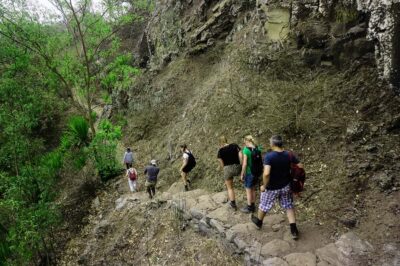
Santiago Island: Serra Malagueta & Tarrafal Beach Trek Tour
Read our review →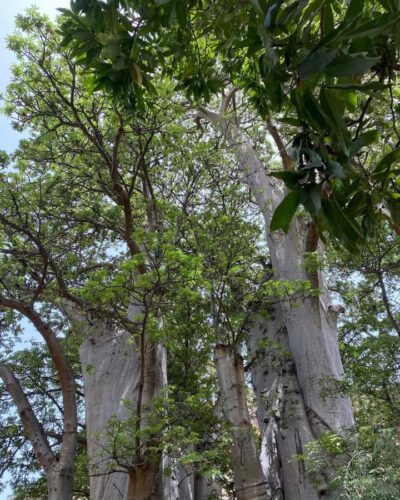
Praia: Baobab Mysterious Tree, Green Valley & Old City Hike
Read our review →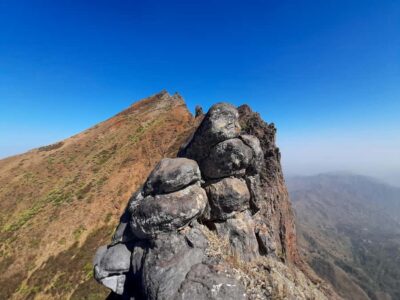
Santiago: Monte Tchota Natural Park to Pico d’Antónia Hike
Read our review →Other lists this hike appears in