
Review · ARUSHA
8-Day Small-group Lemosho Kilimanjaro Summit Trekking
Kilimanjaro is not a technical climb, but it is a serious high-altitude trek. This 8-day Lemosho route gives you time to cross five climate zones, adjust to thinner air, and reach Uhuru Peak at 19,340 feet. The midnight summit push is the hard part, but the route rewards you with changing scenery and sunrise from Africa’s highest point.
I like the extra acclimatization time on the Shira Plateau and at Lava Tower. I also like the practical setup: hotel pickup, meals, tents, park fees, and a guide team are bundled into the $2,895 price. The main drawback is simple: the route still demands strong fitness, long walking days, cold nights, and a punishing summit ascent.
Key points to know before you book
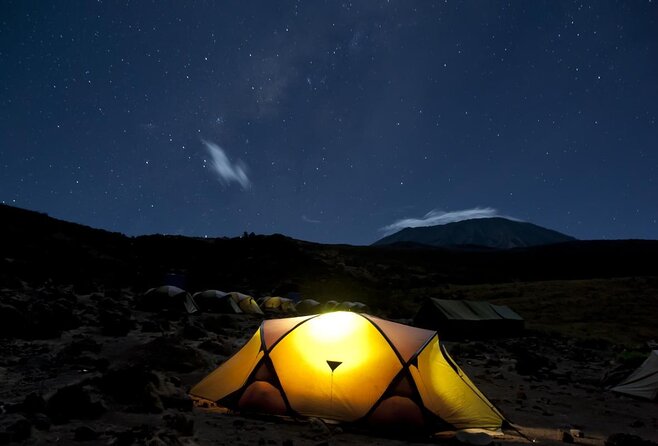
- Lemosho begins in rainforest: The first camp at Mti Mkubwa gives you a gentle start beneath tall forest.
- The 8-day schedule helps with altitude: Days on the Shira Plateau and the Lava Tower route let you climb high and sleep lower.
- Summit night is the real test: You start around midnight, climb 6 to 7 hours to Stella Point, then continue to Uhuru Peak.
- The group can reach 15 people: That is still smaller than some large trekking operations, though not every departure will be tiny.
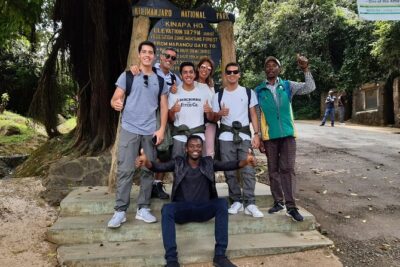
- The crew is a major part of the experience: Guides named in trip feedback include Amani, Raymond, Goodluck, Herment Mosha, Manny, Cinga, and Steve.
- The price covers the essentials: Transfers, camping equipment, meals, fees, and guiding are included, making the package easier to budget.
Why the Lemosho route is worth eight days
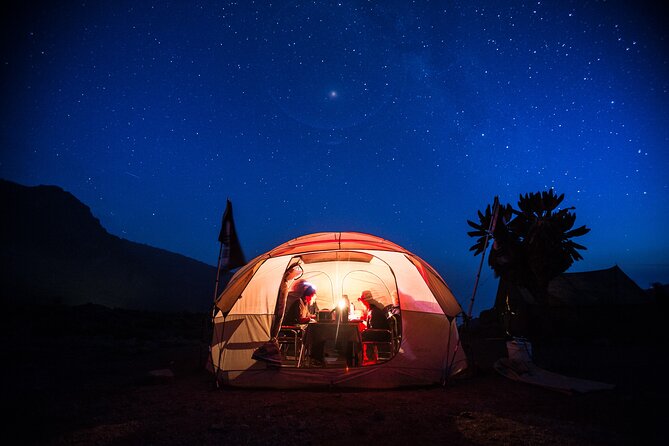
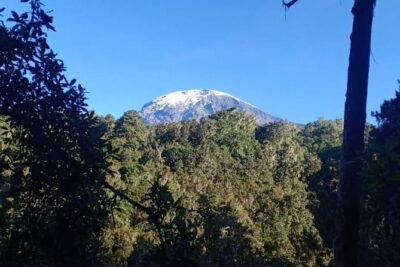
Lemosho approaches Kilimanjaro from the west, beginning far from the busy summit slopes. You start among trees, move across open highland country, pass through volcanic terrain, and finish among rock, ice, and thin air.
That gradual change is the route’s great strength. You are not simply walking uphill for a week. You are watching the mountain change around you while your body has time to adapt.
The schedule includes relatively short days early on, then longer and higher stages as you go. Day 3 explores the Shira Plateau, while Day 4 takes you up toward Lava Tower before dropping to Barranco Camp. This classic climb high, sleep lower pattern is useful for acclimatization.
The route is suitable for beginners as well as experienced climbers, but that does not mean it is easy. You need a strong level of fitness, and you should be ready for several hours of walking most days. The summit day alone involves about 21 kilometers, including both ascent and descent.
More Small-Group Hikes in Tanzania:
- Small Group: Valley of Fire Half Day Tour from Las Vegas
★ 5.0 · 2,130 reviews - Small Group Waterfall and Rainforest Hiking Adventure on Maui
★ 5.0 · 1,417 reviews - Glacier Hike and South Coast Small-Group Tour from Reykjavik
★ 5.0 · 827 reviews
Day 1: Rainforest walking to Mti Mkubwa Camp
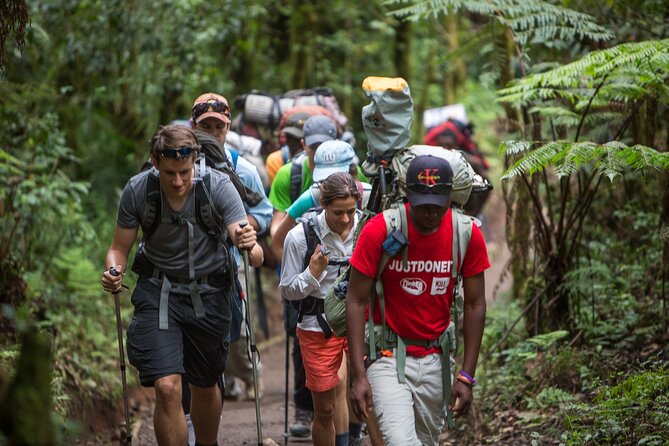
After pickup from your Arusha hotel, the drive takes you to the Londorossi Gate on Kilimanjaro’s western side. Park entry procedures come first, then you begin a gentle ascent through montane forest.
The day covers about 3 miles and takes roughly 3 to 4 hours, ending around 7,742 feet at Mti Mkubwa Camp. Mti Mkubwa means Big Tree in Swahili, and the camp sits beneath the rainforest canopy.
This is a sensible opening day. You are moving, but you are not being pushed into a hard climb immediately after leaving town. The forest also gives you your first taste of Kilimanjaro’s changing plant life.
Keep your rain protection handy. The route begins in a forest zone where conditions can change, and even an easy first day feels different when you are carrying personal gear and adjusting to the routine of camp life.
Day 2: Leaving the trees for the Shira Plateau
The forest thins as you climb toward a high savannah of grasses, heather, volcanic rock, and lichen. The route reaches about 11,500 feet and covers close to 5 miles, with around 5 to 6 hours on foot.
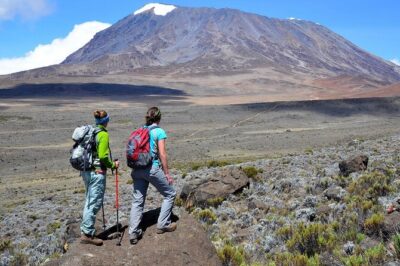
This is the day Kilimanjaro begins to feel wide open. The trees fall away, and views toward Kibo, the mountain’s main summit cone, begin to appear. The contrast with Day 1 is striking: shaded forest becomes open high country.
You finish near the Shira Ridge, on the edge of a broad high-altitude plateau. The air is thinner here, but the walking remains manageable. Go slowly, drink when prompted, and do not treat this day as a race. A calm pace now matters more than an impressive pace.
Day 3: A full day across Shira
Day 3 is devoted to exploring the Shira Plateau. You walk east toward Kibo and can visit the old collapsed Shira cone, one of Kilimanjaro’s three volcanic cones.
The route reaches about 13,800 feet and covers approximately 8.7 miles in 5 to 7 hours. You finish at Moir Camp, located in a large gorge at the end of a dormant lava flow.
This is one of the most valuable days in the program. You gain altitude during the day without rushing directly toward the summit, and you get a proper look at Kilimanjaro’s volcanic structure. The plateau can feel stark and exposed, with a lot less shelter than the forest below.
Moir Camp also gives the day a strong sense of place. You are no longer simply hiking through vegetation. You are walking across old volcanic ground, with Kibo drawing you onward.
More Kilimanjaro Hikes in Tanzania:
- Mountain Kilimanjaro Day Hike
★ 5.0 · 102 reviews - Private Full Day Hiking Experience to Marangu Route
★ 5.0 · 61 reviews - Private Kilimanjaro Hike 7 Day Lemosho Route
★ 5.0 · 60 reviews - Best Kilimanjaro hiking day trip tour with Kilinge Adventures
★ 4.5 · 54 reviews
Day 4: Lava Tower, Senecio forest, and Barranco
Day 4 is the key acclimatization stage. You climb toward Lava Tower at roughly 15,000 feet, then descend through the giant Senecio forest before reaching Barranco Camp at about 13,000 feet.
The listed walking distance is around 4.3 miles, with about 4 to 6 hours of hiking. Although the mileage is not great, the altitude makes the day demanding.
The value comes from spending time high before sleeping lower. You get a useful test of how your body responds to thin air, then lose some elevation before night. That does not remove the risk of altitude problems, but it gives the schedule a more careful rhythm than a rushed ascent.
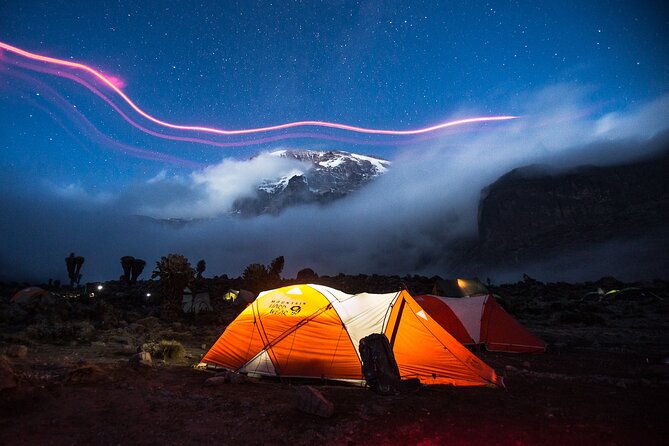
After Lava Tower, the route heads toward the Barranco area, with a waterfall before camp. Barranco Camp sits beneath the large Barranco Wall, and clouds can drift through the valley. It is a dramatic place to spend the night, though the combination of wind, cloud, and altitude can make camp feel rugged.
Day 5: Climbing the Barranco Wall
The Barranco Wall is the day’s defining feature. The route climbs over this rocky obstacle, then continues into the arctic zone and across the South Circuit toward Karanga Valley.
The day covers only about 2.2 miles and takes roughly 4 to 5 hours, finishing at Karanga Camp around 13,100 feet. The short distance does not mean an easy stroll. The wall requires careful footwork and steady movement, especially when the group is adjusting to the altitude.
This is one of the trek’s most memorable sections because it feels more adventurous than a simple trail walk. You do not need technical climbing equipment on this route, but you should be comfortable with uneven ground and exposed-feeling mountain terrain.
Karanga is another acclimatization stop before the final push. The schedule gives you time to settle in, eat, and prepare for the higher camps rather than rushing straight from Barranco toward the summit.
Day 6: Kosovo Camp and preparation for summit night
You take a slow route toward Kosovo Camp at approximately 16,000 feet. The trail passes Barafu Camp, with views toward Kibo and Mawenzi, two of Kilimanjaro’s major volcanic peaks.
The day covers about 2.6 miles and takes 5 to 6 hours. Kosovo Camp sits on an exposed ridge, so you need to become familiar with the camp area before darkness arrives.
This stage is less about sightseeing and more about preparation. You rest, organize your clothing and equipment, and conserve energy for the night ahead. The high camp setting can feel stark, and the thin air may make even small tasks feel tiring.
The schedule’s slow pace is important. Do not spend this day trying to prove anything. Eat what you can, rest when possible, and listen closely to your guide’s instructions. Guides such as Amani, Raymond, Goodluck, and Herment Mosha are repeatedly praised for checking on comfort, energy, and safety, which is exactly the sort of attention you want at this point.
Day 7: Stella Point, Uhuru Peak, and the long descent
Summit night begins around midnight. You climb in darkness toward Stella Point, a steep section on a non-technical route that takes about 6 to 7 hours.
The route crosses heavy scree and reaches the crater rim between the Rebmann and Ratzel glaciers. If conditions cooperate, you arrive around sunrise. From Stella Point, Uhuru Peak is about another hour away.
The summit sits at 19,340 feet, and this is the most physically and mentally demanding section of the trek. The cold, darkness, altitude, and slow progress can make the final hours feel much longer than the mileage suggests.
After reaching Uhuru Peak, you descend to Mweka Camp. The full day is listed at about 11 hours, including roughly 5 kilometers of ascent and 12 kilometers of descent. That makes the descent more than a victory lap. Your legs may be tired, and loose ground can be awkward when you are already spent.
Still, sunrise from the summit is the reward that gives this entire trek its shape. You see the glaciers and crater rim, then begin the long return with the knowledge that the hardest part is behind you.
Day 8: Mweka Gate and a welcome shower
The final morning involves a 6.4-mile walk to Mweka Gate, taking about 3 to 4 hours. At the gate, the Climb Kili vehicle transfers you back to your Arusha hotel.
After several nights in tents, a hotel shower will feel like a major event. The final walk is not just paperwork and transport. It gives you time to reflect on the climb before returning to the comforts of town.
The experience ends on the same practical note with which it began: organized hotel transfers. That matters after a demanding descent, when arranging your own transport would be an unnecessary chore.
What the $2,895 price buys you
At $2,895 per person, this is not a bargain trek, but it is an all-inclusive-style package. The price includes round-trip transfers from your Arusha hotel, park and admission fees, camping equipment, meals, and the guide and support operation.
That bundle has real value. Kilimanjaro costs can otherwise become scattered across permits, food, transport, tents, and equipment. Here, the main price is visible from the start.
The small-group format also adds value. The maximum is 15 people, and some departures are much smaller. One group of four was described as especially comfortable, while another included a solo participant joining four other climbers. A smaller group can make breaks, questions, and pace adjustments easier.
Do not assume every departure will have four people. If the group reaches 15, it will feel less intimate than a private or very small climb. Still, it remains more manageable than a large mass departure, and the listed price includes the working parts that make a Kilimanjaro climb possible.
The human side of the climb
The guide team is central to this experience. Names connected with particularly positive trips include Amani, Isaya, Emmanuel, Raymond, Steve, Manny, Cinga, Goodluck, and Herment Mosha.
The strongest themes are practical: guides check how people are feeling, adjust breaks, encourage slow pacing, explain the mountain, and keep attention on safety. The crew also adds a social side to what could otherwise be a lonely physical challenge. Some guides teach Swahili, while others bring humor and patience to long days.
Food and camp support also receive strong praise. The operation includes a chef and porters, with Simon named as one chef and Thomas and Balthasar mentioned for camp support and early coffee. These details matter because eating, sleeping, and getting moving are not minor chores at altitude. They are part of your ability to continue.
You should also understand the ethical side of a porter-supported climb. The experience relies on a large working crew, so ask Climb Kili about porter welfare, baggage limits, tipping expectations, and how equipment is carried before you depart. Those points are important even though they are not spelled out in the supplied details.
Who should book this trek
This climb suits you if you want Kilimanjaro with a patient schedule, organized support, and a route that changes scenery almost every day. It is also a good match if you are traveling alone but want to join a group rather than arrange a private expedition.
Beginners can consider it, provided they are fit and understand that high altitude is unpredictable. Experienced hikers will appreciate the route’s variety, but you should not assume previous mountain experience makes summit night easy.
This is not the right choice if you want a relaxed walking holiday, dislike camping, or cannot commit to long hours at altitude. The hardest day begins at midnight and continues through the descent. That fact should guide your decision more than the attractive summit photographs.
Booking confirmation is sent within 48 hours, subject to availability. Pickup is offered, the meeting time is 8:00 a.m., and free cancellation is available if you cancel at least 24 hours before the local start time. Changes or cancellations inside that window are not accepted.
Should you book the 8-day Lemosho trek?
I would choose this trip if your priority is a well-supported summit attempt with time for acclimatization and a clear price. The 8-day schedule is more appealing than a hurried climb, and the Lemosho approach offers a fine progression from forest to volcanic highland to summit rock.
The best reasons to book are the extra day on Shira, the Lava Tower acclimatization stage, included logistics, and the guide team’s strong record of personal support. The main reasons to hesitate are the cost, the possibility of a group as large as 15, and the demanding summit night.
Go in with realistic expectations. No company can guarantee that you will reach Uhuru Peak, and no amount of cheerful encouragement changes the effect of altitude. If you are fit, prepared, and comfortable with camping, this is a strong choice for tackling Kilimanjaro with experienced support around you.
FAQ
How long is the Kilimanjaro trek?
The experience lasts approximately eight days, including the final walk to Mweka Gate and the transfer back to your Arusha hotel.
Where does the trek begin?
The route begins on Kilimanjaro’s western side after checking in at Londorossi Gate.
What time does the experience start?
The stated meeting time is 8:00 a.m.
Is hotel pickup included?
Yes. Round-trip transfers from your Arusha hotel are included, with a vehicle returning you to the hotel after the Mweka Gate walk.
How high is Uhuru Peak?
Uhuru Peak reaches 19,340 feet, or approximately 5,895 meters.
How many people can join the group?
The maximum group size is 15 people.
Are camping equipment and meals included?
Yes. Camping equipment, meals, park or admission fees, and guiding are included in the package.
How difficult is the trek?
You should have a strong level of physical fitness. The summit day includes a midnight start, 6 to 7 hours of ascent to Stella Point, about another hour to Uhuru Peak, and a long descent to Mweka Camp.
Is the trek suitable for beginners?
Yes, the experience is described as suitable for beginner and advanced climbers. Beginners still need strong fitness and must be prepared for high altitude, camping, and long walking days.
Can I cancel for a full refund?
You can receive a full refund if you cancel at least 24 hours before the local start time. Cancellations or changes made less than 24 hours before the start are not accepted.
Recently reviewed hikes in Tanzania
- Full Day Private Hiking Tour to Kilimanjaro Mountain★ 5.0 · 22 reviews
- Kilimanjaro 7 Day Private Trekking Experience★ 5.0 · 40 reviews
- Mount Kilimanjaro Day Hike Through Marangu Route to Mandara Hut★ 5.0 · 37 reviews
- Mount Kilimanjaro Day Hike★ 4.5 · 23 reviews
- Best Kilimanjaro Adventure 7 days Machame route Trekking★ 5.0 · 42 reviews
- Private Kilimanjaro Hike 7 Day Lemosho Route★ 5.0 · 60 reviews
- Best Kilimanjaro hiking day trip tour with Kilinge Adventures★ 4.5 · 54 reviews
- #1. Best Kilimanjaro Day hike Tour-Machame Route-ISMANI★ 4.2 · 47 reviews
Kilimanjaro Hikes, compared.
Private Full Day Hiking Experience to Marangu Route
Read our review →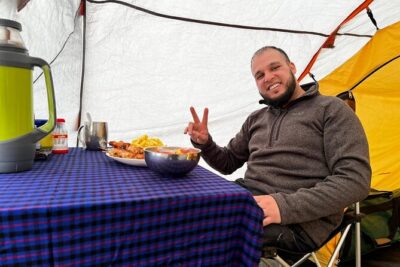
Best Kilimanjaro hiking day trip tour with Kilinge Adventures
Read our review →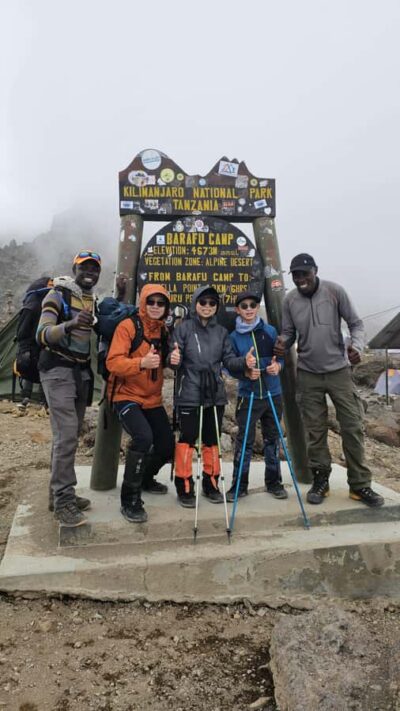
#1. Best Kilimanjaro Day hike Tour-Machame Route-ISMANI
Read our review →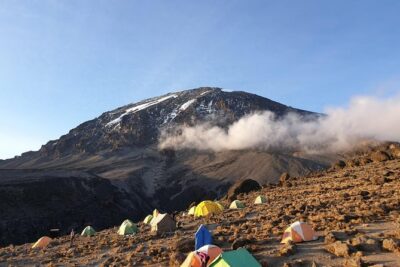
Best Kilimanjaro Adventure 7 days Machame route Trekking
Read our review →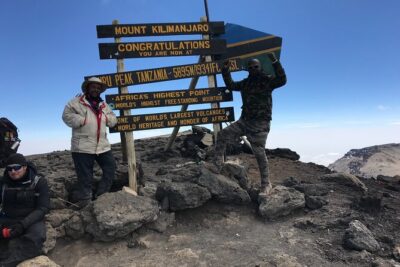
Kilimanjaro 7 Day Private Trekking Experience
Read our review →
Mount Kilimanjaro Day Hike Through Marangu Route to Mandara Hut
Read our review →Other lists this hike appears in