
Review · MOSHI
Kilimanjaro 7 Day Private Trekking Experience
Kilimanjaro’s Machame Route gives you a proper mountain story: rainforest on day one, open moorland on day two, the Lava Tower acclimatization climb, Barranco Wall, and a midnight push to Uhuru Peak. This private seven-day trip is built around a small personal group, with guides, porters, a chef, and camping crew handling the hard work around you.
I like the sensible acclimatization plan, especially the climb to 4,600-meter Lava Tower followed by sleep at Barranco Camp. I also like the human touch: company owner Oscar is praised for quick replies and careful planning, while guides such as Saul, Mvungi, and Jonas are singled out for friendly support. The main drawback is simple: this is a demanding climb, not a sightseeing stroll, and the summit day can mean up to 15 hours of walking.
The trek at a glance
- Machame Route in seven days: Start in the rainforest and finish at Mweka Gate after crossing several climate zones.
- Private group format: Only your party takes part, allowing the pace and support to be shaped around your group.
- Lava Tower acclimatization: Climb high to 4,600 meters, then sleep lower at Barranco Camp.
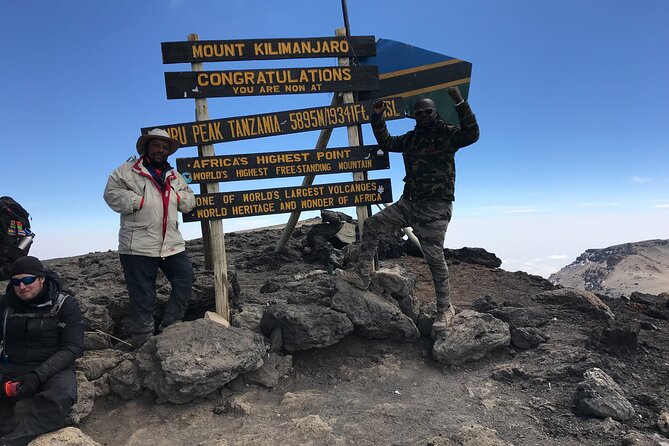
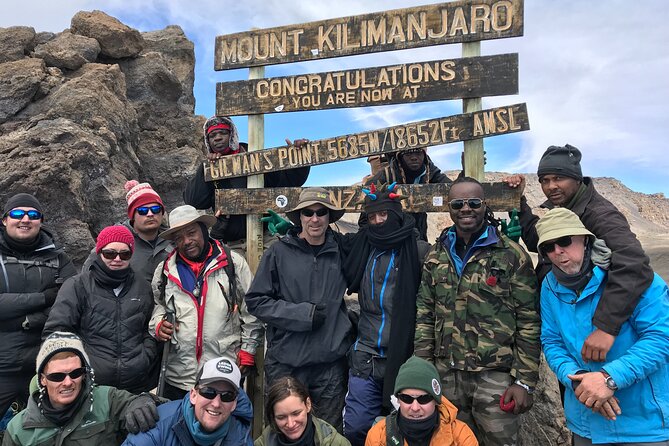
- Midnight summit attempt: Reach Stella Point and Uhuru Peak around sunrise, weather and fitness permitting.
- Full mountain support: Tents, food, porters, guides, chef, camping crew, transfers, and pre and post-climb accommodation are included.
- Extra costs to plan for: Personal trekking equipment, insurance, laundry, phone charges, and crew tips are not included.
Why the Machame Route works so well in seven days
The Machame Route is often chosen for its changing scenery and steady height gain. Your first day begins in thick rainforest, then the trees give way to moorland, rocky ground, high desert, and finally the icy summit zone.
The route is not easy. You gain altitude quickly during the first few days, and the trail includes steep sections, loose stone, and the scramble up Barranco Wall. The seven-day schedule gives you a useful acclimatization pattern, but it cannot remove the effects of altitude.
This private setup matters. You are not tied to a large group’s slowest pace or a fixed social rhythm. Your crew can focus on your group, though the mountain timetable still controls much of the day.
The advertised price is $3,120 per person. That is a substantial sum, but it covers far more than a guide and a permit. Food, tents, mountain crew salaries, specified transfers, and accommodation before and after the climb are included, along with six breakfasts, six dinners, and seven lunches. You still need to budget for personal gear and gratuities.
More Private Hiking Tours in Tanzania
- Private Full Day Hiking Experience to Marangu Route
★ 5.0 · 61 reviews - Private Kilimanjaro Hike 7 Day Lemosho Route
★ 5.0 · 60 reviews - Full Day Private Hiking Tour to Kilimanjaro Mountain
★ 5.0 · 22 reviews
Day 1: Machame Gate and the first rainforest climb
The day begins around 9am, when the guides and porters meet you for a final check of equipment and supplies. You can leave unwanted luggage in a hotel lock-up, a useful detail if you are combining the climb with a safari, Zanzibar, or other time in Tanzania.
A vehicle takes you to Machame Gate for registration with the Kilimanjaro National Park office. You receive a packed lunch before setting off, and the trail climbs into the rainforest.
The first day covers about 11 kilometers, rising from roughly 1,800 meters to 3,000 meters. The walk takes about six hours, depending on the group’s pace and trail conditions.
This is a good day to settle into pole pole, the slow-and-steady approach that suits high-altitude trekking. You will have a break around the middle of the walk for your packed lunch, then continue to Machame Camp in the late afternoon.
At camp, the crew sets up your tent and provides dinner. The listing describes hot drinks and boiled drinking water as part of camp service, so bring a refillable bottle and follow the guide’s instructions about hydration.
Day 2: Shira Camp and the end of the trees
A hot drink arrives at your tent around 6:30am, followed by breakfast. You then leave the rainforest behind and cross into open moorland, where small shrubs replace the dense trees.
The route covers about nine kilometers and climbs from 3,000 meters to 3,850 meters. Expect around six hours of walking, with a steep rocky ridge and a river gorge along the way.
The trail leads toward the Shira Plateau, where you get an early view of the Western Breach and its glaciers. This is one of the first moments when the mountain feels truly high and exposed.
Shira Camp is more open than the previous night’s camp. On arrival, the cook provides boiled drinking water and a hot wash, a modest but welcome service after a dusty climb.
You should use this evening to organize clothing and sleeping equipment. Temperatures and weather can change sharply as you gain height, so keep warm layers close rather than buried at the bottom of your bag.
Day 3: Lava Tower, 4,600 meters, then Barranco
Day three is the key acclimatization day. After a hot drink and breakfast, you leave Shira Camp and climb for roughly four to five hours toward Lava Tower at 4,600 meters.
The route crosses semi-desert terrain and covers about 12 kilometers in total. The schedule lists around seven hours of trekking, though your day may feel longer because the altitude slows everything down.
At Lava Tower, you stop for lunch and spend time at a higher elevation before descending about 650 meters to Barranco Camp. This follows the useful mountain rule of climbing high and sleeping low.
The descent is not a wasted effort. It gives your body exposure to higher altitude without making you sleep at the day’s highest point. The walk also provides strong views and photo opportunities around the volcanic rock and glacier country.
This is described as the toughest day so far, and you should take that seriously. The distance is moderate by ordinary hiking standards, but the altitude and repeated climbing can leave you tired. Keep your pace gentle and tell the guide promptly if you feel unwell.
Barranco Camp sits in a dramatic valley below the Barranco Wall. You will have dinner and rest before the next morning’s steep scramble.
Same mountains, a different route up:
- 8-Day Small-group Lemosho Kilimanjaro Summit Trekking
★ 5.0 · 186 reviews - Mountain Kilimanjaro Day Hike
★ 5.0 · 102 reviews - 4 Days Mount Meru Trekking
★ 5.0 · 55 reviews - Best Kilimanjaro hiking day trip tour with Kilinge Adventures
★ 4.5 · 54 reviews
Day 4: Scrambling up Barranco Wall
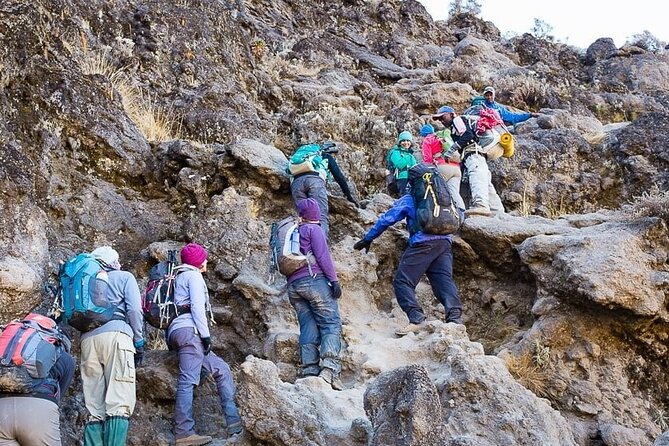
After breakfast, the trail climbs Barranco Wall for about an hour and a half. This is the most hands-on section of the day. In places, you use your hands to help pull yourself upward.
The route then drops into the greener Karanga Valley before climbing again toward a ridge above the valley. The day covers about seven kilometers, with an elevation gain of roughly 250 meters.
Do not mistake the short distance for an easy day. The wall demands concentration, balance, and patience rather than speed. Guides can help you choose footholds, but you still need enough fitness and confidence for exposed-feeling rocky sections.
The reward comes at the top, where the route opens toward the high mountain. You then descend into Karanga Valley, a useful reminder that Kilimanjaro trekking is rarely a straight uphill line.
Camping on the ridge above the valley is intended to support acclimatization. It also puts you within reach of Barafu Camp on the following day, while giving you time to rest before the summit push.
Day 5: Barafu Camp and the southern circuit
The walk to Barafu Camp covers about six kilometers and climbs roughly 400 meters. You pass views of Kibo’s glaciers and reach the junction where the Mweka descent route meets the Machame trail.
This day completes the southern circuit of Kilimanjaro, giving you changing views of the summit rather than one repeated angle. The route crosses ridges and valleys before reaching the high camp.
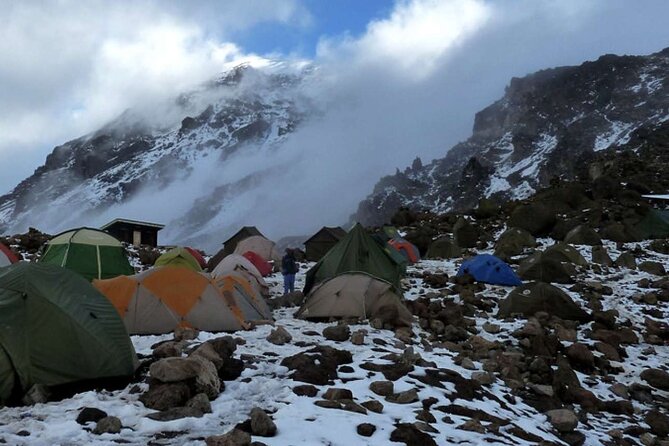
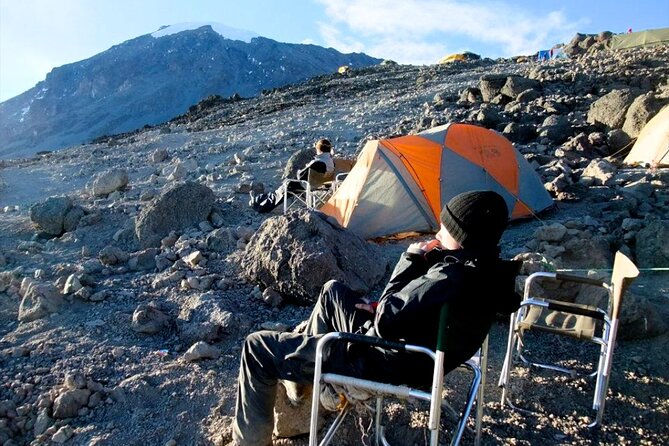
Barafu means ice, and the camp sits in a stark, rocky zone close to the summit route. From here, there is little cover and not much to do besides eat, prepare your summit clothing, and rest.
The schedule describes roughly seven hours of trekking, but the most important part of the day is conserving energy. Your wake-up call is planned for 11:30pm, with departure around midnight.
Use the afternoon to prepare your headlamp, gloves, warm layers, water, snacks, and camera. Keep the next morning’s equipment easy to reach. A few minutes of preparation at Barafu can make the midnight start less chaotic.
Day 6: Stella Point, Uhuru Peak, and the long descent
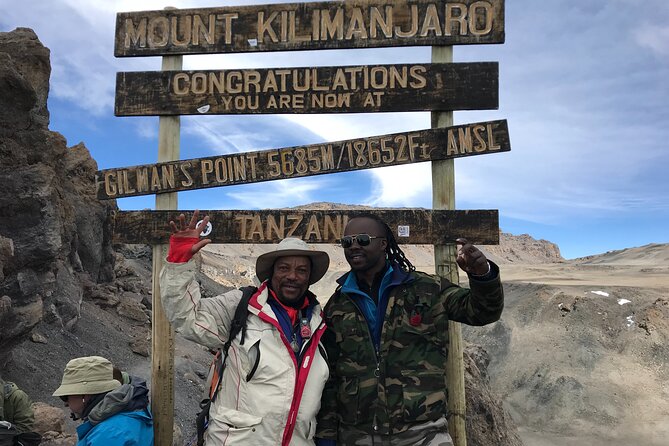
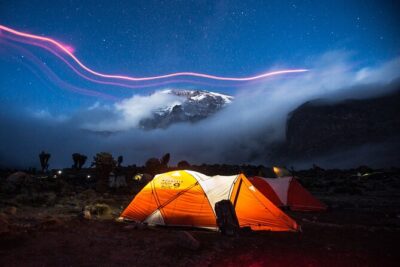
Summit day begins in darkness. The initial climb takes about six hours and follows winding paths through stone and ice toward Stella Point, with headlamps providing the light.
The route description lists the summit area at about 5,895 meters, the height of Uhuru Peak. From Stella Point, you continue along the crater rim toward Uhuru Peak, then begin the long descent.
The sunrise from the summit area is one of the great rewards of the climb. You may see glaciers, ice fields, and the surrounding mountain country as daylight arrives, though weather can affect visibility.
The schedule allows seven to eight hours for the descent after the six to eight-hour ascent. You eventually reach about 3,100 meters, making this an extremely long day even for a fit hiker.
The summit section is physically demanding and can be mentally draining. Altitude, cold, darkness, loose stone, and lack of sleep all play a part. The crew’s support is especially important here, and the guide will determine how to manage the pace and any health concerns.
You should be ready for the possibility that reaching Stella Point may be your personal summit achievement, even if Uhuru Peak proves out of reach. The mountain is not improved by taking unsafe risks.
Day 7: Mweka Gate, celebration, and a hot shower
The final morning starts with a celebratory breakfast and thanks between you and the mountain crew. This is also the usual point for giving tips to the guides, porters, cooks, and other staff.
The descent to Mweka Gate takes about three to four hours and covers roughly 10 kilometers, dropping from around 3,100 meters to 1,800 meters through rainforest.
At the gate, the crew loads equipment into the vehicle. The program includes a celebratory beer or champagne, followed by transport to Kilimanjaro Wonders Hotel in Moshi for lunch and a hot shower.
That shower is not a throwaway detail. After a week of camping and a summit night, clean clothes, food, and a proper bed can feel like part of the achievement.
After dinner, you receive a certificate of achievement. The climb ends in Moshi rather than directly at the trailhead, which makes the final transfer and post-climb accommodation useful additions to the package.
What the crew and service add
The experience is operated by Tanzania Escapade, which has more than a decade of experience according to the supplied information. The team includes professional guides, porters, chefs, and a camping crew.
Names that appear repeatedly in the company’s wider arrangements include Oscar, Saul, Mvungi, Jonas, Jackie, Emmanuel, and Gaudence. Oscar is described as the main contact who handles questions quickly and helps arrange connected plans such as safaris and Kikuletwa Hot Springs visits.
Saul receives particular praise for his friendly manner and mountain experience. That does not guarantee which guide will lead your own climb, so ask for the confirmed guide team before booking.
The porters and cooks are not background details. They carry equipment, prepare meals, establish camp, and keep the expedition moving. The price includes their salaries, but gratuities are extra and should be planned as part of your budget.
Food, camping, and what you need to bring
Food, tents, mountain crew salaries, specified transfers, and accommodation before and after the climb are included. The meal plan provides seven lunches, six dinners, and six breakfasts.
You also receive hot drinks, boiled drinking water, and a hot wash at Shira Camp according to the daily plan. The exact menus and tent arrangements are not specified, so ask about these if you have allergies, dietary restrictions, or strong preferences.
Personal climbing equipment is not included, though it can be hired locally if needed. You will also pay separately for travel and baggage insurance, phone charges, laundry, and guide and porter gratuities.
You should treat insurance as essential planning rather than an optional extra. The operator specifically excludes it, and the climb requires good physical fitness.
Who should book this Kilimanjaro climb?
This trip suits you if you want a private climb with a full support crew and a route that changes scenery each day. It is a good match for people who value direct communication, organized transfers, and the comfort of returning to a Moshi hotel after the descent.
It also works well for a couple or private group that wants to combine Kilimanjaro with a safari or other Tanzanian plans. Past arrangements connected climbs with multi-day safaris, Zanzibar, and a half-day visit to Kikuletwa Hot Springs.
You should think twice if you dislike camping, steep rocky sections, early starts, or long days at altitude. Children under 15 require special arrangements, and the operator states that participants need a strong level of physical fitness.
The trip is private, but it is not flexible in the casual holiday sense. Mountain weather and altitude control the schedule. Poor weather can lead to a new date or a full refund, while ordinary cancellations or amendments are non-refundable.
Is the $3,120 price fair?
At $3,120 per person, this is not a bargain trek. Still, the package includes the major operating costs that can quickly add up: mountain crew wages, camping, food, specified transfers, and accommodation before and after the climb.
The private format also adds value if you want your own group rather than joining a large departure. You are paying for organization and support, not just a route through the park.
The price is less attractive if you already own all your equipment and only want a basic guided climb. Ask for a precise list of included transfers, hotel nights, equipment available for hire, and any park-related charges before paying.
Should you book it?
I would consider this trek if you want the Machame Route, a seven-day schedule, and a private crew that can help with the practical work. The strongest reasons are the climb-high, sleep-low day at Lava Tower, the full food and camping setup, and the reported care taken by Oscar and the guiding team.
Book only after checking the equipment list, insurance needs, tipping expectations, dietary arrangements, and the name of your lead guide. If you are fit, prepared for a very long summit day, and comfortable with the non-refundable terms, this offers a well-supported path to Kilimanjaro’s highest point.
FAQ
How long is the Kilimanjaro trek?
The experience lasts approximately seven days, including the final descent to Mweka Gate and the return to Moshi.
Is this a private tour?
Yes. Only your group participates in the activity.
Which Kilimanjaro route does the trek use?
The itinerary uses the Machame Route, beginning at Machame Gate and descending through Mweka Gate.
Is pickup available?
Yes. Pickup is offered, and the package includes transfers as specified by the operator.
What meals are included?
The package includes seven lunches, six dinners, and six breakfasts.
Are tents included?
Yes. Tents are included in the tour price.
Is personal trekking equipment included?
No. Personal climbing gear is not included, but equipment can be hired locally if required.
Are guide and porter tips included?
No. Gratuities for mountain guides and porters are not included.
Can children join the trek?
Children under 15 require special arrangements before trekking on Mount Kilimanjaro.
More Kilimanjaro Hikes in Tanzania
- #1. Best Kilimanjaro Day hike Tour-Machame Route-ISMANI
★ 4.2 · 47 reviews - Best Kilimanjaro Adventure 7 days Machame route Trekking
★ 5.0 · 42 reviews - Mount Kilimanjaro Day Hike Through Marangu Route to Mandara Hut
★ 5.0 · 37 reviews - Mount Kilimanjaro Day Hike
★ 4.5 · 23 reviews
Recently reviewed hikes in Tanzania
- Full Day Private Hiking Tour to Kilimanjaro Mountain★ 5.0 · 22 reviews
- Mount Kilimanjaro Day Hike Through Marangu Route to Mandara Hut★ 5.0 · 37 reviews
- Mount Kilimanjaro Day Hike★ 4.5 · 23 reviews
- Private Kilimanjaro Hike 7 Day Lemosho Route★ 5.0 · 60 reviews
- Best Kilimanjaro hiking day trip tour with Kilinge Adventures★ 4.5 · 54 reviews
- Best Kilimanjaro Adventure 7 days Machame route Trekking★ 5.0 · 42 reviews
- #1. Best Kilimanjaro Day hike Tour-Machame Route-ISMANI★ 4.2 · 47 reviews
- Arusha: Napuru Waterfalls Guided Hike★ 4.8 · 39 reviews
Kilimanjaro Hikes, compared.
8-Day Small-group Lemosho Kilimanjaro Summit Trekking
Read our review →
Private Full Day Hiking Experience to Marangu Route
Read our review →
Best Kilimanjaro hiking day trip tour with Kilinge Adventures
Read our review →
#1. Best Kilimanjaro Day hike Tour-Machame Route-ISMANI
Read our review →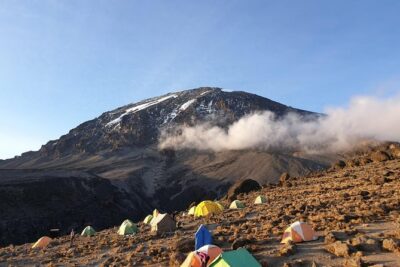
Best Kilimanjaro Adventure 7 days Machame route Trekking
Read our review →
Mount Kilimanjaro Day Hike Through Marangu Route to Mandara Hut
Read our review →Other lists this hike appears in