Review · PHILIPPINES
Small-Group Weekend Hiking Tour to Banaue-Ifugao from Manila
The best part of this four-day trip is that you do not simply stop at a viewpoint, take a photo, and leave. You walk through the 2,000-year-old Banaue rice terraces, pass through Ifugao villages, and sleep near the terraces in a basic mountain inn. The route gives you the rice fields from inside the valley, where stone walls, footpaths, forests, and homes become part of the experience.
I like the small maximum group of seven, which makes steep trails and village visits easier to manage. I also like that transport from Manila and the village stay are arranged for you. The main caution is the physical demand: expect six to seven hours of hiking each day, with steep and slippery sections, plus an overnight bus ride at both ends.
Key points to know before booking
- Four days from Manila: The trip starts at 9:00 pm with an overnight bus to Banaue and ends back at the same Manila bus station around 3:00 am on Day 4.
- A true hiking trip: The route includes six to seven hours of walking each day on moderately hilly to steep ground.
- Three terrace areas: You visit Banaue, Batad, and Bangaan, with the amphitheater-shaped Batad terraces as the main visual prize.
- Village-based overnight stay: You spend the night in a very basic inn with running water and communal bathrooms.
- Small group support: The group is limited to seven people and includes a professional guide, with porters available if you do not want to carry your own pack.
- Food is mostly extra: One breakfast is included, but you pay for other meals and drinks along the way.
Why this route is more than a rice terrace viewpoint
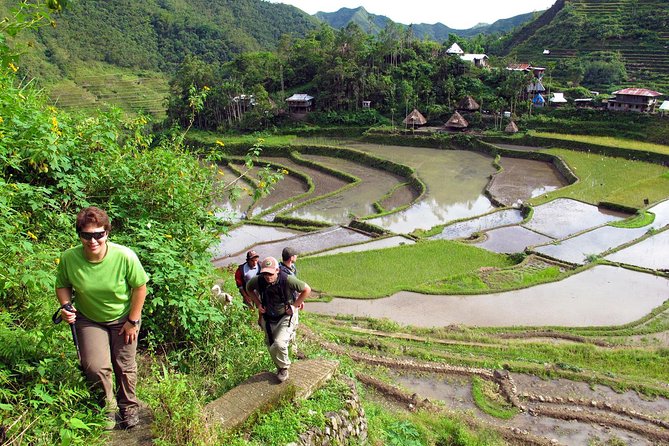
Banaue is often reduced to one famous photograph: layered rice fields cut into a mountain slope. That viewpoint is worthwhile, but it gives you only the broad outline. This tour takes you beyond the roadside stop and onto the paths linking the terraces and villages.
The Ifugao region is especially rewarding for hikers who want local life alongside scenery. You pass through native communities, walk beside working rice fields, and spend the night in a village rather than returning to a city hotel. The setting is simple, but that is part of the appeal. You will have less privacy and fewer comforts, while gaining more contact with the place.
The trip is not a relaxed sightseeing circuit. You carry clothing, handle rough paths, and keep moving for most of the day. If you enjoy walking and accept a little discomfort, the route offers a much fuller experience than a quick Banaue excursion.
More Small-Group Hikes in the world:
- Small Group Waterfall and Rainforest Hiking Adventure on Maui
★ 5.0 · 1,417 reviews - Glacier Hike and South Coast Small-Group Tour from Reykjavik
★ 5.0 · 827 reviews - Sólheimajökull Glacier Hike – Adventure in a Small Group
★ 5.0 · 799 reviews
The overnight bus from Manila
Meet at Ohayami Trans in Sampaloc, Manila, at 9:00 pm. The bus carries you north through winding mountain roads while you sleep, at least in theory. This is an efficient way to reach Banaue without giving up a separate day for transport, but it is not a substitute for a good night in a bed.
You should arrive ready for an early start after a long ride. Keep essential items close at hand, including water, a light layer, medication, and anything you need during the night. Your larger pack can hold clothing and hiking supplies, but the bus journey is easier if you have a small personal bag.
The return is also demanding. On Day 3, you make your way back toward Manila, arriving at the same bus station at about 3:00 am on Day 4. Plan your next Manila activity carefully. You may want a quiet morning rather than an airport transfer or an important appointment.
Day 1 and the first look at Banaue
The first morning brings you to Banaue, the gateway to the Ifugao highlands. After the overnight ride, the group prepares for the walking portion of the trip.
Before the main hike, you take a tricycle to the Banaue Rice Terraces view deck. The ride itself is a useful introduction to local transport, and the viewpoint gives you the wide view needed to understand the scale of the terraces. This stop is short, about 15 minutes, but it helps you see how the fields follow the shape of the mountains.
Do not mistake this viewpoint for the main experience. The tour quickly moves from the photo stop to the trailhead at Kinaking, where the route becomes more physical and more personal.
Kinaking to Cambulo, about four hours on foot
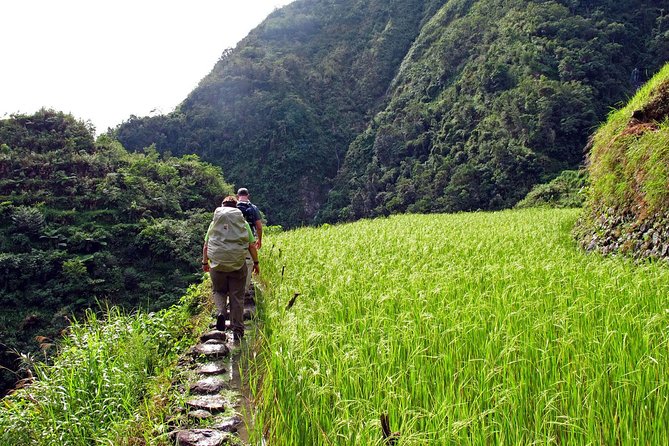
The first substantial hike leads from Kinaking toward Cambulo. You walk for roughly four hours through the Ifugao mountains, with terraces, forest, and mountain paths appearing in sections rather than all at once.
This is where the trip begins to separate itself from a standard day tour. You are not watching village life through a vehicle window. You are moving at walking pace, with time to notice the paths between homes and fields and to understand how remote communities connect with one another.
The trail can feel moderate to a regular hiker, but the full day adds up. Rain can make parts slippery, and the combination of uneven ground, heat, and a loaded pack may slow you down. Use the guide’s pace rather than trying to race ahead.
Cambulo is the first Ifugao village on the route. The stop gives you a chance to see village life at close range, but it also reminds you that this is a lived-in community, not a stage set for tourism. Be polite with photographs and follow the guide’s advice around homes and local residents.
More hikes and treks around the world:
- From Marrakech: Ouzoud Waterfalls Guided Hike and Boat Trip
★ 4.7 · 33,630 reviews - Berber villages : Atlas Mountains Day Hike from Marrakech
★ 5.0 · 14,007 reviews - Bali: Sunrise Mount Batur Guided Hike with Breakfast
★ 4.8 · 9,660 reviews - Bali: Mount Batur Sunrise Guided Hike and Natural Hot Spring
★ 4.8 · 9,284 reviews
Cambulo to Batad, another three hours
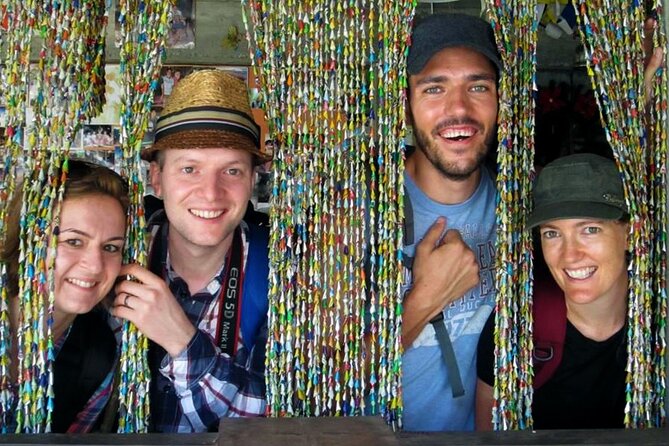
From Cambulo, the route continues for about three hours to Batad. By this point, your legs will already know that this is a serious walking holiday.
Batad is the visual centerpiece of the trip. Its rice terraces form a large amphitheater, with steep slopes folding around the valley. The shape is different from the broad views near Banaue, and the closer scale makes the old walls, paths, and cultivated plots easier to appreciate.
Your overnight stay is in a village inn with a view of the terraces. Expect very basic conditions: running water, communal bathrooms, and none of the polished comforts of a city hotel. That simplicity is worth considering honestly. You are paying for access to a remarkable mountain setting, not for a private bathroom or a full-service lodge.
The overnight location also saves you from rushing through Batad. You can settle in after the hike, eat, rest, and wake up close to the terraces. The accommodation is included, while food and drinks beyond the included breakfast are your responsibility.
Batad and Tappiyah Waterfalls on Day 3
The next morning begins with another three-hour hike around Batad. The route includes Tappiyah Waterfalls, along with more time to explore the village and terraces.
The waterfall adds variety to the day. After the long approach to Batad, you are not simply retracing your steps or heading straight to a vehicle. The path takes you through another part of the area, with the terraces and village remaining central to the walk.
The route around Batad is still demanding. You can expect climbs and descents, and wet weather may make the trail harder. Good hiking shoes or boots with reliable grip matter here. Sandals or casual trainers are a poor choice for a route where slippery sections are possible.
After lunch, you walk for about three hours to Bangaan, the final village on the adventure. The day again totals roughly six hours of hiking, so your comfort depends on carrying only what you need and keeping your pace steady.
Bangaan and the final return journey
Bangaan marks the final village portion of the trip. The route gives you one more chance to see how rice terraces, homes, and mountain paths fit together before the group begins the return toward Manila.
The precise return transport details are less important than the timing: you will spend much of the night traveling and arrive back at the original bus station at around 3:00 am. This arrangement keeps the tour compact, but it makes Day 4 more of a travel finish than a sightseeing day.
You should build recovery time into your plans. The bus saves money and avoids a separate domestic connection, yet the tradeoff is fatigue. For many people, that is a fair exchange for fitting Banaue into a four-day schedule from Manila.
What the $270 price covers
At about $270 per person, the price is reasonable for a guided, multi-day mountain trip if you value convenience and route planning. It covers all land transport during the trip, one night in a village inn, activity fees, a professional guide, and one breakfast.
The small group also matters. A maximum of seven people gives the guide a better chance to monitor the pace, help with trail decisions, and keep the group together on steep sections. A larger group might lower the price, but it could also make village visits and narrow paths less comfortable.
You still need to budget for most meals and drinks, personal trekking equipment, and tips. Hotel pickup and drop-off in Manila are not included, so you must reach Ohayami Trans in Sampaloc on your own.
The value is strongest for an independent-minded hiker who would otherwise need to arrange a bus, local transport, a guide, a village stay, and a multi-day route separately. If you already speak with local guides and are comfortable organizing mountain transport, the savings may look less important.
Carrying a pack, or hiring a porter
You need to carry two days of clothing in a backpack. That does not mean bringing a large travel bag. Pack light, because every extra item becomes noticeable on steep paths.
The operator can arrange a porter if you prefer not to carry your main load. This may be useful if you are fit enough for the walking but do not want the added strain of a pack. Ask about the porter option after booking, and still carry a small day bag with water, rain protection, personal medication, and valuables.
A practical packing list should include:
- Two days of lightweight clothing
- Grippy hiking shoes or boots
- Rain protection, since the tour runs in all weather
- A small personal bag for water and essentials
- Basic toiletries for communal bathrooms
- Any medication you need during the bus ride and hikes
The packing guide is sent after booking. Use it, but remember that wet conditions can make clothing and footwear more important than usual.
Guides, pace, and the small-group advantage
A professional guide is central to this trip. The route includes several long walking sections, village paths, and changes in weather. A guide helps with direction, timing, local context, and the practical decisions that are harder to make on your own.
Guides Marvin and Jonathan have both received especially strong praise for their work. Jonathan is noted for being friendly and well informed about the region, while Marvin is closely associated with a memorable terrace experience. Your assigned guide may differ, but these names give you a sense of the standard the operator aims for.
The small group is useful in less obvious ways. Seven people can spread out on a trail without creating a large procession, and the guide can pay closer attention to tired hikers or slippery sections. It also makes conversation easier during the long walks and bus transfers.
You should still be honest about your condition. The tour is not designed for someone who wants to decide each morning whether to walk. The route operates in all weather, and the group must follow the planned schedule.
The main drawbacks to weigh
The physical demand is the biggest issue. Six to seven hours of hiking each day is a lot, especially when the path is steep or wet. A moderate fitness level is required, but regular hill walking is a better preparation than occasional flat-city strolls.
Sleep is another consideration. The first night is on a bus, and the final return also involves overnight transport. The village inn has running water but communal bathrooms, and the stay is basic by design.
Food costs extra apart from one breakfast. Bring enough money for meals and drinks, and do not expect the price to cover every expense once the hiking begins.
Finally, the trip requires flexibility. It operates in all weather, though poor conditions may lead to a date change or full refund if the operator cancels. You can cancel for a full refund at least six full days before the start time. Later cancellations receive less or no refund, so do not leave your decision until the last moment.
Who should book this Banaue hiking trip?
I would recommend it to hikers who want more than a viewpoint and who are comfortable trading comfort for access. It suits people who enjoy long days outdoors, small groups, village stays, and a guide-led route through unfamiliar mountain country.
It is also a good choice if you have limited time in the Philippines. The overnight bus makes Banaue possible from Manila without arranging several separate transport legs.
I would not choose it for a relaxed family holiday, a luxury trip, or a casual sightseeing weekend. The minimum age is 12, children must be accompanied by an adult, and the high physical demand may rule out younger or less active participants.
FAQ
How long is the Banaue hiking tour?
The experience lasts about four days. It begins in Manila at 9:00 pm on the first evening and returns to the same Manila bus station at around 3:00 am on Day 4.
Where does the tour start and end?
You meet at Ohayami Trans, 1528 Fajardo Street, Sampaloc, Manila. The tour ends back at this same meeting point.
How much hiking is involved each day?
You should expect six to seven hours of hiking each day on moderately hilly to steep terrain. The listed walking sections include about four hours from Kinaking to Cambulo, three hours from Cambulo to Batad, three hours around Batad, and three hours from Batad to Bangaan.
Is accommodation included?
Yes. One night in a basic village inn is included. The inn has running water and communal bathrooms.
Are meals included?
One breakfast is included. Other food and drinks are not included, so you should budget separately for meals during the trip.
Can I hire a porter?
Yes. You need to carry a backpack with two days of clothing, but you have the option of hiring a porter.
What is the minimum age and group size?
The minimum age is 12, and children must be accompanied by an adult. The group has a maximum of seven people.
Should you book it?
Book this tour if you want to walk through Banaue and the Ifugao highlands rather than simply photograph them from a road. The Batad amphitheater, Tappiyah Waterfalls, village stays, and small group make the route feel like a real mountain journey.
Skip it if you need private bathrooms, dependable sleep, short walks, or a flexible daily schedule. For the right hiker, the $270 cost buys useful transport, local guidance, and access to a demanding but memorable part of Luzon that is difficult to arrange smoothly on your own.
Recently reviewed hikes in the world
- Asheville: Yoga on a Mountain Hike★ 4.7 · 7 reviews
- Arequipa: 2-day Colca Canyon Trekking, Ending in Puno★ 4.8 · 8 reviews
- Arctic hike on Kvaløya Island with drinks and snacks★ 5.0 · 8 reviews
- Arctic Wilderness Hike from Rovaniemi (Day & Evening)★ 4.7 · 12 reviews
- Antelope Valley: Ligai Si Anii Canyon Hiking Tour★ 4.9 · 13 reviews
- Antigua: 2-Day Acatenango Volcano Hike w/Local Guide & Meals★ 4.3 · 43 reviews
- Delphi: Easy Hike on Ancient Path through the Olive Groves★ 5.0 · 9 reviews
- Antalya: Hiking in Termessos Ancient City★ 5.0 · 152 reviews
Philippines Hiking Tours, compared.

Bohol: Hidden Waterfall Hopping and Jungle Trek Adventure
Read our review →
Day hike to Mount Daraitan with Tinipak River 2024
Read our review →