
Review · VIK
Sólheimajökull Glacier Hike – Adventure in a Small Group
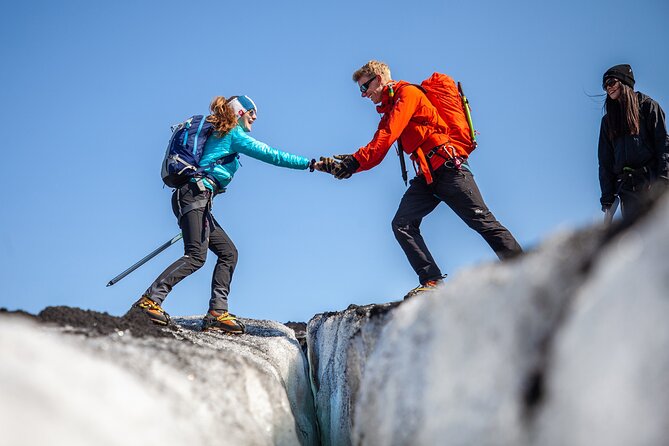
Sólheimajökull is not a distant view behind a safety rail. You walk onto the ice itself, using crampons and an ice axe while your guide points out blue ice, crevasses, cauldrons, and the marks left by a moving glacier. The experience feels adventurous without requiring a full day or advanced climbing skills.
I like the small-group format, which gives your guide room to watch your footing, answer questions, and adjust the pace. I also like the simple pleasures: drinking clean glacier water, stepping near a small ice tunnel, and learning how quickly this glacier changes.
The main consideration is time. The tour lasts about three hours, but only about 45 minutes to one hour may be spent walking on the ice itself. You also need decent balance and ankle support, and the approach can be windy, dusty, and cold.
Key points to know before you book
- You walk on real glacial ice: Expect blue ice, crevasses, uneven surfaces, and changing formations rather than a flat path.
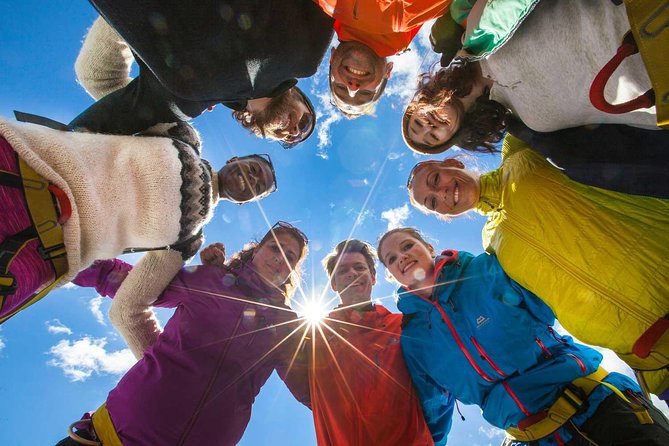
- The group is capped at 14 people: Small groups help with safety, questions, photos, and pace.
- Most of the technical gear is supplied: You receive a harness, crampons, ice axe, and helmet.
- The glacier portion is moderate, not effortless: Cardiovascular fitness is not the biggest issue, but balance and agility matter.
- Plan for cold, wind, and dust: Bring warm waterproof layers, gloves, a hat, hiking shoes, and sunglasses that wrap around.
- The price buys guidance and gear, not just a walk: At $115 per person, you are paying for a certified guide, equipment, instruction, and access to terrain you should not enter alone.
Sólheimajökull gives you a close look at a changing glacier
Sólheimajökull is an outlet glacier, a tongue of ice extending from the larger Mýrdalsjökull ice cap. From the base, it may look like a broad white slope, but the surface becomes much more interesting once you get close. Blue ice, dark volcanic dust, hollows, ridges, and cracks give the glacier a rough, sculpted character.
Your guide uses the walk to explain how the ice moves and how the surface changes. One useful lesson is that a glacier is not frozen in place. It shifts by many meters each year, and the formations you see are temporary parts of a moving system.
That makes this more than a scenic hike. You get a practical introduction to glacial geology while standing on the subject itself. If climate change interests you, the experience also gives you a more tangible sense of a retreating and changing ice environment.
The ice is the star, but the setting around the glacier matters too. The approach offers broad views and a stark contrast between volcanic ground and bright ice. On a clear day, the combination of dark ash, white snow, and blue ice makes the route especially photogenic.
More Glacier Hikes in Iceland
- Skaftafell: Ice Cave Tour and Glacier Hike
★ 4.5 · 1,746 reviews - Skaftafell: Falljokull Glacier Easy Group Hike
★ 4.7 · 1,508 reviews - Reykjavik: Glacier Hike, Waterfalls and Black Sand Beach
★ 4.8 · 1,285 reviews
From Sólheimajökull Base Camp to the glacier
You begin at Icelandic Mountain Guides by Icelandia, Sólheimajökull Base Camp, near Hvolsvöllur. The tour ends at the same place, so you do not need to arrange a separate pickup from the glacier.
Arrive before the scheduled start so you have time to meet your guide and group. The base camp has toilets, and coffee and tea are included. These are modest comforts, but they are useful in Iceland, where wet weather can make a hot drink feel like part of the itinerary.
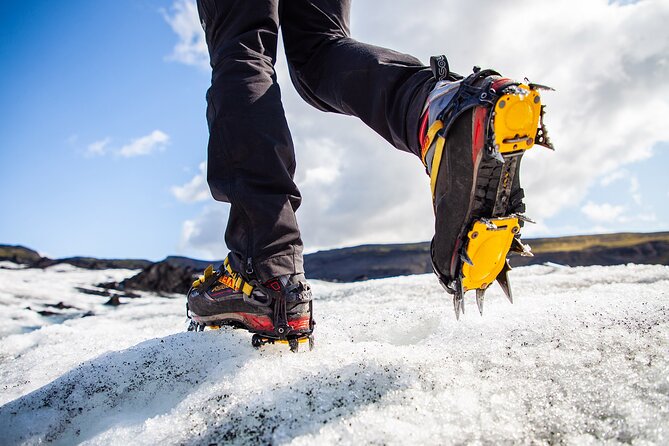
At the base, you are fitted with a harness, crampons, an ice axe, and a helmet. The operator provides the glacier equipment, but hiking boots are not included. Bring sturdy shoes that rise above the ankle. Some people have rented boots through the company, but you should confirm availability rather than depend on it.
The guide then explains how to use the equipment and how to walk safely on ice. Crampons change your stride. Instead of stepping lightly as you might on a trail, you place your feet firmly and keep your balance over the points beneath your boots.
This preparation can take longer than expected. One account described roughly an hour passing before the group reached the glacier, because fitting gear and getting everyone ready takes time. That is not wasted time, since poor equipment preparation would spoil the walk, but it does mean the three-hour tour is not three hours of glacier hiking.
What the approach feels like before your boots touch ice
The route from the base area to the glacier includes walking over rough ground. One account described the approach as about 10 minutes, while other experiences suggest that preparation and access together can make the first part feel longer.
Conditions matter. Strong gusts, cold temperatures, and loose black volcanic dust can make this section less pleasant than the ice itself. One useful tip is to bring sunglasses that wrap around your face. Wind can blow ash and dust toward your eyes on the walk to and from the glacier.
Wear warm, waterproof clothing even if the forecast looks kind. Icelandic weather can shift quickly, and the glacier creates its own cold, exposed setting. A hat and gloves are specifically recommended, and rain gear is not supplied.
Once you reach the ice, the crampons become more than safety equipment. They let you grip the surface and walk over slopes and uneven patches that would be unsafe in ordinary shoes. Your guide will choose the route based on current conditions, so the exact path and formations can change.
Walking across blue ice, crevasses, and cauldrons
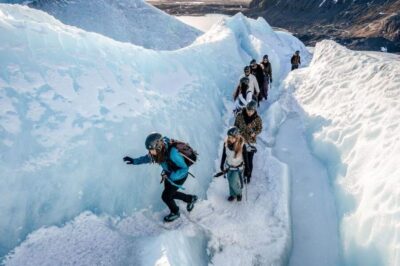
The glacier walk is the central part of the tour. You follow your guide across a frozen area filled with folds, ridges, holes, and blue-white walls. The blue color comes from the way dense ice absorbs and reflects light, and it can look especially strong inside hollows and cracks.
You may see crevasses and cauldrons, but you do not explore them independently. Your guide selects safe places to approach and explains what you are looking at. A small ice tunnel or the entrance to a shallow ice cave can be a highlight when conditions allow and the group is comfortable.
That wording matters. Ice formations are not fixed attractions, and access can change with weather and glacier movement. You should treat any tunnel or crevice visit as an optional bonus, not a guaranteed feature.
The guide also builds in regular stops. These breaks give you time to catch your breath, take photographs, and ask questions. They also keep the pace manageable for a mixed group, which can include people with very different levels of fitness and hiking experience.
The walking itself is often described as easy to moderate from a cardiovascular point of view. You are not racing uphill for three hours. Still, the surface demands attention. If you have orthopedic problems, poor balance, or trouble walking on uneven ground, you should think carefully before booking.
One person who was not used to regular exercise found the hike difficult, while a more active companion had no trouble. That is a useful distinction: your lungs may be fine, but your ankles, knees, and balance still have work to do.
More Small-Group Hikes in Iceland
- Glacier Hike and South Coast Small-Group Tour from Reykjavik
★ 5.0 · 827 reviews - Skaftafell Glacier Hike 3-Hour Small Group Tour
★ 4.5 · 580 reviews - Solheimajokull Glacier 3-Hour Small-Group Hike
★ 5.0 · 501 reviews - Skaftafell: Extra-Small Group Glacier Hike
★ 4.9 · 501 reviews
Why the guide makes such a difference
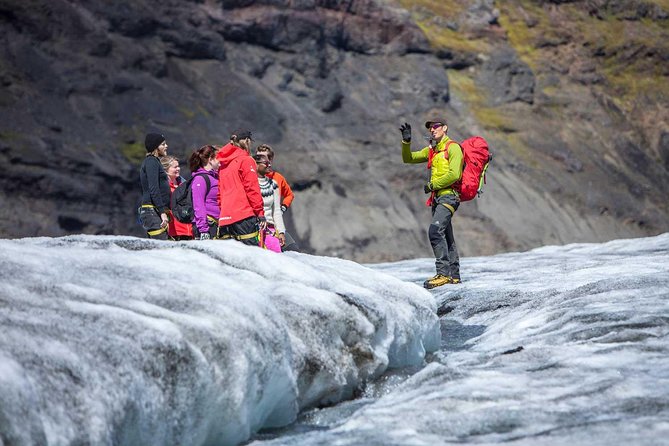
A glacier is not a place where you should simply follow a marked path. The surface changes, cracks may be hidden, and weather can turn a short route into a demanding one. Your certified guide handles the route, checks conditions, explains the equipment, and keeps the group together.
The strongest part of this experience is the personal attention. With a maximum of 14 people, the guide can watch how you move and help correct your technique. If the group is smaller, you may get more time for questions and photographs.
Guides named in the tour feedback include Sam, Sophia, Oskar, Heini, Maria, Eliska, Oscar, Anton, Woody, Dennis, and Evan. The praise is consistent across those accounts: clear safety instructions, friendly explanations, patience with different abilities, and help with photographs.
You should not book on the assumption that you can choose one of these guides. Their names simply show the range of guides leading the experience. The important point is the role they play. A good guide turns a cold walk on uneven ice into an activity that feels controlled and understandable.
The guides also seem willing to adapt within safe limits. Eliska, for example, was able to give a beginner confidence while offering more challenge to an experienced partner. Another guide adjusted the pace for younger and older members of the same group.
That flexibility is valuable if your party has mixed abilities. You will not all need the same level of challenge, but everyone must be comfortable following the guide’s instructions.
How active is a three-hour glacier hike?
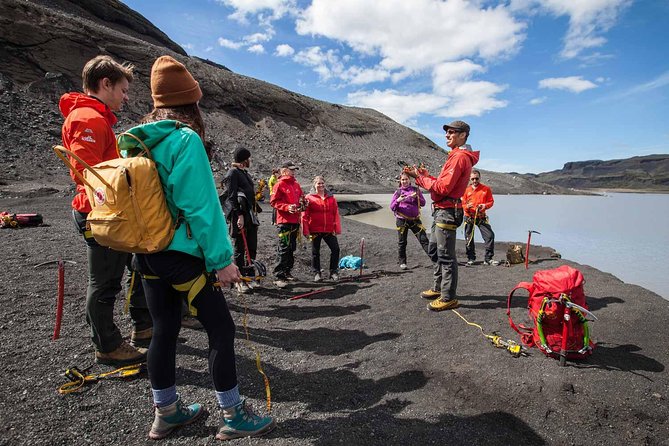
The tour is best described as a guided glacier walk with moderate physical demands, not a serious mountaineering expedition. The actual walking on the ice may last about 45 minutes to one hour, with the rest of the time used for the approach, equipment, instruction, breaks, and explanations.
That shorter ice-walking period can be a strength. Three hours is long enough to reach the glacier, learn the basics, see varied formations, and get a real sense of the place. It is also short enough to fit into a busy South Iceland day.
If you expect constant movement or a demanding climb, you may find the activity less active than advertised. One person wanted more time on the glacier. A private tour might offer more flexibility, but this standard small-group experience includes waiting while everyone prepares and moves together.
For many people, the slower pace is exactly right. You have time to take photographs without rushing, listen to the guide, and look closely at the ice. The pauses are not filler. They are part of learning how to read a glacier safely.
The tour runs several times daily, which helps you fit it around other plans. An early departure may give you a quieter start. One group found that they had the glacier largely to themselves for a while in the morning, though conditions and crowd levels vary.
Price, equipment, and what your $115 covers
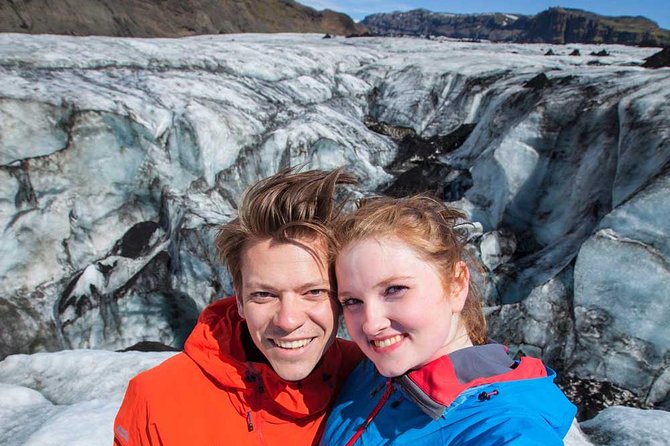
At $115 per person, this is not a cheap sightseeing walk, but the price is reasonable for a guided glacier activity. You receive a certified guide and use of a harness, crampons, ice axe, and helmet. You also get instruction in how to use the gear and how to move on the glacier.
Buying or renting all that equipment separately would be impractical for a short visit. More important, you should not attempt to walk on glacial ice alone. The cost includes route knowledge, safety management, and the judgment to decide which formations are safe to approach.
Coffee, tea, and toilets at the base camp are included. Hiking boots, rain gear, and snacks are not. Bring food if you need it, especially if you are fitting the tour between other South Iceland activities.
The best value comes when you want an active encounter with the glacier but do not want a full-day mountaineering program. If you only want a photograph of Sólheimajökull from a distance, this is more money and effort than you need. If you want to stand on the ice and understand what you are seeing, the price makes more sense.
Who will enjoy this activity most
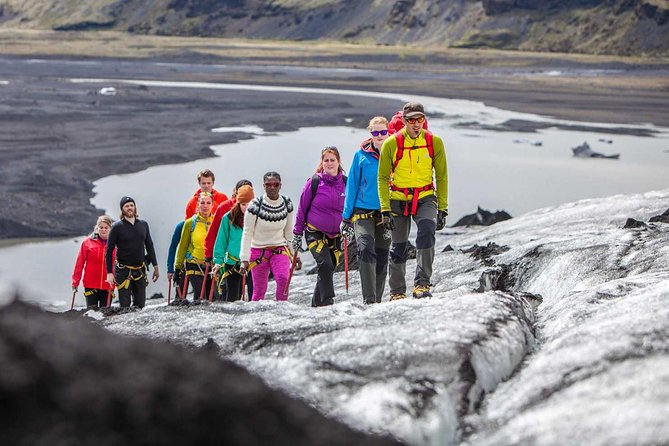
This tour suits you if you want a memorable Iceland experience in a half-day-sized block. It works well for couples, families with children who can follow instructions, and mixed-ability groups that benefit from a careful guide.
Children must be accompanied by an adult. The information supplied says most people can participate, but that does not mean the walk is suitable for everyone. You need good hiking shoes, warm waterproof clothes, and enough balance to walk on uneven ice.
I would choose this for someone who is curious about glaciers but has no technical experience. The equipment and instruction remove much of the intimidation, while the small group keeps the outing personal.
I would hesitate if you have significant orthopedic issues, dislike cold and wind, or want a long, strenuous hike. I would also explain the schedule clearly to anyone expecting several hours of continuous ice walking. The glacier time is limited, and the group moves at a shared pace.
Practical advice for a smoother glacier walk
- Wear ankle-high hiking shoes: The supplied crampons need a solid fit, and ankle support helps on uneven ground.
- Bring waterproof layers: Rain gear is not supplied, and the glacier can feel colder than the base camp.
- Pack gloves and a hat: You will handle equipment and an ice axe in an exposed setting.
- Use wraparound sunglasses: Windblown black dust can bother your eyes on the approach.
- Bring snacks: Food is not included, though coffee and tea are available at the base camp.
- Keep your camera ready: The guide will provide pauses for photographs, and some formations may only be visible for a short time.
- Expect changing conditions: Ice tunnels, crevasses, and the route depend on safety and weather.
- Book ahead: The experience averages about 40 days of advance booking, so leaving it until the last minute may limit your choice of departure time.
The activity is offered in English. Confirmation arrives when you book, and the ticket is mobile, which keeps the process simple.
Safety, weather, and cancellation details
The guide controls the route and monitors conditions throughout the outing. That is especially important in strong wind or cold weather. One group dealt with gusts of about 50 miles per hour and temperatures near 34 degrees Fahrenheit, yet continued with equipment and close guide supervision.
Poor weather can cancel the experience. If that happens, you are offered another date or a full refund. You can also cancel for a full refund if you do so at least 24 hours before the start time. Changes or cancellations inside that window are not accepted, and the cutoff uses local time.
Do not treat the weather policy as a reason to pack lightly. Even when the tour runs, you need suitable clothing. Icelandic Mountain Guides can manage many conditions, but they cannot make wet cotton, poor shoes, or cold hands comfortable.
Should you book the Sólheimajökull glacier hike?
Book it if you want to walk on a glacier without committing to a full-day expedition. The combination of safety instruction, supplied technical gear, a certified guide, blue ice, crevasses, and glacier water gives you a real connection to Sólheimajökull.
I especially recommend it for first-time glacier hikers and families with older children who can manage uneven ground. The small group and patient pacing make the activity approachable, while the guide keeps it interesting for people who already know something about ice.
Skip it if you want a long, hard hike, if your balance is unreliable, or if you would rather save the money for scenic stops that require no gear. Also keep your expectations clear: much of the three hours involves preparation, walking to the ice, instruction, and breaks.
For the right visitor, this is one of the most direct ways to experience Iceland’s ice. You do not just look at a glacier from the roadside. You strap on crampons, take careful steps, and learn how a moving world of ice works under your feet.
FAQ
Where does the Sólheimajökull glacier hike begin?
The tour begins at Icelandic Mountain Guides by Icelandia, Sólheimajökull Base Camp, listed at 871 Hvolsvöllur, Iceland.
Where does the activity end?
The tour ends back at the Sólheimajökull Base Camp meeting point.
How long does the glacier hike last?
The activity lasts approximately three hours. About 45 minutes to one hour may be spent walking on the glacier itself, with additional time for preparation, the approach, instruction, stops, and the return walk.
What equipment is included?
The tour includes a harness, crampons, an ice axe, and a helmet. A certified glacier guide is also included.
Are hiking boots provided?
No. Hiking boots are not included. You should bring good shoes that are high on the ankle.
What clothing should I bring?
Bring warm and waterproof clothing, a hat, gloves, and suitable hiking shoes. Rain gear is not included.
Are food and drinks included?
Coffee and tea are available at the base camp. Snacks are not included, so bring your own if needed.
Is this tour suitable for children?
Children must be accompanied by an adult. Most people can participate, but the walk requires balance and the ability to follow safety instructions.
What is the maximum group size?
The group can include a maximum of 14 people.
What happens if bad weather cancels the tour?
If poor weather causes a cancellation, you are offered a different date or a full refund. You can also receive a full refund if you cancel at least 24 hours before the experience start time.
Recently reviewed hikes in Iceland
- Private Jökulsárlón Glacier Lagoon 2 Day Tour & Glacier Hike★ 5.0 · 159 reviews
- Private South Coast and Glacier Hike – With photos★ 5.0 · 49 reviews
- Private Guided Hike Experience on Sólheimajökull Glacier★ 5.0 · 41 reviews
- Hiking with Husky in Akureyri (private)★ 5.0 · 44 reviews
- Reykjavik: South Coast, Waterfalls & Glacier Hike Small-Group★ 4.5 · 322 reviews
- Fagradalsfjall Volcano Hike – Small Group with Local Guide★ 5.0 · 338 reviews
- Skaftafell: Small-Group Vatnajökull Glacier Hike (Moderate)★ 4.8 · 327 reviews
- Zipline and Hiking Adventure Tour in Vík★ 5.0 · 336 reviews
Glacier Hikes, compared.
Skaftafell: Falljokull Glacier Easy Group Hike
Read our review →
Reykjavik: Glacier Hike, Waterfalls and Black Sand Beach
Read our review →
Sólheimajökull: Blue Ice Glacier Hike near Vík (Easy)
Read our review →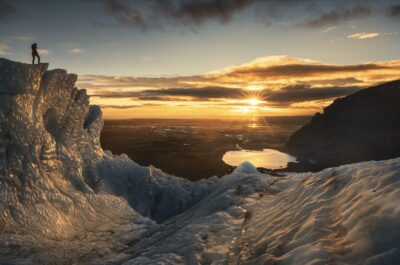
Skaftafell National Park: Falljokull Glacier Advanced Hike
Read our review →
Skaftafell: Blue Ice Glacier Hike on Vatnajökull
Read our review →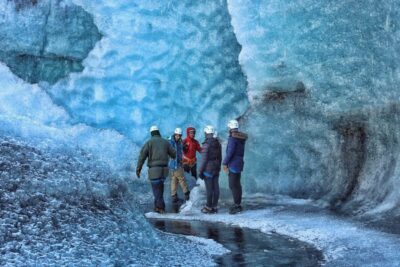
Jökulsárlón: Vatnajökull Glacier Guided Hiking Tour
Read our review →
From Reykjavik: Glacier Hike, South Coast and Waterfalls Day Trip
Read our review →Other lists this hike appears in