
Review · ICELAND
Fagradalsfjall Volcano Hike – Small Group with Local Guide
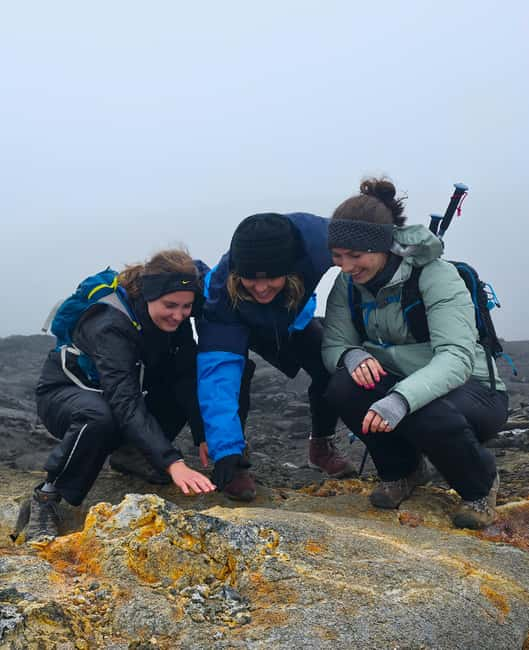
The striking thing here is that you do not simply pull over, snap a picture, and move on. You spend up to four hours on foot around Fagradalsfjall, crossing black lava formed by eruptions since 2021 and seeing ground that may still steam. The advertised eruption activity reached as recently as July 2025, but glowing lava is never promised.
I like the eight-person limit, which lets guides such as Oddi, Guðni, Haffi, and Sigrún adjust the pace and keep an eye on everyone. I also like the local connection: guides from Grindavík and Keflavík explain the eruptions, the town’s damage, and everyday life beside an active volcanic zone.
The main consideration is simple: this is a real, moderate hike in changeable Icelandic weather. Strong wind, mud, loose rock, and cold rain can make the 8-kilometer route feel much longer, and self-drivers need a rental car, parking money, and the confidence to follow the guide to the trailhead.
Key points at a glance
- Walk on young lava: Cross black volcanic ground shaped by eruptions from 2021 onward, with smoking spots possible when conditions allow.
- Small group, personal pace: No large coach group. The guide can stop for geology, photos, and rest without turning the outing into a race.
- Local guides with direct ties: Guides from Grindavík and Keflavík share first-hand context about the eruptions and the town’s disruption.
- Two ways to join: Pick up in Reykjavík for a longer outing, or meet at Geo Hotel Grindavík if you have a rental car.
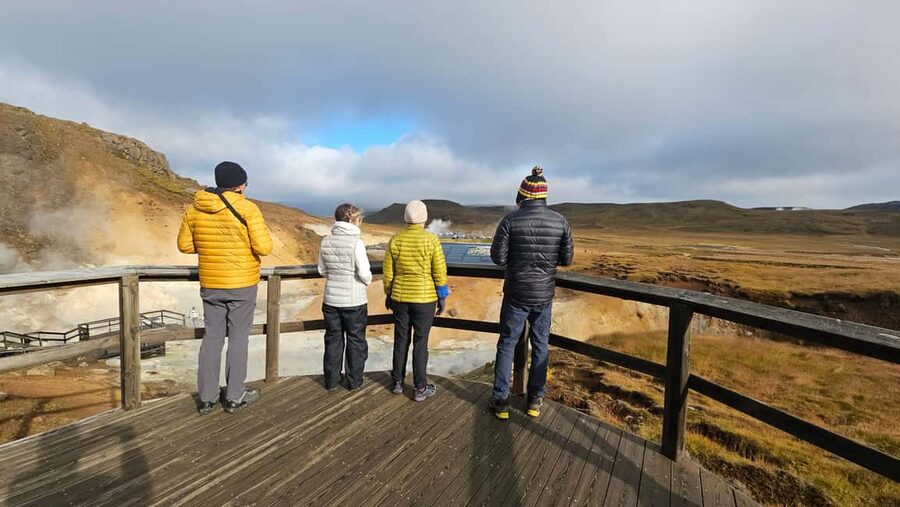
- Extra summer stops: Pickup outings can include Seltún’s geothermal ground and Kleifarvatn Lake when roads and weather cooperate.
- Come prepared for a hike: Bring sturdy hiking shoes, water, snacks, layers, and rain gear. Poles are supplied, with crampons available in winter.
Why this is more than a volcano photo stop
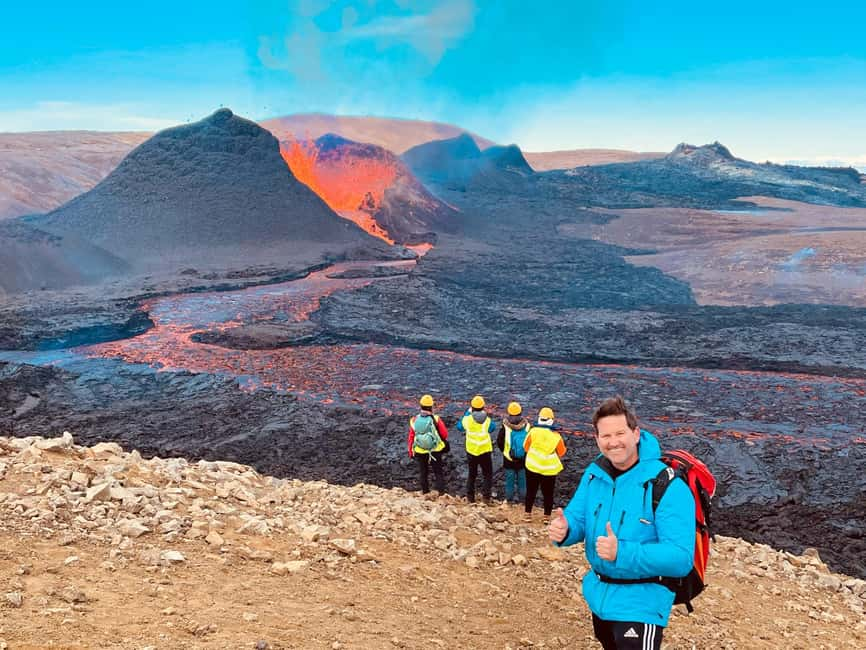
Fagradalsfjall is one of Iceland’s newest volcanic areas, and its appeal comes from seeing freshly formed terrain at walking speed. The route takes you across rough black lava fields, toward craters and viewpoints shaped by several eruptions since 2021.
That pace matters. From a van window, lava can look like a dark, shapeless mass. On foot, you notice broken textures, folds, ridges, steam, and the way the route rises toward a broad view. Your guide can stop to explain how lava moved, where eruptions began, and why some sections look different from others.
The experience is also tied to Grindavík. This is not a distant volcanic site with no human story attached. The town has faced fissures, lava damage, evacuations, and major disruption. A short stop or drive through the fishing village gives the hike a human frame before you reach the open volcanic ground.
The setting can feel almost unreal. One guide compared it to the volcanic world of fantasy films, and that is easy to understand when you are surrounded by dark rock, steam, wind, and empty ridges. Still, the strongest part is not fantasy. It is the clear sense that this ground is young and that the area remains active.
More Small-Group Hikes in Iceland
- Glacier Hike and South Coast Small-Group Tour from Reykjavik
★ 5.0 · 827 reviews - Sólheimajökull Glacier Hike – Adventure in a Small Group
★ 5.0 · 799 reviews - Skaftafell Glacier Hike 3-Hour Small Group Tour
★ 4.5 · 580 reviews
The two ways to join the tour
You can book a Reykjavík pickup or choose the self-drive option. The choice affects both the length and the number of places you see.
The pickup outing takes up to about six hours. The van collects you in Reykjavík, with Bus Stop 3 at Lækjargata listed as one meeting point, then heads toward the Reykjanes Peninsula. Return transport is included, so you can focus on the hike rather than parking, driving, or reading road updates.
The self-drive version takes about four hours. You meet the guide at Geo Hotel Grindavík at 10:45, get a short introduction to the fishing village, and follow the guide in your own rental car to the volcano parking area. Parking costs extra and is paid on site.
That self-drive detail is important. A taxi or shuttle cannot replace a rental car for this option. After the hike, you continue on your own, so pickup is the simpler choice if you do not already have a car.
The Reykjavík option offers more than convenience. During summer or good weather, it can include Seltún and Kleifarvatn. In winter, snow or ice may close those roads, so treat both stops as useful extras rather than guaranteed parts of the day.
Grindavík gives the hike a human story
The first stop is a brief visit or scenic drive through Grindavík, generally around ten minutes. It is not a full town tour, but it helps you understand the effects of the volcanic activity.
Your guide can point out fissures, lava damage, and areas affected by the eruptions. The drive is short, yet it changes how you read the rest of the day. You are not looking at old rocks in isolation. You are seeing a place where residents had to respond quickly to changing ground and lava flows.
Several guides are local to Grindavík or nearby Keflavík. That local link is one of the strongest reasons to choose this small-group outing instead of arranging a basic transfer to the trailhead. Guides such as Oddi and Guðni are praised for combining eruption science with Icelandic culture, folklore, and stories about the area.
Do not expect a long stop here. The point is orientation, not a full historical tour. The limited time works well if you want the volcano to remain the main event.
The 8-kilometer Fagradalsfjall hike
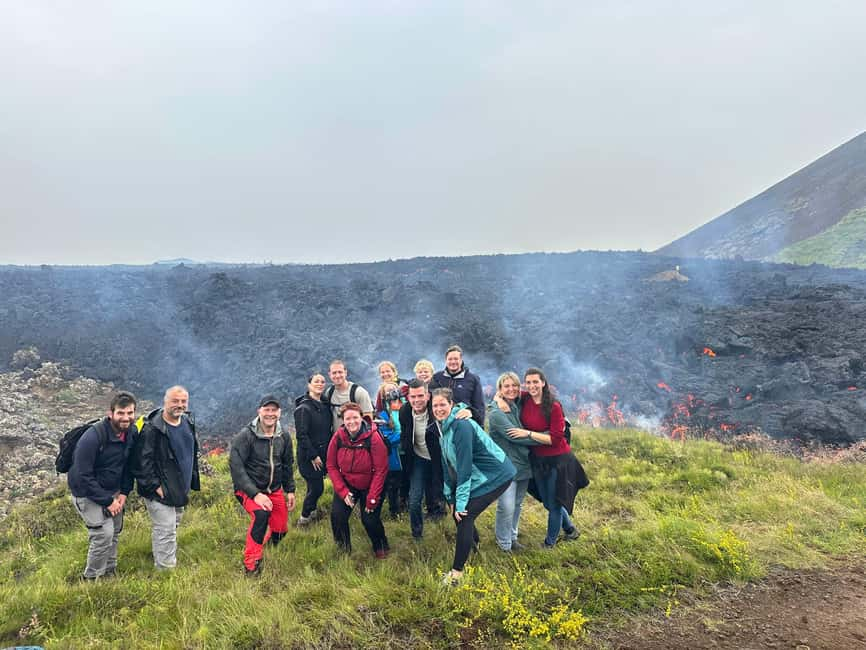
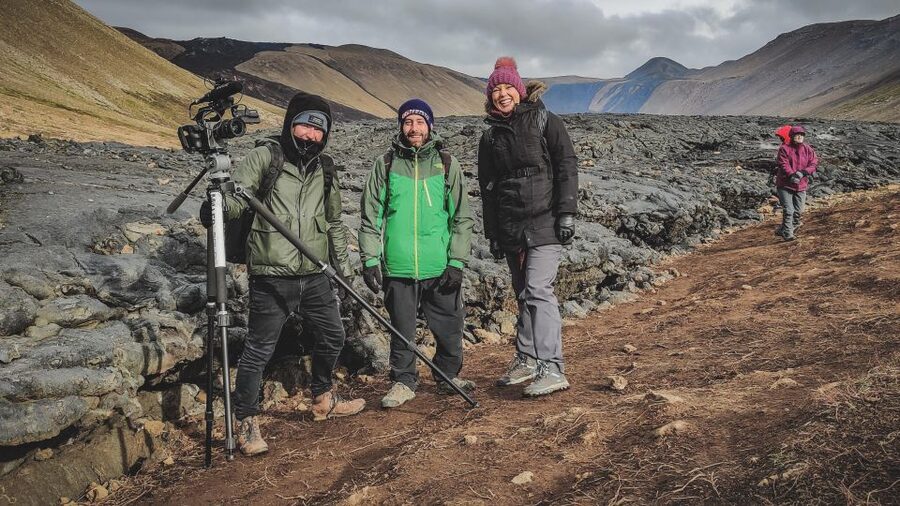
The main hike lasts up to about three and a half hours, with walking time reaching four hours depending on group pace and conditions. The full route is about 8 kilometers round trip, and the elevation gain is roughly 300 meters.
That makes it moderate, not a casual stroll. You need to walk uphill, manage uneven volcanic ground, and descend carefully. The climb is not described as extremely steep, but loose rocks can shift beneath your shoes, especially on the way down.
This is where the small group earns its keep. The guide can pause for explanations and allow people to catch up. A ten-year-old handled the outing well with a steady pace, and visitors in their seventies were also carefully supported, but that does not turn it into an easy family walk for everyone. Young children under two are not accepted, and the route is not suitable for people with mobility impairments, pregnancy, or respiratory problems.
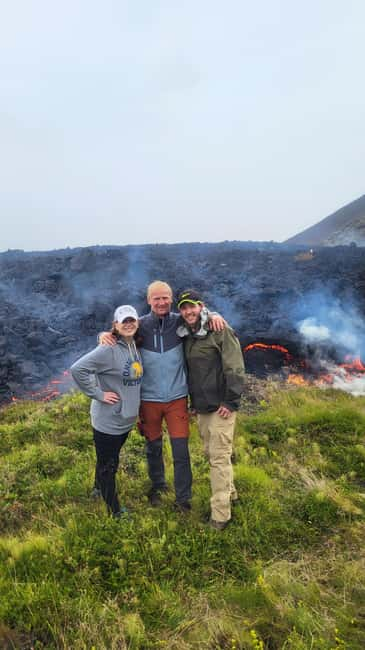
The ground is the main attraction. You may walk across lava from the 2021 or 2023 eruptions, see dark craters, and reach viewpoints over the Reykjanes terrain. If volcanic heat is present, you might feel warmth rising from the ground or see steam billowing from cracks.
Visible red lava is not part of the standard promise. Lava appears only during an eruption, and access depends on safety. If activity is happening and the route is open, the guide adjusts the plan to reach the best safe viewing point. If not, the outing focuses on the lava fields, craters, steam, and views.
That honest setup matters. Book this for the chance to walk through a young volcanic area, not for a guaranteed night of glowing lava.
More Volcano Hikes in Iceland
- Reykjavík: Volcano Eruption Site and Reykjanes Hiking Tour
★ 4.6 · 1,066 reviews - Reykjavík: Guided Afternoon Hiking Tour to New Volcano Site
★ 4.4 · 934 reviews - From Reykjavík: Fagradalsfjall Volcano Hike with Geologist
★ 4.8 · 780 reviews - Iceland Hiking Tour to Fagradalsfjall Volcano with Local Guide
★ 5.0 · 573 reviews
What the guide adds on the trail
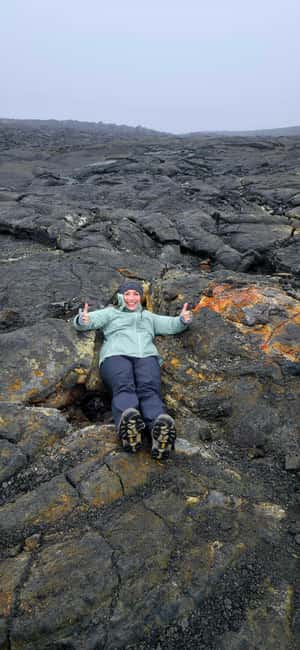
The guide is more than the person behind the wheel. You get an English-speaking, accredited local guide dedicated to your small group.
Expect frequent stops for geology and local stories. Guides explain magma, lava movement, eruption patterns, and the differences between volcanic features under your feet. They also talk about Icelandic culture and folklore, which gives the hard science a warmer, more personal feel.
The best guide reports show a consistent pattern: the pace stays steady without feeling rushed, safety comes first, and explanations continue throughout the route. Oddi is often praised for his enthusiasm and for pointing out extra details, including a ptarmigan family on the mountain. Guðni is noted for supplying spare beanies and helping with poles or clothing when needed. Haffi is praised for showing where earlier flows traveled and for making the volcanic science easy to follow.
Some outings include a surprise near the end, sometimes involving food heated by volcanic gas or a vent. The exact surprise is not guaranteed, so do not book solely for that feature. It is best treated as a playful extra after a serious walk.
Seltún and Kleifarvatn add variety
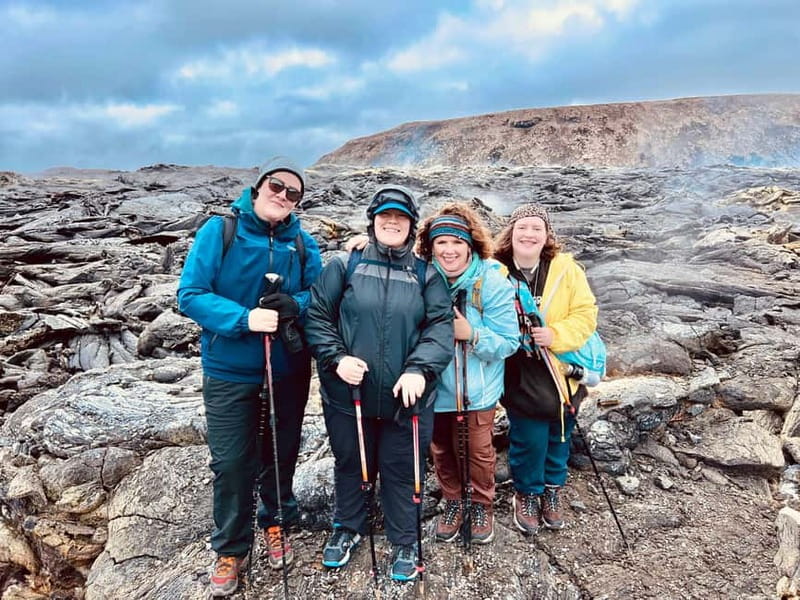
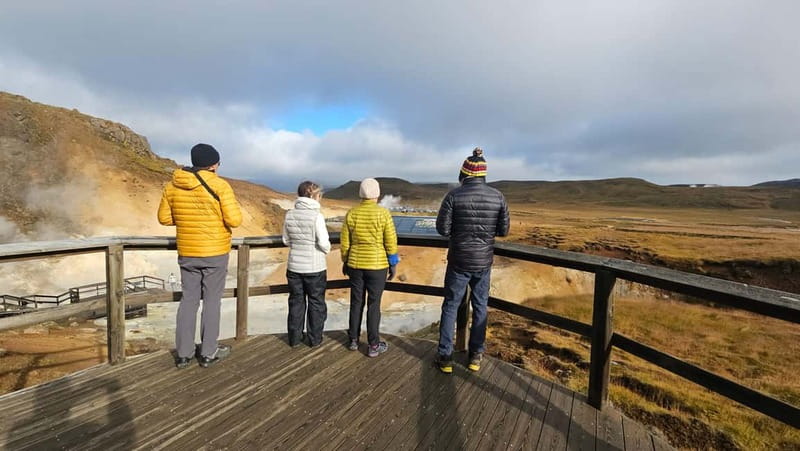
Pickup outings may continue to Seltún, a geothermal area about 15 minutes from the volcano. You get a short visit, a walk, and time for photos. The ground here offers a different look at Iceland’s underground heat, with steaming areas and geothermal color.
The stop is brief, so think of it as a sharp contrast to the lava hike rather than a full geothermal visit. It also depends on summer conditions or good weather. Roads can close in winter because of snow and ice.
Kleifarvatn comes next, with about ten minutes for photos and views. The lake gives you an open, quiet pause after the rough volcanic route. The drive itself is part of the appeal, with changing views across the Reykjanes Peninsula.
Again, weather controls the plan. If the road is unsafe, the guide may skip one or both stops. That is a sensible tradeoff in Iceland, where a promised photo stop is never more important than safe roads.
Weather, clothing, and trail comfort
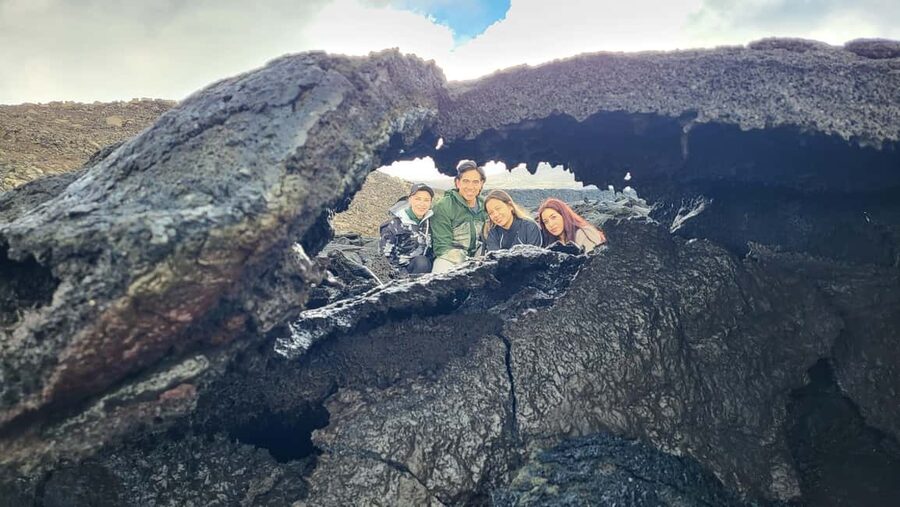
Iceland can give you sunshine, rain, and hard wind in the same afternoon. On this route, wind is not a minor nuisance. The open volcanic ground offers little shelter, and one winter outing was described as extremely windy.
Wear thermal layers, comfortable clothes, and a waterproof outer layer. Bring gloves and a warm hat, even if Reykjavík feels mild when you leave. Pack water and snacks, since food and drinks are not included.
Your shoes matter most. Choose sturdy hiking shoes with good grip, not sneakers. Loose rock can slide underfoot, and the trail may become muddy after rain. Sandals, flip-flops, and high heels are not suitable.
Walking poles are available at no extra charge. Crampons are supplied in winter when needed. Poles are useful on uneven ground, but they are not essential for everyone.
You should also bring enough clothing to adjust during the climb. The hike can warm you up, while a rain shower or gust of wind can make you cold again within minutes.
Is the $148 price fair?
At $148 per person, this is expensive by most standards. Iceland’s high operating costs are part of the reason, but the useful question is what you receive for the money.
The price includes a private accredited guide for your group, and pickup tours include transport from Reykjavík. You are not paying only for a drive and a viewpoint. You are paying for route planning, eruption updates, safety decisions, local interpretation, and a guide who can adjust the hike to the group.
The eight-person cap improves the value. A large group can make a volcanic hike feel like a queue across the rocks. Here, the guide can answer questions, set a manageable pace, and watch the slower walkers more closely.
The value is weaker if you want a short outing or guaranteed flowing lava. You may spend several hours walking in cold, windy conditions and see no red lava at all. If your main aim is a quick photo, this is probably too costly and too demanding.
For someone who wants to understand what happened on the peninsula and walk across young volcanic ground, the price is easier to justify. The extra stops on the pickup version make it more attractive, especially if you do not have a rental car.
Who should book this hike?
I would choose this for geology fans, photographers, active families, and anyone fascinated by Iceland’s recent eruptions. It also suits people who want a local guide rather than a standard coach commentary.
The experience is best for someone comfortable walking about 8 kilometers with a 300-meter climb. You do not need to be a serious mountaineer, but you should be fit enough for uneven ground and changing weather.
It is not suitable for children under two, pregnant people, visitors with mobility impairments, or those with respiratory issues. Anyone with limited hiking experience should be honest about their fitness before booking.
The small group also works well for solo visitors and couples. You can ask questions, hear the guide clearly, and get a more personal sense of the place.
Should you book the Fagradalsfjall hike?
Book it if you want a real walk across new volcanic ground, strong local storytelling, and a guide who can explain both the rocks and the people affected by them. The most reliable reward is not glowing lava. It is the strange beauty of black fields, steam, craters, wind, and the knowledge that the terrain is only a few years old.
Choose the Reykjavík pickup if you want a simple day with transport and possible stops at Seltún and Kleifarvatn. Choose self-drive only if you have a rental car and want a shorter outing.
I would skip it if you dislike hiking, need guaranteed eruption activity, or want a quick sightseeing stop. For everyone else, the small group, local guides, and direct contact with Fagradalsfjall make this one of the more meaningful ways to see Iceland’s recent volcanic activity.
FAQ
How long does the Fagradalsfjall volcano hike take?
The experience lasts about four to six hours. The hike itself takes up to about four hours, with timing adjusted to weather and group pace.
How far is the hike?
The round-trip route is about 8 kilometers, though the distance can vary with weather and volcanic conditions.
How much elevation gain is involved?
The hike includes about 300 meters of elevation gain and is rated moderate.
Can I see flowing red lava?
Flowing red lava is not guaranteed. Lava is visible only during an eruption, and any route toward active lava depends on safe access and current conditions.
What is included in the price?
The tour includes a certified local guide, and Reykjavík pickup tours include return transfer. Hiking poles are available, with crampons supplied in winter when needed.
Can I join without a rental car?
Yes, if you choose the Reykjavík pickup option. The self-drive option requires a rental car, since taxis and shuttles cannot follow the guide to the volcano parking area.
Are Seltún and Kleifarvatn included on every tour?
No. These stops are included only with the pickup option and generally take place in summer or good weather. Winter road closures from snow or ice can prevent access.
What should I bring?
Bring water, snacks, hiking shoes, rain gear, comfortable clothing, and thermal layers. Gloves and a warm hat are useful in windy or cold conditions.
Can I cancel the booking?
You can cancel up to 24 hours before the activity for a full refund. The reserve-now, pay-later option lets you hold a place without paying on the day of booking.
Recently reviewed hikes in Iceland
- Private Guided Hike Experience on Sólheimajökull Glacier★ 5.0 · 41 reviews
- Hiking with Husky in Akureyri (private)★ 5.0 · 44 reviews
- Private Jökulsárlón Glacier Lagoon 2 Day Tour & Glacier Hike★ 5.0 · 159 reviews
- Private South Coast and Glacier Hike – With photos★ 5.0 · 49 reviews
- Reykjavik: South Coast, Waterfalls & Glacier Hike Small-Group★ 4.5 · 322 reviews
- Skaftafell: Small-Group Vatnajökull Glacier Hike (Moderate)★ 4.8 · 327 reviews
- Zipline and Hiking Adventure Tour in Vík★ 5.0 · 336 reviews
- Reykjavík: Sólheimajökull Glacier Hike & Ice Climbing Intro★ 4.8 · 380 reviews
Volcano Hikes, compared.
Bali: Sunrise Mount Batur Guided Hike with Breakfast
Read our review →
Bali: Mount Batur Sunrise Guided Hike and Natural Hot Spring
Read our review →
Mount Etna: Summit Guided Hiking Tour up to 3,400 m
Read our review →
Mount Etna: Trek to 3000m with cable car and 4×4
Read our review →
Bali: Mount Batur Sunrise Trek With Guide and Breakfast
Read our review →
Mount Batur Sunrise Hike and Natural Hot Spring Option
Read our review →
Mount Etna: Summit Crater Trek with Cable Car
Read our review →
Other lists this hike appears in