
Review · AREQUIPA
4-hour excursion: Sillar Route with Hiking in Culebrillas
Arequipa’s famous white stone is not just a building material. On this four-hour outing, you see it being cut from the earth at Añashuayco Quarry, then walk into the narrow Culebrillas Canyon to find petroglyphs made by the Wari culture more than 1,000 years ago. It is a useful pairing of working quarry and older archaeological site.
I like the clear volcano views from the opening viewpoint, and I like the chance to watch a stonemason at work and try cutting a block yourself. The main drawback is that the tour is more of a short guided walk with several photo stops than a serious hike. One reported departure did not take place, and another visitor found the guide’s heavy accent and microphone difficult to follow, so communication may vary.
Key points to know before booking
- The Sillar Route is an active quarry area: Añashuayco is still worked by stonemasons, so you see how Arequipa’s pale volcanic stone is produced.
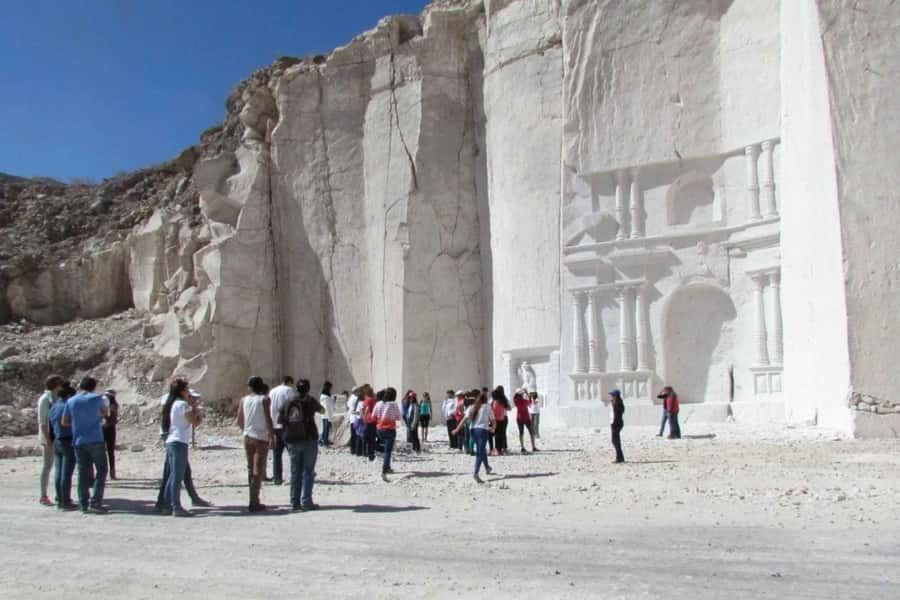
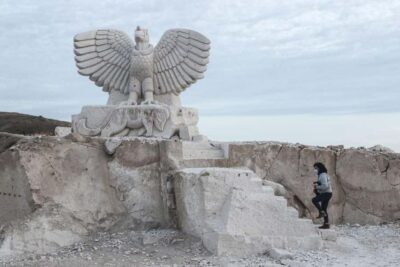
- The Megacavado is the visual centerpiece: Look for the large carving of the Church of the Company of Jesus cut into the quarry stone.
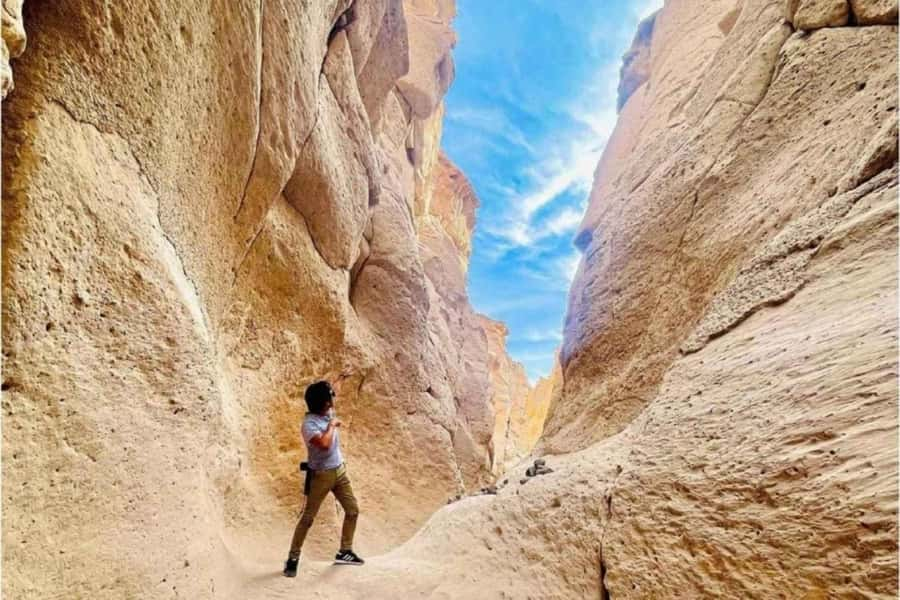
- Culebrillas provides the best walk: The roughly 20-minute route enters a canyon with walls rising 15 to 20 meters and ends at ancient Wari petroglyphs.
- The tour is scenic but not strenuous: Expect a short canyon walk, vehicle time, and stops rather than a full day of hiking.
- The $20 price is attractive: Transport and a professional guide are included, but admission costs an extra 10 soles.
- English and Spanish are offered: If clear spoken English matters to you, confirm the guide and listen carefully during the opening briefing.
Why Arequipa’s white stone matters
Arequipa is closely tied to sillar, the pale volcanic stone used throughout the city. The material gives many local buildings their light color, but this tour lets you see its source rather than simply admiring finished walls in the historic center.
That difference matters. In town, sillar can feel like a decorative feature. At the quarry, you see the work behind it: extraction, cutting, shaping, and the physical effort required to turn rough ignimbrite into usable blocks.
The tour also connects present-day labor with older cultural traces. At Añashuayco, stonemasons continue their trade. At Culebrillas, Wari petroglyphs point to activity more than a thousand years ago. You are not getting one polished historical story, but two very different layers of human use.
The experience is also practical for a short stay in Arequipa. It lasts about four hours, begins at 9:15 in the morning, and returns to the city around 1:30 in the afternoon. That leaves time for lunch and other sightseeing, although the stated schedule runs a little longer than four hours.
More hikes and treks around Peru:
- From Arequipa: Sillar Route Trek
★ 4.2 · 461 reviews - From Cusco: 7 Lakes Ausangate Trek with Breakfast and Lunch
★ 4.8 · 360 reviews - From Arequipa: 2-Day Colca Canyon Trekking Tour
★ 4.8 · 243 reviews
The first stop: volcanoes, the Chilina Valley, and Andenerías
The outing begins with a drive toward the Ruta del Sillar. Before reaching the quarries, the vehicle makes a short stop at a strategic viewpoint where you can see volcanoes and the Chilina Valley.
This early stop helps you get your bearings. The tour is not only about stone. It also places the quarries within the wider Arequipa setting, with volcano views and the Andenerías, or agricultural terraces, adding a reminder that people have long adapted the area for work and settlement.
The exact viewpoint can vary by season. The route may use another traditional lookout where the volcanoes are visible, so do not expect one fixed photo stop every time. Conditions and timing affect what you see, but the opening view gives the excursion a strong visual start.
I would keep your camera ready here, but do not let the first stop set the wrong expectation. The volcano viewpoint is brief. The main subject begins after the drive to Añashuayco, which takes about 45 minutes.
Añashuayco Quarry: a working source of sillar
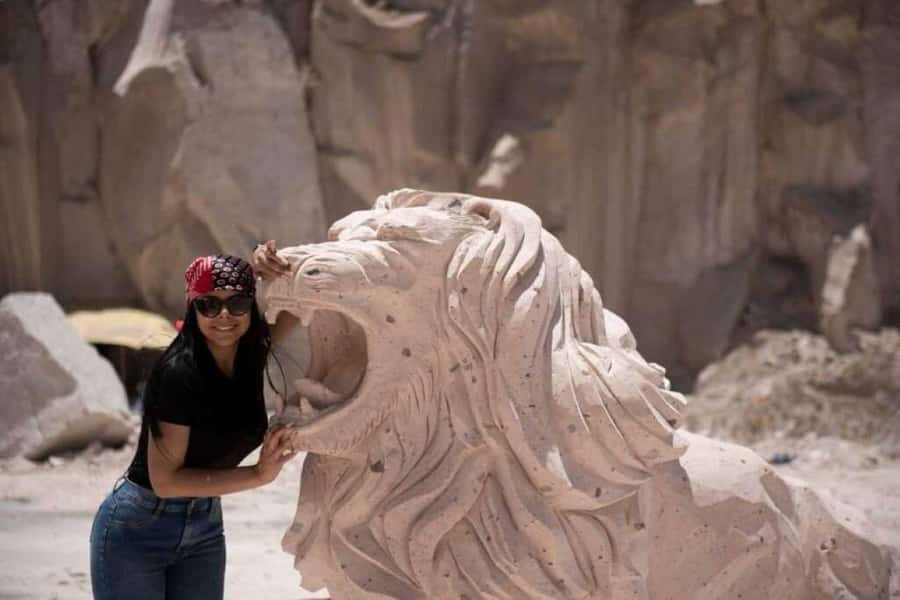
Añashuayco is the tour’s most direct look at the sillar trade. The quarry is still operating, and the walls reveal the scale of extraction. You see tall ignimbrite cliffs formed as workers remove stone for construction.
The quarry is not presented as an untouched archaeological site. It is an active work area with a living trade. That can make the visit more useful, because you see the material in a modern working context rather than behind glass or in a museum display.
Your guide explains the history of sillar, how it is produced, and how it has been used. The quality of that explanation matters. One person found the guide’s accent heavy and said the microphone made much of the commentary hard to hear. If you have trouble understanding, move closer to the guide when possible and ask for key points to be repeated.
The stonecutters’ work is central to the stop. You can visit one of the workers, hear about the daily routine, and try cutting one of the stone blocks yourself. This small hands-on part gives the quarry more meaning than a quick photograph beside a white wall. It shows that each finished block depends on repeated physical work and skill.
Still, keep your expectations realistic. The quarry is a tourist stop within an active commercial setting. If you imagined an ancient, spiritual site untouched by modern use, Añashuayco may feel different from what you pictured. I see that as a reason to research the tour in advance, not a flaw in the quarry itself.
The Megacavado and the Church of the Company of Jesus
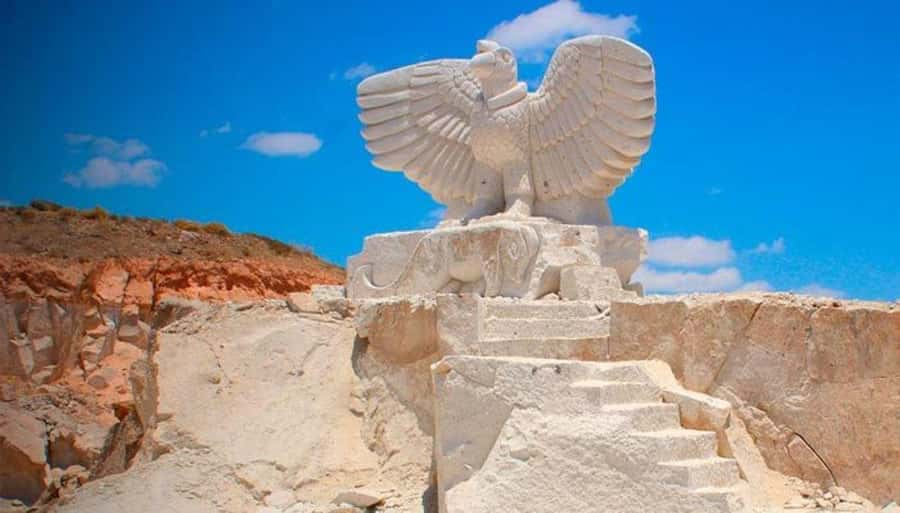
One of the most memorable features at Añashuayco is the Megacavado, a large carving of the Church of the Company of Jesus made by local stonemasons.
This gives you a useful connection between raw material and finished architecture. Arequipa’s historic buildings are known for their pale stone details, and the carving shows how that material can be shaped into an architectural form. It is also an easy focal point for photographs.
The Megacavado is not an ancient church or a preserved colonial building. It is a modern creation within the quarry, made by the workers themselves. That distinction is worth keeping clear, especially if you care about historical accuracy.
I like this stop because it shows pride in the trade. The stonemasons are not only extracting blocks for sale. They have also made a large piece of public-facing stonework that explains their craft to people who may know Arequipa’s buildings but not the labor behind them.
Same mountains, a different route up:
- Cusco: Rainbow Mountain Tour and Red Valley Hike (Optional)
★ 4.7 · 149 reviews - From Huaraz: Hike to the Lagoon 69
★ 4.4 · 121 reviews - Cusco: Full-Day Rainbow Mountain & Red Valley Trekking Tour
★ 4.5 · 121 reviews - Salkantay Trek Challenge – 3 Days / 2 Nights
★ 5.0 · 101 reviews
Into Culebrillas Canyon
After Añashuayco, the vehicle continues for about 30 minutes to Quebrada de Culebrillas. Here, the focus shifts from a working quarry to a natural canyon shaped by water.
The walk through the canyon lasts about 20 minutes. Its walls begin at roughly 15 to 20 meters high and grow taller as you move farther inside. This is the part most likely to feel like a genuine walk rather than a roadside visit.
The route is short, but the canyon changes the pace of the morning. At the quarry, you look at walls shaped by extraction. In Culebrillas, you look at walls shaped by flowing water. That contrast gives the excursion a simple but effective structure.
One visitor felt that Culebrillas matched the more historic and atmospheric experience they had expected from the whole tour. I understand why. The narrow canyon feels less commercial than Añashuayco, and the walk offers a closer look at the area’s natural form.
Do not book this excursion expecting a demanding trek. The advertised walk is about 20 minutes, and the overall trip includes substantial vehicle time. It suits you if you want a short outdoor outing and a few easy stops around Arequipa, not if you are seeking hours on a trail.
Wari petroglyphs at the end of the walk
At the end of the Culebrillas walk, you can see petroglyphs attributed to the Wari culture and dated to more than 1,000 years ago.
This is an important reason to pay attention during the walk instead of treating the canyon as a photo background. The drawings may not be huge or dramatic, but their setting gives them weight. They are part of the canyon rather than an isolated object in a display case.
The guide’s explanation is especially valuable here. You will want to know where to look and what the markings represent, since ancient rock art can be easy to miss without direction. If your group is focused mainly on taking pictures, stay close to the guide so you do not miss the cultural details.
The canyon and petroglyphs also make the excursion feel more varied. You begin with volcano views, move into a working quarry, then walk through a narrow water-cut passage to an older human record. That sequence is the best argument for visiting both Añashuayco and Culebrillas rather than choosing only a quarry photo stop.
Apachetas and the trip back to Arequipa
Before returning, the group pauses to observe apachetas, small stone formations made by placing stones one on top of another.
They are described here as symbols of gratitude toward nature and as good-luck attractions. They add a spiritual note to the final part of the excursion, though you should not mistake them for a major archaeological monument.
This is a quiet closing moment after the canyon walk. You can take in the piles of stones and the idea behind them before getting back into the vehicle. The trip back begins around 12:30, with arrival in Arequipa at about 1:30.
Because the outing ends around lunchtime, it fits well into a short Arequipa itinerary. You can pair it with city sightseeing in the afternoon, provided you allow for the possibility that timing may shift slightly.
What the $20 price really gets you
At $20 per person, this is a low-cost way to reach sites outside Arequipa without arranging separate transport. The price includes tourist transport and a professional guide, as well as the guided stops at the viewpoint, quarry, canyon, and apachetas.
You must pay an additional 10 soles for entrance to the places visited. That extra charge is small, but include it when comparing the tour with other half-day outings.
The value is strongest if you want several sights in one morning. A separate trip to the quarry and Culebrillas would require transport planning, and the guide adds context that you would not get from simply arriving, taking photos, and leaving.
The value is weaker if you want a long hike or a quiet, noncommercial setting. Much of the time is spent in the vehicle, and Añashuayco is an active tourist and commercial area. You are paying for access, transport, and interpretation, not an isolated wilderness experience.
The tour also offers reserve-now, pay-later booking and free cancellation up to 24 hours before departure for a full refund. Those terms make it easier to fit into a changing Peru itinerary.
Guide quality and language considerations
The tour is offered in English and Spanish with a live guide. That gives you a chance to ask questions about sillar, the stonecutters’ work, the Wari petroglyphs, and the apachetas.
Clear communication is worth treating as part of the booking decision. One person had trouble hearing and understanding a guide speaking through the microphone, partly because of a heavy accent. That does not prove every departure will have the same issue, but it is a sensible reason to confirm the language and stay near the guide during explanations.
No guide names are provided for this experience, so you should not expect to select a particular person. The best version of this outing depends on how well the guide explains the quarry work and points out the petroglyphs.
A serious concern is the report of one departure not taking place at all. That is not a normal feature of the excursion, but it is important enough to mention. Keep your booking confirmation and contact details handy, especially if the tour is tied to other same-day plans.
Who should book this four-hour outing?
I would recommend it to a first-time visitor who wants to see more than Arequipa’s central streets without giving up the rest of the day. It is also a good fit if you like photography, short walks, local crafts, and cultural stops mixed together.
Families and casual sightseers may appreciate the limited walking time. The route includes a 20-minute canyon walk, but the tour is not presented as a strenuous mountain hike.
It suits you less if your main goal is solitude, a long trek, or a purely ancient site. The Sillar Route has a commercial side, and the quarry remains a working place. The Culebrillas section feels more atmospheric, but it is also brief.
I would also choose it if the price matters. For $20 plus the 10-sol entrance fee, you get transport to several outlying points and a guide to explain what you are seeing. That is a solid deal, as long as you see the tour as a short cultural excursion rather than a full hiking day.
Should you book the Sillar Route and Culebrillas tour?
Book it if you want a compact introduction to Arequipa’s stonework, a working quarry, volcano views, and a short canyon walk with Wari petroglyphs. The combination is varied, inexpensive, and easy to fit into a morning.
Skip it if you want an untouched archaeological experience or serious hiking. The quarry is tourist-oriented, the walking is limited, and communication may not be perfect on every departure.
My practical choice would be to book this early in your Arequipa stay, leaving the afternoon open. That gives you time to enjoy the stonework and canyon without asking the tour to be something it is not.
FAQ
How long does the excursion last?
The activity is advertised as a four-hour excursion. It begins around 9:15 in the morning, starts the return to Arequipa around 12:30, and arrives in the city at about 1:30.
How much does the tour cost?
The listed price is $20 per person. An additional entrance fee of 10 soles is not included.
What is included in the price?
Tourist transport and a professional guide are included.
Is the entrance fee included?
No. The entrance ticket costs 10 soles and must be paid separately.
Which languages are available?
The live tour guide service is offered in English and Spanish.
How long is the walk in Culebrillas Canyon?
The walk through the canyon takes approximately 20 minutes.
What can I see at Añashuayco Quarry?
You can see an active quarry, tall ignimbrite walls, the Megacavado carving of the Church of the Company of Jesus, and stonemasons at work. You may also be able to try cutting a stone block.
Are the Wari petroglyphs included in the route?
Yes. The walk through Culebrillas ends at petroglyphs attributed to the Wari culture and dated to more than 1,000 years ago.
Can I cancel the booking?
You can cancel up to 24 hours in advance for a full refund. The activity also offers a reserve-now, pay-later option.
Recently reviewed hikes in Peru
- Arequipa: 2-day Colca Canyon Trekking, Ending in Puno★ 4.8 · 8 reviews
- Ancash: Trekking to Paron Lagoon with Entrance | Full day|★ 4.1 · 9 reviews
- 4 days/3 nights: Inka Jungle Trek to Machu Picchu★ 4.7 · 25 reviews
- Ancascocha Trek To Machu Picchu 4 Days And 3 Nights★ 5.0 · 77 reviews
- Choquequirao Trek 4 days and 3 nights★ 5.0 · 81 reviews
- Machu Picchu: 5-Day Salkantay Trek with Panoramic Train★ 5.0 · 79 reviews
- Full-Day Trek to Humantay Lake from Cusco with Guide★ 4.5 · 66 reviews
- Humantay Lake Full Day Hike★ 5.0 · 75 reviews
Arequipa Hiking Tours, compared.
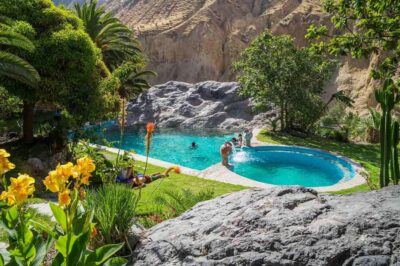
From Arequipa: 2-Day Colca Canyon Trekking Tour
Read our review →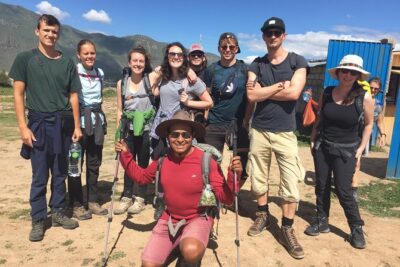
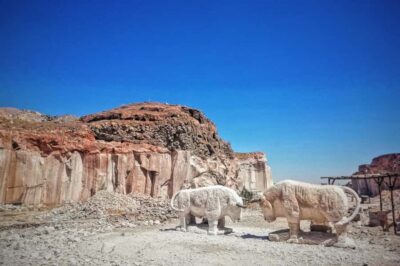
4 hours Tour: Route of Sillar with Trek in Culebrillas
Read our review →Other lists this hike appears in