
Review · KATHMANDU
Manaslu Circuit Trek
The Manaslu Circuit takes you from hot rice fields and dusty roads to a 5,160-meter Himalayan pass, with turquoise rivers, suspension bridges, yak pastures, monasteries, and glaciers along the way. I like the quieter feel compared with the Annapurna Circuit, and I like how the trek connects daily village life with huge mountain scenery. The trade-off is simple: the road in and out is rough, the walking days are long, and altitude is a serious concern.
I also like the care built into the schedule. Two acclimatization days around Samagaun and Samdo give you time to adjust, while guides such as KP, Pemba, Dilman, Narayan, Sajan, and Mitra have been praised for pacing groups, adapting plans to weather, and helping with altitude problems. Still, this is not a soft adventure. You need strong fitness, patience, and a willingness to sleep in basic teahouses.
Key points at a glance
- Larkya La Pass at 5,160 meters: The trek’s big test, with views toward Himlung, Kang Guru, and Annapurna II.
- A quieter alternative to Annapurna: The route feels remote and lightly developed, with fewer people on the trail.
- Two acclimatization days: Time around Samagaun and Samdo helps you adjust before the pass.
- Buddhist mountain culture: Mani walls, prayer flags, gompas, Tibetan dress, and Nubri villages shape the route.
- Private trip with flexible support: Your group travels privately, and the guides can adjust timing or side trips.
- $1,081 includes the basics: Transport, permits and taxes, three daily meals, and the 14-day arrangement are included, but not Kathmandu lodging or a porter.
Why the Manaslu Circuit feels different
The Manaslu Circuit is a full mountain journey, not simply a walk to a viewpoint. You begin among lowland terraces and river valleys, then move through forests, Gurung and Ghale villages, Tibetan-influenced settlements, and high yak country. The scenery changes almost every day.
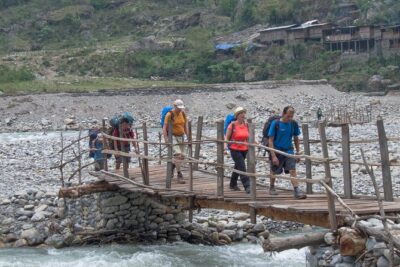
I especially like the route’s sense of progression. The Budi Gandaki River is your companion early on, rushing through a narrow gorge and slipping beneath suspension bridges. Later, the valley opens into broad pasture, the trees thin out, and the mountains take over.
Compared with the classic Annapurna Circuit, Manaslu has a more remote feel. That comes with a cost. Roads are rough, accommodation is simple, and some sections require careful walking around landslides or glacier-fed streams. You are choosing isolation and atmosphere over ease.
The tour is private, so only your own group participates. That matters on a trek where people walk at different speeds. Guides can adjust the day, add a monastery visit, or move the pass crossing earlier when weather makes that sensible. The strongest praise for the guiding team centers on calm support, clear organization, humor, and the ability to help when altitude sickness appears.
More Langtang and Manaslu Treks in Kathmandu:
- Manaslu Circuit Trek
★ 5.0 · 292 reviews - Langtang Valley Trek
★ 5.0 · 140 reviews - Trekking in Annapurna/Langtang/Everest/Upper Mustang regions
★ 5.0 · 161 reviews
Days 1 and 2: Rough roads and the first real walk
Your journey begins with a long transfer from Kathmandu toward Soti Khola. The drive can take about eight hours and may involve a bus or a bus and local jeep combination. A private jeep is available and makes more sense if you value flexibility, since the road is dusty, bumpy, and slow.
Local transport stops on the highway for lunch and toilet breaks. The private option costs more in principle, but it gives you a better chance to control the pace and avoid being squeezed into a crowded vehicle. The road is part of the experience, though not always the pleasant part.
From Soti Khola, you start walking toward Machhakhola. The trail passes through sal forest, beside rivers and waterfalls, and along rocky ledges above the gorge. Villages belong mainly to Gurung and Ghale communities, and you may see mule trains carrying supplies.
One practical rule matters here: stand on the uphill side when mules pass. The drop-off side is no place to be pushed by a loaded animal. At Nyali Khola, locals pray to river and mountain deities for safety, a small but meaningful introduction to the spiritual life of the route.
Days 3 and 4: Hot springs, bridges, and the restricted area
The walk to Jagat follows the Budi Gandaki through forest and river gorge. Monkeys and langurs may appear in the trees, while Gurung villages and shepherd settlements provide a human rhythm to the day.
Tatopani offers warm water for a soak, but do not linger too long. The route still includes a suspension bridge and a cantilever bridge before Jagat. After several days of rough walking and transport, even a short soak can feel useful.
Jagat is important because you enter the Manaslu Restricted Area here. It is a flagstoned Gurung village, and the change is not just administrative. From this point, the route feels more controlled, more remote, and increasingly shaped by Tibetan Buddhist traditions.
The next day brings prayer flags, gompas, forest, and river-shaped boulders. You pass through Sirdibas and Phillim, where permits are checked, then continue toward Pewa. Dinner is typically dal bhat in a teahouse, the dependable rice, lentil, and vegetable meal that fuels many days in Nepal.
Days 5 and 6: Landslides, coffee, and Manaslu views
The route to Namrung crosses a landslide zone. This is a place to listen closely to your guide and avoid rushing. The trail can be unstable, and the day is about careful footwork rather than speed.
Monkeys may provide a welcome distraction, and Namrung has an unusual comfort for such a remote stop. A local business owner who worked in Hong Kong returned home and built a hotel and restaurant with coffee and Wi-Fi. Do not expect city standards, but a decent cup of coffee and a connection can feel luxurious here.
The next day, you walk through fir, oak, and rhododendron forest toward Lho. Mani walls carry carved Buddhist mantras, and gate arches feature painted designs. Tibetan dress and customs become more common as the route moves closer to the Tibetan border.
Lho is one of the first places where the mountain views feel truly grand. Manaslu rises to 8,163 meters, with Manaslu North at 7,157 meters. The walking day is shorter, about four hours, giving you time to enjoy the village and recover before higher ground.
More hikes and treks around Kathmandu:
- Everest Base Camp Trek – 14 Days
★ 5.0 · 1,499 reviews - Everest Base Camp Trek
★ 5.0 · 842 reviews - Everest Base Camp Trekking
★ 5.0 · 485 reviews - Nagarkot Sunrise View and Day Hiking from Kathmandu
★ 5.0 · 471 reviews
Days 7 and 8: Samagaun and the acclimatization choice
The walk to Samagaun is another shorter day. You begin with fine views of Manaslu, then enter a broad settlement surrounded by yak pastures. Samagaun is the principal village of the Nubri people and has a large gompa, shops, a health post, heliport, and telephone or Wi-Fi access.
This is where the trek changes character. Trees become less dominant, the air feels thinner, and the mountains seem closer. The village is not just a stopping point. It is a useful place to slow down and watch how high-altitude communities live.
Day 8 is for acclimatization, but it is not a day to lie in bed. Staying active with a shorter hike helps you adjust. You can choose Pungyen Gompa, Manaslu Base Camp, or Birendra Tal.
The Base Camp walk reaches about 4,400 meters and requires more effort. Birendra Tal is the sensible choice if you feel tired. Your guide can help match the outing to how you feel, and you should be honest about headaches, nausea, unusual fatigue, or other symptoms.
A packed lunch is taken on the trail. The point is not to collect the most ambitious side trip. The point is to prepare your body for the pass.
Days 9 and 10: Samdo and the Tibetan frontier
The route to Samdo takes about three hours and crosses a broad valley with yak pastures. This shorter day is welcome, especially after the higher walk near Samagaun.
From Samdo, you can explore nearby villages or climb toward Samdo Peak. The higher viewpoint shows the route toward Larkya La and Tibet. You cannot cross into Tibet, but you may see yak caravans moving along the border area.
A second acclimatization day gives you another chance to adjust before the hardest section. Depending on conditions and your strength, the day can include a walk toward the Tibetan border. Blue sheep, pikas, and marmots may appear, though wildlife sightings are never guaranteed.
Looking south, you can see Samdo Glacier, including a large serac near its upper section. This is a good reminder that the high mountains are not merely scenic. Ice, snow, weather, and altitude all affect the route.
Days 11 and 12: Dharamsala and the Larkya La crossing
The walk to Dharamsala is slow and exposed, with rugged ground and a chain of Himalayan peaks around you. The settlement is a high overnight stop with striking views, but comfort is limited. This is the point where you need warm clothing, good hydration, and a sensible attitude.
The pass day starts early. You need to cross Larkya La before afternoon, when weather can worsen. The walk is about ten hours, and snow or poor weather can make the crossing much harder.
At 5,160 meters, the pass is the physical heart of the trek. Crampons may be needed if snow and ice cover the route, so ask your operator exactly what equipment and guidance will be available for your dates. Move slowly, follow your guide, and do not treat the pass as a race.
The views reward the effort. Himlung reaches 7,126 meters, Kang Guru reaches 6,981 meters, and Annapurna II rises to 7,937 meters. Huge icefalls and glaciers fill the view on the descent, including Pongkar Tal between the Pongkar and Salpudanda Glaciers.
After the pass, you descend for about three hours to Bimthang. Reaching a lower village after the crossing brings real relief. The day is long, but it delivers the route’s biggest mountain drama.
Days 13 and 14: Forests, rough tracks, and the return to Kathmandu
From Bimthang, the route heads downhill through lush forest and rhododendron bushes. You cross the Dudh Khola and stop for lunch at Karche Village.
The trail can still be rough, and signs of glacier floods show the force of water in this region. As you continue, agriculture returns, with fields and thicker forest replacing the high, bare country.
The final day is another long transport day back to Kathmandu, taking about ten hours. You can use a local jeep and bus combination or choose a private jeep. The private option again gives you more control, but the road remains long and tiring.
The itinerary is listed as 14 days, though the walking portion is sometimes described as roughly 11 days. That difference comes from transport and acclimatization days. It is wise to keep your schedule flexible rather than booking an important flight immediately after the return.
What the $1,081 price really covers
At $1,081 per person, the price offers solid value for a private 14-day trek if you want transport, meals, permits, and organization handled together. Breakfast, lunch, and dinner are included, as are private transportation and all fees and taxes.
The main omissions matter. A hotel in Kathmandu is not included, and neither is a porter. You should budget for both if you need them. The guide can help with the trek, but you should clarify how much luggage you are expected to carry.
The food arrangement is practical rather than fancy. Dal bhat is a familiar staple, and village meals keep you fueled on long walking days. Accommodation is in teahouses, with better facilities in places such as Namrung and Samagaun and more basic conditions at high stops such as Dharamsala.
The price also buys planning and support. Guides including KP, Pemba, Dilman, Narayan, Sajan, and Mitra have been praised for organizing meals and accommodation, adjusting daily plans, and helping groups handle changing conditions. The exact guide is not guaranteed in the information provided, so confirm who will lead your departure.
Who should book this trek?
You should consider this trek if you are fit, comfortable with long days, and excited by remote villages more than polished facilities. It suits someone who wants a quieter Himalayan route, strong cultural contact, and a major pass crossing.
It is also a good choice if you prefer a private group and want a guide to manage the restricted-area requirements. Solo visitors can join privately with guide support, which removes some of the stress of arranging a regulated route alone.
I would hesitate to recommend it if you dislike bumpy roads, basic teahouses, changing plans, or high-altitude exertion. A 5,160-meter pass is not a minor detail. The two acclimatization days help, but they do not remove the risk of altitude illness.
Pickup is offered, and confirmation is provided at booking. Free cancellation is available up to 24 hours before the start time, but changes or cancellations inside that window are not accepted.
Should you book the Manaslu Circuit?
Book it if your priorities are quiet trails, powerful mountain views, Buddhist villages, and a demanding sense of achievement. The journey from rice terraces to Larkya La gives you far more variety than a simple mountain walk, and the remote setting feels special.
Skip it if you want predictable roads, hotel-style comfort, or an easy introduction to Nepal. For a strong walker who accepts rough edges, this $1,081 package is a practical way to tackle one of Nepal’s most rewarding circuits with guides who can adjust the plan when weather, fitness, or altitude demands it.
FAQ
How long is the Manaslu Circuit Trek?
The listed duration is approximately 14 days. This includes transport from Kathmandu, walking days, and acclimatization days around Samagaun and Samdo.
What is the highest point on the trek?
The highest point is Larkya La Pass at about 5,160 meters. Snow and ice can make the crossing difficult, and crampons may be needed.
Is transportation included?
Yes. Private transportation is included. The route information also gives the choice of local bus and jeep combinations or a private jeep for the long road journeys.
Are meals included?
Yes. Breakfast, lunch, and dinner are included for the 14-day trip. Dal bhat is one of the meals mentioned along the route.
Is a porter included?
No. A porter is not included in the stated price. You should arrange one separately if you do not want to carry your own belongings.
Is a Kathmandu hotel included?
No. Accommodation in Kathmandu is not included.
Do I need to be very fit?
Yes. The experience requires a strong level of physical fitness. Walking days can last up to ten hours, and the route reaches 5,160 meters.
Are there acclimatization days?
Yes. There is an acclimatization day around Samagaun and another around Samdo. Options include Manaslu Base Camp, Pungyen Gompa, Birendra Tal, Samdo Peak, and the Tibetan border area.
Is this a private tour?
Yes. Only your own group participates in the private activity.
Can I cancel for a full refund?
Yes, if you cancel at least 24 hours before the experience starts. Cancellations or changes made less than 24 hours before the start time are not accepted for a refund.
Recently reviewed hikes in Kathmandu
- 14 Days Private Tour Everest Base Camp Trek★ 5.0 · 105 reviews
- Kathmandu: Nagarkot Sunrise & Hike with Lunch -Private/Group★ 4.9 · 122 reviews
- 4 Days Poon Hill Trek★ 5.0 · 94 reviews
- Langtang Valley Trek★ 5.0 · 140 reviews
- Manaslu Circuit Trek★ 5.0 · 292 reviews
- Nagarkot Sunrise View & Day Hiking with Lunch – Private/Group★ 5.0 · 73 reviews
- Kathmandu: Dhulikhel to NamoBuddha Day Hike with Lunch★ 4.8 · 62 reviews
- Nagarkot Sunrise Trip & Day Hike with Lunch from Kathmandu★ 4.5 · 83 reviews
Langtang & Manaslu Treks, compared.
Trekking in Annapurna/Langtang/Everest/Upper Mustang regions
Read our review →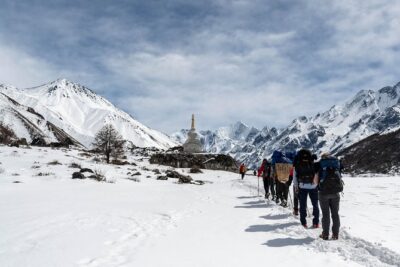
Other lists this hike appears in