
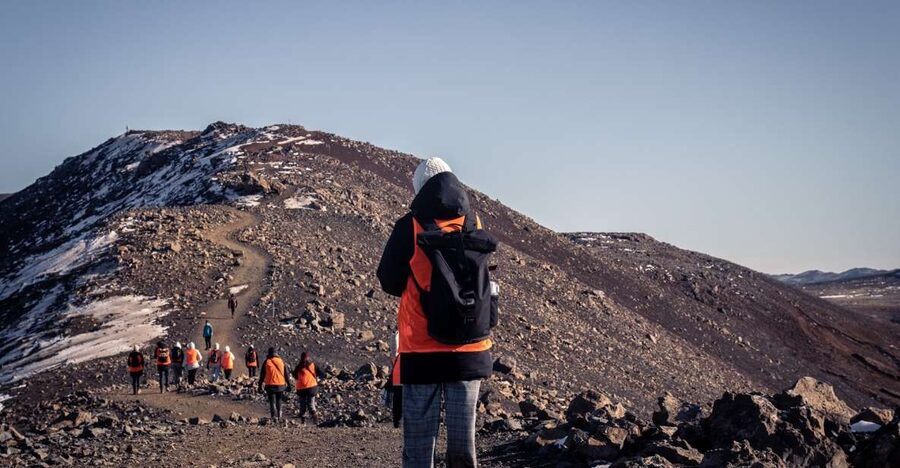
Review · REYKJAVIK
Reykjavík: Volcano Eruption Site and Reykjanes Hiking Tour
The main event is the recent lava field near Geldingadalur, where the Reykjanes Peninsula’s volcanic power is still plain to see. I like the mix of a serious hike with quick stops at Lake Kleifarvatn, Gunnuhver, the lighthouse, and the Bridge Between Continents. You get raw geology, ocean air, and useful local explanation in one long day.
I also like that the guide can change the hiking route when wind, ice, or volcanic conditions make the original plan unsafe. The catch is simple: this is not a gentle sightseeing ride. The hike can take about two hours each way, and weather may make it much harder than the distance suggests.
Key points at a glance
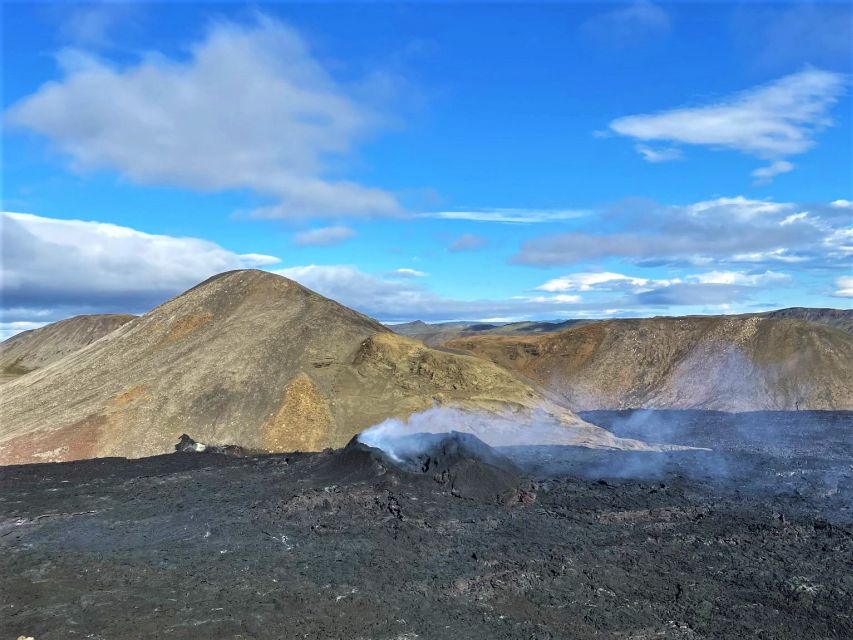
- A four-hour volcanic hike: The walk toward Litli-Hrutur, Meradalir, and Fagradalsfjall is the heart of the day and calls for real stamina.
- Fresh lava and recent eruptions: Depending on conditions, you may see smoldering lava fields, cooled flows, or the remains of recent volcanic activity.
- A full Reykjanes sampler: Lake Kleifarvatn, Seltún, Gunnuhver, Reykjanes Lighthouse, and the Bridge Between Continents all fit into one outing.
- Guides who add character: Omar, Ottar, Colin, HBO, Alain, and others have been praised for clear explanations, humor, and care with mixed-ability groups.
- Weather controls the experience: Wind, snow, ice, fog, and road conditions can change the route and the views.
- Good value for a long day: At $126, transport, guiding, WiFi, pickup, and a possible headlamp are included, but you bring your own food and drinks.
A volcano hike with no tidy ending
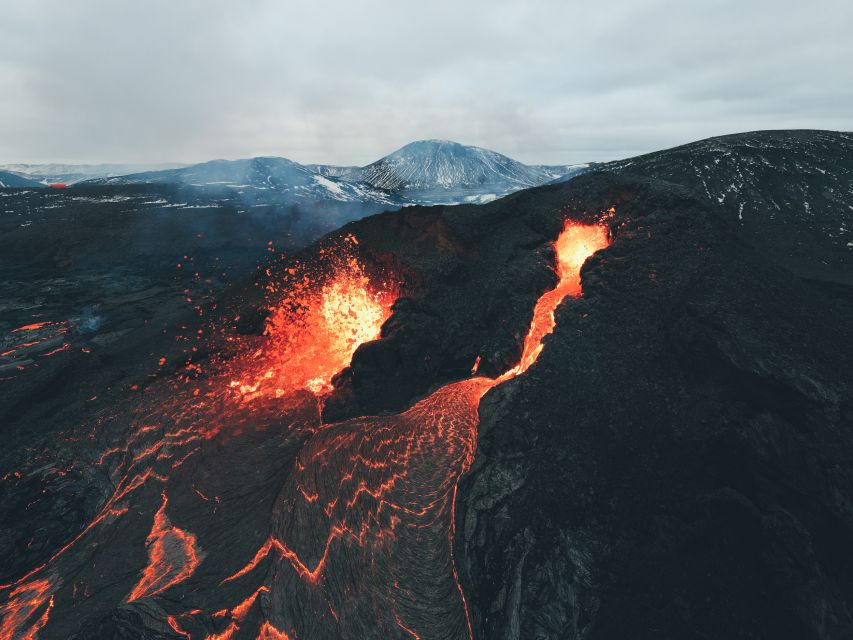
Iceland’s Reykjanes Peninsula is not a polished volcanic park with neat paths and fixed viewpoints. It is an active, shifting place. New lava can cool, roads can close, and the safest viewing point can change from one day to the next.
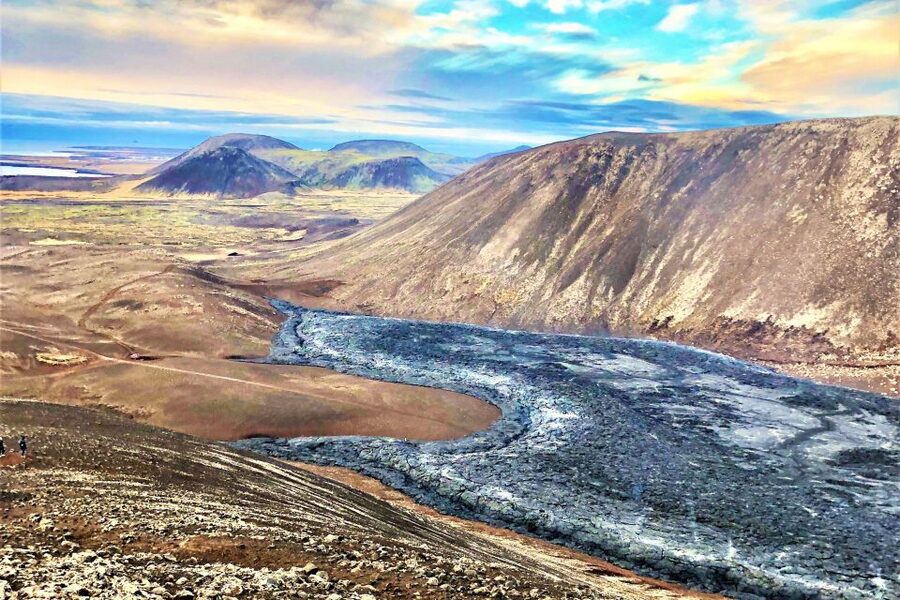
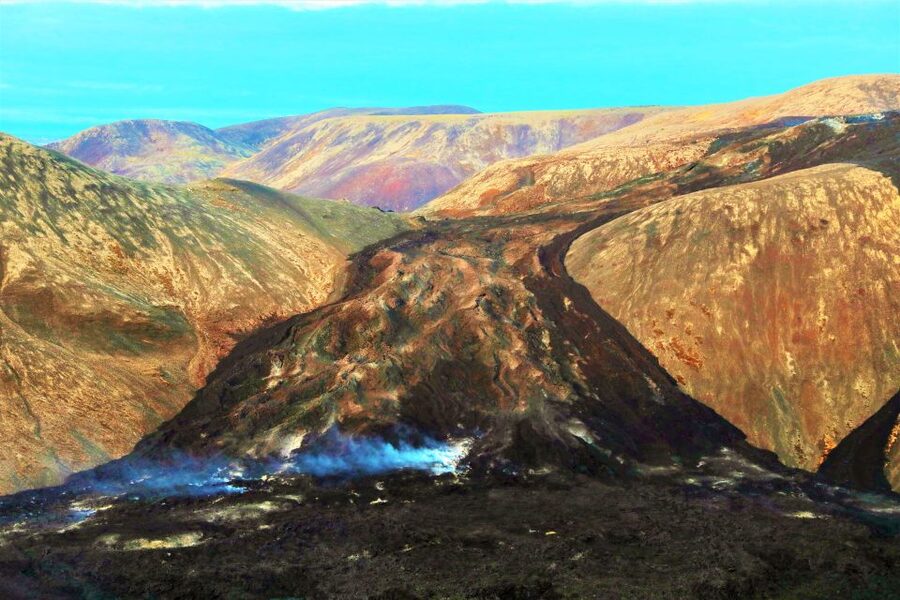
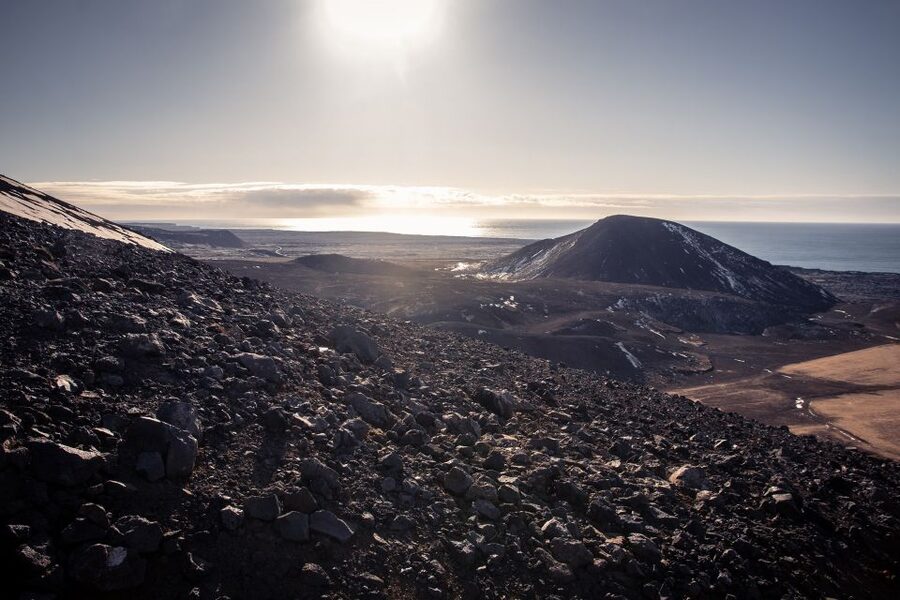
That uncertainty is part of the appeal. You are not simply looking at a famous crater from a platform. You walk across rough volcanic ground toward areas shaped by eruptions at Litli-Hrutur, Meradalir, and Fagradalsfjall. The route can pass old lava fields covered with soft green moss, newer black rock, and areas that still give off heat.
At the time described for this outing, the fresh flow at Litli-Hrutur had stopped, but the site was still smoldering. Conditions can change, so do not book this expecting a guaranteed eruption or flowing lava. The dependable experience is the volcanic scenery, the hike, and the guide’s explanation of what you are seeing.
The tour lasts about nine hours. That sounds generous, but the day fills quickly. You have a roughly 40-minute drive to the peninsula, a long hike, several short photo stops, and a 70-minute return drive. This is best treated as your main activity for the day, not something to squeeze between other plans.
More Volcano Hikes in Iceland
- Reykjavík: Guided Afternoon Hiking Tour to New Volcano Site
★ 4.4 · 934 reviews - From Reykjavík: Fagradalsfjall Volcano Hike with Geologist
★ 4.8 · 780 reviews - Iceland Hiking Tour to Fagradalsfjall Volcano with Local Guide
★ 5.0 · 573 reviews
Lake Kleifarvatn starts the day with black sand
The first major stop is Lake Kleifarvatn, one of the Reykjanes area’s most striking bodies of water. Its black beach and bare mountain surroundings give it a stark, almost otherworldly look. The lake is also associated with underwater hot springs, adding another reminder that the ground here is not quiet.
You get about 10 minutes for a photo stop. That is enough to take in the view and shoot a few pictures, but not enough for a long walk along the shore. If you enjoy slow scenic stops, this may feel rushed. If you want to reach the volcano hike with energy left in your legs, the short pause makes sense.
Bring your camera, but also look beyond the water. The surrounding mountains and dark volcanic shore show how much of Reykjanes was shaped by fire rather than by trees or rivers.
Seltún shows the heat below your feet
The stop at Seltún Geothermal Area is brief, around 15 minutes, but it gives you a useful introduction to Iceland’s underground heat. Steam, colorful ground, and geothermal activity make this a very different scene from Kleifarvatn.
You walk around the area rather than simply stepping off the bus for a single photograph. Still, do not expect a long visit. The value here is context. After seeing the hot ground at Seltún, the bubbling mud and steaming vents later at Gunnuhver make more sense.
This is also where good footwear begins to matter. The route is short, but wet and uneven ground can be uncomfortable in ordinary city shoes. You should wear hiking shoes from the start, not plan to change later.
The Geldingadalur hike is the real test
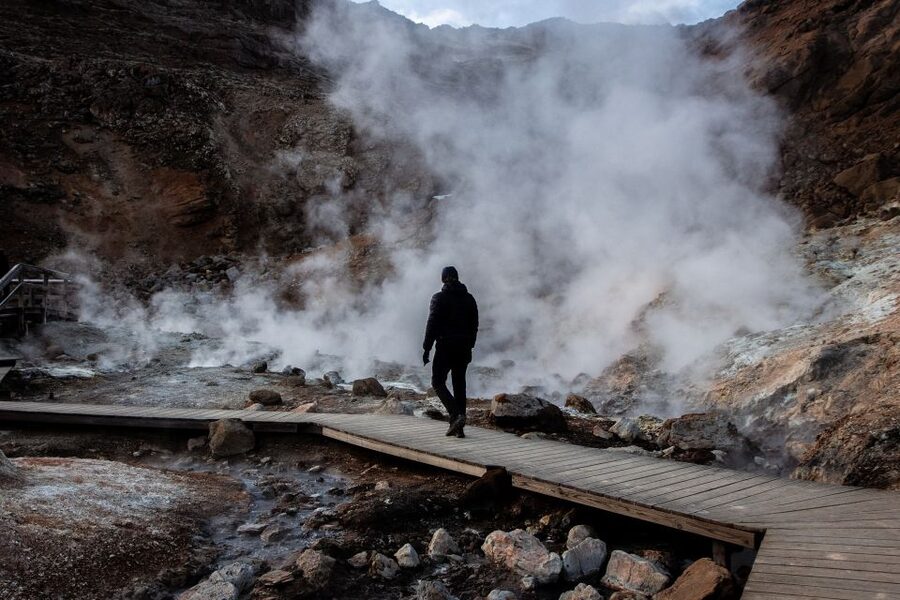
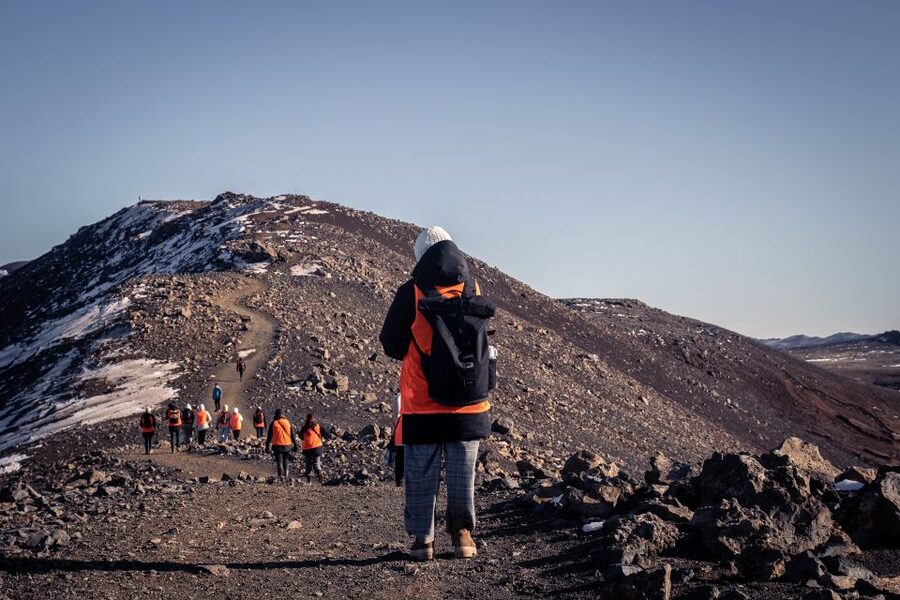
The hike near Geldingadalur Valley is listed at about 3.5 hours, with roughly two hours each way toward the volcanic area. The exact route can change according to safety conditions. The group may walk toward Litli-Hrutur, pass the Meradalir eruption site, or reach a different safe viewing point around Fagradalsfjall.
Do not read moderate to hard as marketing language. The distance, loose volcanic ground, wind, elevation changes, and weather can make this a demanding outing. One person may find the walk manageable, while another may struggle, especially in winter when snow and ice cover parts of the route.
The supplied experiences give a useful picture of the range. Some people found the hike relatively easy, while others described it as demanding. A 75-year-old participant completed it despite wind and ice, but that should encourage you, not trick you into ignoring the difficulty. You need to walk a reasonable distance comfortably and keep going for several hours.
The guides generally keep the group together and adjust the pace. On snowy days, guides have provided equipment that fits under shoes for extra grip. On windy days, they have stopped short of higher ground and used a backup route to reach recent lava fields instead.
That flexibility is one of the strongest reasons to take this trip with a guide. You do not have to decide alone if a ridge is safe, and you are less likely to waste time following a route that has changed.
More Volcano Hikes in Reykjavik
- Reykjavik: Thrihnukagigur Volcano Guided Hiking Day Trip
★ 4.9 · 564 reviews
What you actually see at the eruption sites
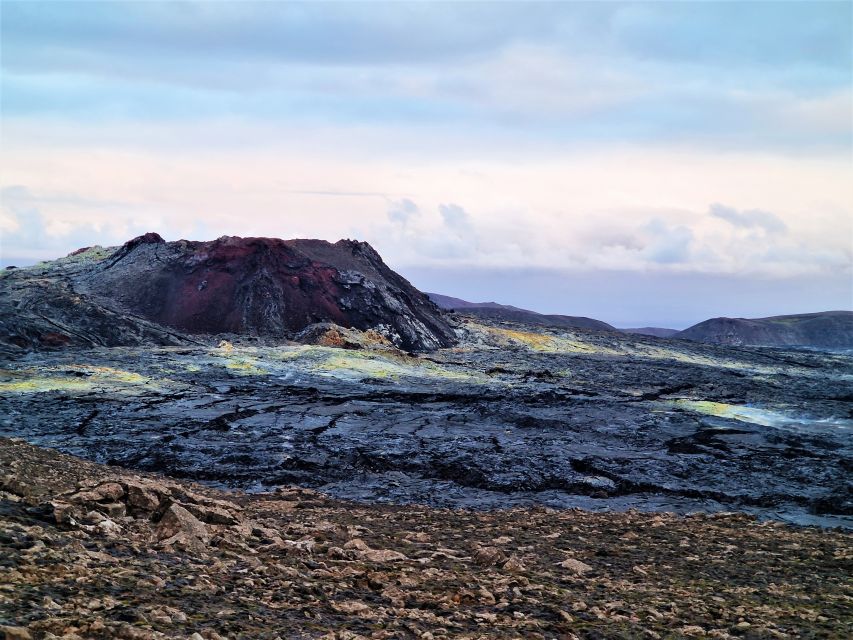
The volcanic area is more than a single crater. You might see solidified lava, black fields, smoking sections, rough lava formations, and small geothermal activity. If the timing is fortunate and an eruption is active, you may see glowing flows or lava rising from a crater. But that is never something the tour can promise.
Even without active fire, the area has a powerful sense of recent change. Some lava is newly formed and sharp, while older flows have softened under moss. The contrast helps you read the ground as a record of different eruptions rather than one uniform field.
The walk also gives you a better sense of scale than a roadside viewpoint. You spend time moving through the volcanic area, with mountains and open ground around you. That physical effort is part of the experience, although it also means you should save some energy for the later stops.
You will likely eat your packed lunch near the volcanic area. Food and drinks are not included, so bring enough water and something substantial. A quick snack is not ideal for a four-hour hike in cold, windy weather.
Gunnuhver brings mud, steam, and old stories
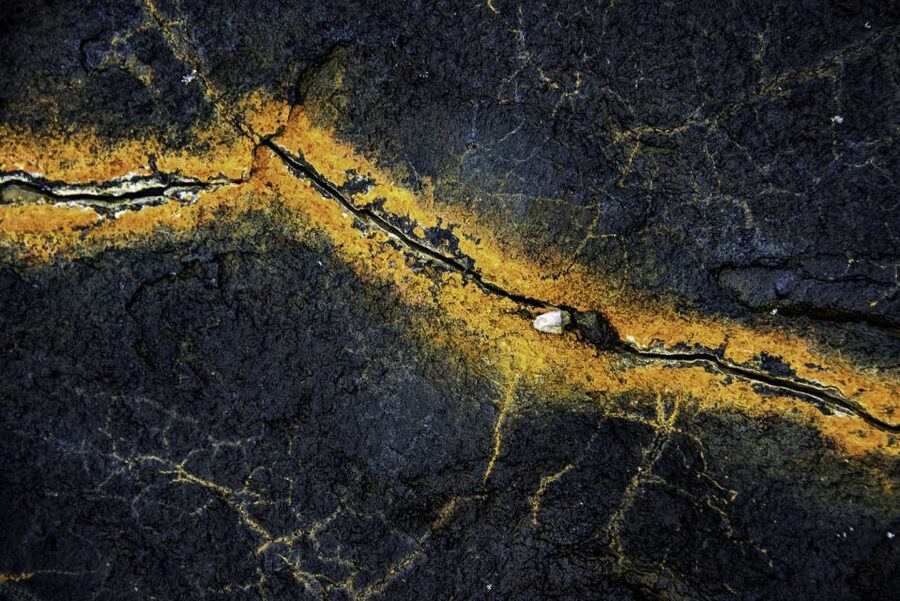
After the hike, the bus continues across Reykjanes through broad lava fields covered in moss. Gunnuhver Hot Springs gives you a short but dramatic stop, with bubbling mud pots and hissing steam vents.
You have about 10 minutes here. That is enough to see the geothermal features and take photographs, but the steam and smell can be intense. Stay on marked paths and follow the guide’s instructions. Boiling ground is not a place for improvised shortcuts.
The guides often add local tales along with geology. Their strongest contribution is not just naming the features. It is explaining how the same volcanic forces shape roads, homes, hot water, and daily life on the peninsula.
The lighthouse puts the volcanoes beside the sea
Reykjanes Lighthouse is a calmer stop after the geothermal ground. You get about 20 minutes to breathe in the Atlantic air and look across the coast.
The lighthouse is described as Iceland’s oldest, and its setting is the real attraction. Nearby Valhnúkamöl Boulder Ridge has cliffs and sea stacks shaped by the ocean. After hours of inland volcanic ground, the rough coast gives you a different view of the peninsula’s forces.
This stop is short, so expect a photo opportunity rather than a full coastal walk. Wind can be strong, even when Reykjavik feels mild. A waterproof jacket is much more useful here than jeans or a light sweater.
Crossing the Bridge Between Continents
The final major stop is the 15-meter Bridge Between Continents. It crosses a visible rift between the Eurasian and North American tectonic plates, allowing you to walk from one side to the other.
The bridge itself is small, but the idea is memorable. It turns a large geological process into something you can experience with a short walk and a photograph. After seeing volcanic activity up close, this stop gives the day a neat final lesson in plate movement.
You get about 20 minutes. It is enough to cross, take pictures, and look into the rift. Do not expect a grand structure or a long attraction. The value is the clear, simple connection between the physical ground and the geology explained throughout the day.
The bus ride and group experience
Pickup is available from selected hotels, official Reykjavik bus stops, and the cruise port. If you are staying in the central area, city bus restrictions may mean using a nearby official stop rather than getting picked up outside your accommodation. Bus stop number 12 is one stated meeting point, and the guide uses a BusTravel Iceland vehicle, jacket or vest, and tour sign.
The bus includes WiFi and gives you shelter between stops. Some people found the ride comfortable, while one person described parts of it as bumpy. That is worth keeping in mind because Reykjanes roads and access tracks can be rough.
Group size is not specified, so do not assume a private or tiny tour. The strongest guide experiences came from people such as Omar, Ottar, HBO, Colin, Alain, James, and Olaf. Their strengths were different: humor, local stories, geology, safety, music, and keeping the group moving at a sensible pace.
One practical weakness is that a microphone may be hard to hear from the back of the bus. Sit near the front if hearing every explanation matters to you, and ask the guide to repeat anything you miss.
What to wear and pack for nine hours
I would treat the clothing list as essential, not optional. Reykjanes weather can shift fast, and open volcanic ground offers little shelter from wind.
Bring:
- Waterproof rain gear
- Hiking shoes with good grip
- Warm layers
- Water
- A packed lunch
- Small snacks
- Gloves and a hat in cold weather
Jeans are specifically discouraged because they hold moisture and become uncomfortable in rain. Comfortable shoes alone are not enough for the long hike.
A headlamp may be provided if required. That does not mean you should plan on darkness as part of the standard trip, only that changing daylight and conditions are taken seriously.
Children under 12 and people with mobility impairments are not suited to this outing. You should also think carefully before booking if you dislike exposed weather, long walks, or changing plans.
Is $126 good value?
At $126 per person, the price is fair for a full nine-hour day from Reykjavik. You are paying for transport, a live English-speaking guide, pickup and drop-off, onboard WiFi, and a route that links several distant sites.
The value is strongest if you do not want to drive on unfamiliar roads or make your own safety decisions near recent lava. A rental car could give you more time at each stop, but it would not provide the same guided interpretation, group pacing, or route adjustments.
Food and drinks are not included. Add the cost of a packed lunch and water, and remember that the hike demands proper clothing and footwear. If you already have outdoor gear, the tour is easier to justify. If you need to buy winter hiking equipment just for this day, your real cost will be higher.
The itinerary is busy. You will not get a long, quiet visit at every location. The tradeoff is variety: one day covers a lake, geothermal ground, volcano sites, lava fields, coast, lighthouse, and tectonic rift.
Should you book this Reykjanes tour?
Book it if you want the volcanic hike to be the center of your Iceland visit and you value a guide who can explain the geology while adjusting the route for safety. It suits active adults, older walkers with solid stamina, geology fans, photographers, and anyone who wants more than a quick roadside volcano photo.
Skip it if you want an easy bus day, dislike uncertain weather, or prefer to set your own pace. The eruption may have stopped, visibility may be poor, and the walk can be icy, windy, or tiring.
For most fit visitors, this is a strong way to see Reykjanes in one day. Just book it for the active volcanic ground and rugged scenery, not for a guaranteed eruption. Pack lunch, wear real hiking gear, and leave the rest of the day free.
FAQ
How long does the tour last?
The tour lasts about nine hours, including driving, sightseeing stops, and the volcanic hike.
How long is the volcano hike?
The hike to the volcanic area takes around two hours each way. The full stop at Geldingadalur Valley is listed at about 3.5 hours.
Is the hike easy?
No. It is described as moderate to hard and is suitable for people with reasonable fitness who can walk a long distance comfortably.
Can I see flowing lava?
You might, if volcanic activity is occurring, but flowing lava is not guaranteed. The Litli-Hrutur flow had stopped at the time described, though the area was still smoldering.
What happens if weather or safety conditions change?
The route can change, and the guide will take the group to the safest available viewing point. A backup route may include walking across recent lava fields.
Is food included?
No. You need to bring your own packed lunch, snacks, and water.
What should I wear?
Wear hiking shoes, comfortable outdoor clothing, warm layers, and rain gear. Jeans are not recommended because they are poor in wet weather.
Is pickup available from my hotel?
Pickup is available from selected hotels, official bus stops in central Reykjavik, and the cruise port. You should confirm the exact pickup details after booking.
Is the tour suitable for children?
Children under 12 are not considered suitable for this activity.
What language is the tour conducted in?
The live tour guide speaks English.
Recently reviewed hikes in Reykjavik
- Private Jökulsárlón Glacier Lagoon 2 Day Tour & Glacier Hike★ 5.0 · 159 reviews
- Private South Coast and Glacier Hike – With photos★ 5.0 · 49 reviews
- Reykjavik: South Coast, Waterfalls & Glacier Hike Small-Group★ 4.5 · 322 reviews
- Skaftafell: Small-Group Vatnajökull Glacier Hike (Moderate)★ 4.8 · 327 reviews
- Reykjavík: Sólheimajökull Glacier Hike & Ice Climbing Intro★ 4.8 · 380 reviews
- From Reykjavik: South Coast & Glacier Hike★ 4.9 · 490 reviews
- Iceland Hiking Tour to Fagradalsfjall Volcano with Local Guide★ 5.0 · 573 reviews
- Reykjavik: Thrihnukagigur Volcano Guided Hiking Day Trip★ 4.9 · 564 reviews
Volcano Hikes, compared.
Bali: Sunrise Mount Batur Guided Hike with Breakfast
Read our review →
Bali: Mount Batur Sunrise Guided Hike and Natural Hot Spring
Read our review →
Mount Etna: Summit Guided Hiking Tour up to 3,400 m
Read our review →
Mount Etna: Trek to 3000m with cable car and 4×4
Read our review →
Bali: Mount Batur Sunrise Trek With Guide and Breakfast
Read our review →
Mount Batur Sunrise Hike and Natural Hot Spring Option
Read our review →
Mount Etna: Summit Crater Trek with Cable Car
Read our review →
Other lists this hike appears in