
Review · POKHARA
Private 7 – Day Annapurna Base Camp Trekking
Annapurna Base Camp is the prize here: a high mountain bowl surrounded by snow-covered peaks, reached on foot through villages, forests, stone stairways, and narrow ridges. This private trek lets you set the pace with your own group, while a guide handles the route, permits, meals, tea houses, and transport.
I like the private format, especially for a demanding seven-day walk where your group may want extra breaks or small itinerary changes. I also like that a porter, guide, meals, accommodation, permits, and emergency assistance are included, so you are not sorting out each piece as you climb.
The main caution is the pace. This is not a gentle sightseeing tour. You’ll face long uphill sections, roughly 2,500 stone steps, and a high-altitude finish. The published day-by-day outline also has a few compressed or confusing sections, so confirm the exact overnight stops before you set off.
Key points to know before booking
- Private group format: You trek only with your own party and the assigned guide and porter.
- Seven days from Pokhara: The trip begins and ends in Pokhara Lakeside, with an 8:15 am start.
- Tea house nights: Accommodation is provided along the trail, but hotels in Pokhara and Kathmandu are not included.
- Full trek support: A government-registered guide, porter expenses, permits, meals, a map, oxygen saturation checks, water purification, and a duffle bag are covered.
- A serious walking itinerary: Expect long climbs, steep stone stairs, and a moderate fitness requirement.
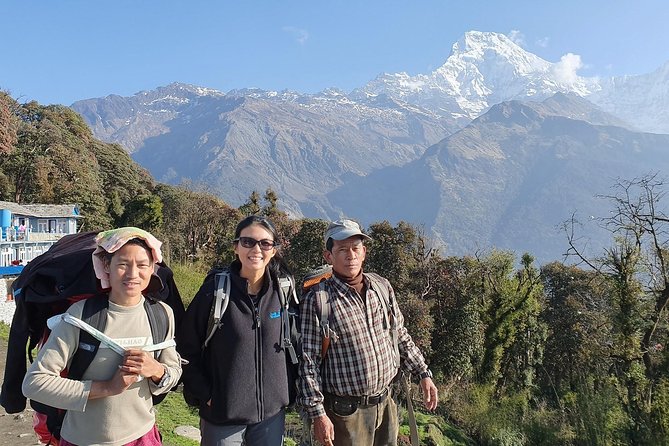
- Flexible local support: Guides such as Sanjay, Amar, Laxman, Andrea, and Ram have led or supported similar trips, though your guide is not named in advance.
Why this private Annapurna trek works well
The best part of this trip is the combination of structure and personal space. You are not joining a large departure with a fixed walking speed. Your guide and porter travel with your party, and the company has adjusted plans for some groups when their needs changed.
That matters in the Annapurna region. A strong walker may want to keep moving, while another person in the same group may need a slower climb, a longer lunch, or a shorter day. A private trek gives your guide more room to manage those differences.
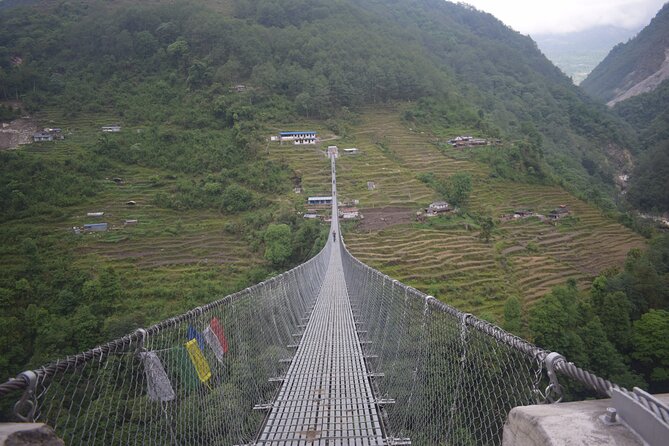
The mountain scenery changes as you gain height. The opening road journey brings you toward the trailhead, then the route moves through villages and forest before reaching the colder, more exposed country near base camp. You get village life, bridges, shrines, rock stacks, river valleys, and big Himalayan views rather than only a final photo at the destination.
The guide and porter arrangement is another real advantage. You are not carrying every item yourself, and the guide handles route decisions, local arrangements, and practical support. The package also includes oxygen saturation checks, which can help your guide watch how you are responding to altitude.
Still, you should not confuse support with ease. Annapurna Base Camp sits at high elevation, and the route has plenty of uphill work. The tour asks for a moderate fitness level, but you should be comfortable walking for several hours on uneven ground and climbing stairs for long stretches.
More Private Hiking Tours in Nepal
- 14-Day Private Annapurna Base Camp Trek
★ 5.0 · 180 reviews - Kathmandu: Nagarkot Sunrise & Hike with Lunch -Private/Group
★ 4.9 · 122 reviews - 14 Days Private Tour Everest Base Camp Trek
★ 5.0 · 105 reviews
Day 1: The jeep ride to Chhomrong
The first day starts at 8:15 am from Pokhara Lakeside. A private jeep takes you for about two and a half hours toward Chhomrong, making this a useful transition from city travel to mountain walking.
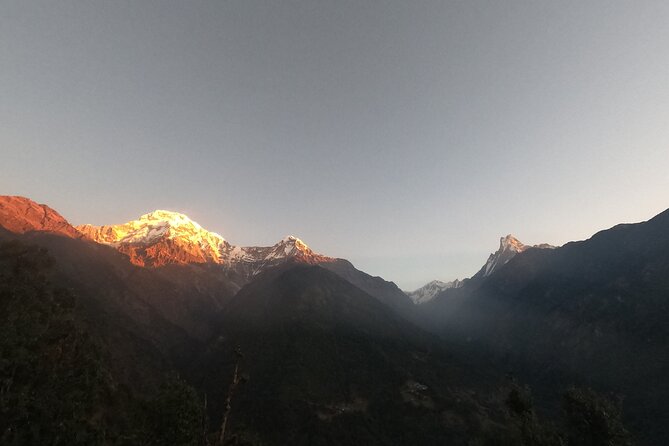
Chhomrong is a fine place to begin. The plan includes breakfast with views toward Annapurna I, at 8,091 meters, and Machhapuchhre, at 6,997 meters. These are serious Himalayan peaks, and seeing them from a terrace gives you an immediate sense of the scale ahead.
The day includes about three hours of activity. That sounds easy beside the longer walking days, but the drive and the change in setting still make it a useful first stage. You can organize your bags, meet your support team, and settle into the rhythm of tea house travel.
One thing to clarify is the exact accommodation on this first night. The itinerary identifies Chhomrong as the stop, but the day-by-day notes are brief. Ask the operator to confirm the sleeping village and what luggage you should carry during the walking days.
Day 2: Stone stairs, Sinuwa, and Bamboo
Day two introduces the route’s most memorable physical feature: a descent of about 2,500 stone steps. You cross a bridge over the Chhomrong Khola, then climb toward Sinuwa before continuing to Bamboo.
This is a classic Himalayan trail day, with a little of everything. The downhill section can be hard on knees, while the uphill section asks for steady breathing and patience. Stone steps are easier to follow than a rough scramble, but they are still tiring when repeated for hours.
The planned walking time is about six hours. Lunch is scheduled at Sinuwa, followed by the walk to Bamboo and an overnight stay. Bamboo gives the day a clear finish, and the forest setting begins to replace the open village views from lower down.
I would keep your daypack light here. The included porter carries the main duffle, but you still need water, rain protection, warm layers, sunscreen, personal medicine, and anything needed during the day. A lighter pack makes the stairs much more manageable.
Day 3: From Bamboo through Dovan to Deurali
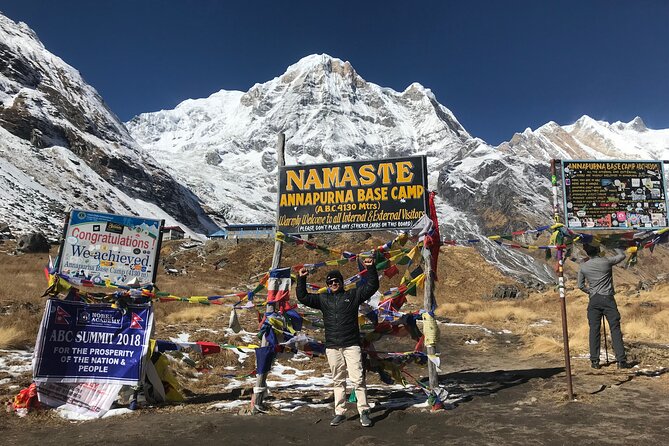
After breakfast, you leave Bamboo and climb toward the Himalaya Hotel area. The trail passes Dovan and continues along the route’s so-called weeping wall, a section known for water running down rock faces.
You also pass a local shrine before reaching the higher forest around Himalaya. The day is listed at about five hours, ending in Deurali. Compared with day two, it is shorter on paper, but the higher elevation and steady climb can make it feel just as demanding.
This section is valuable because the route begins to feel more alpine. The forest remains part of the experience, but the river corridor and rock walls make the valley seem narrower and more enclosed. You are moving toward the high basin rather than simply walking between villages.
The tea house system is basic by design. Accommodation and meals are covered, but you should not expect city-hotel standards. The value is that you can sleep along the route without arranging each night yourself. Bring travel insurance, since medical treatment and evacuation can become costly in the mountains.
More Private Hiking Tours in Pokhara
- Pokhara: 3-Day Ghorephani and Poon Hill Private Trek
★ 5.0 · 58 reviews - 4-Day Private Poon Hill Trekking Tour
★ 5.0 · 58 reviews - Pokhara: 2-Day Ghorephani and Poon Hill Private Trek
★ 4.6 · 50 reviews
Day 4: The final climb to Annapurna Base Camp
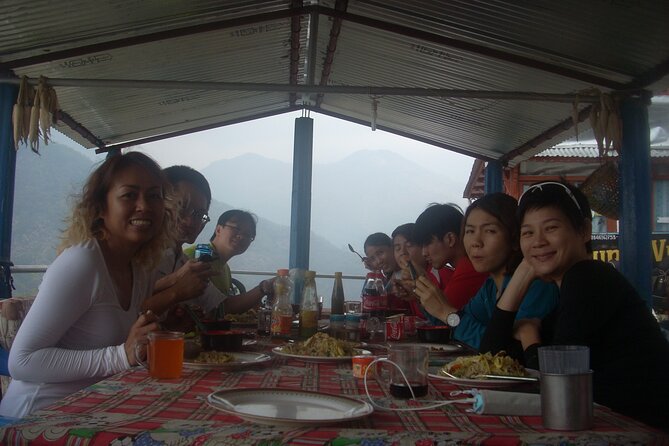
From Deurali, the trail climbs beside the Modi River and passes through alpine forest. The route includes decorated stacks of rock and an icy cave before reaching Machhapuchhre Base Camp and continuing toward Annapurna Base Camp.
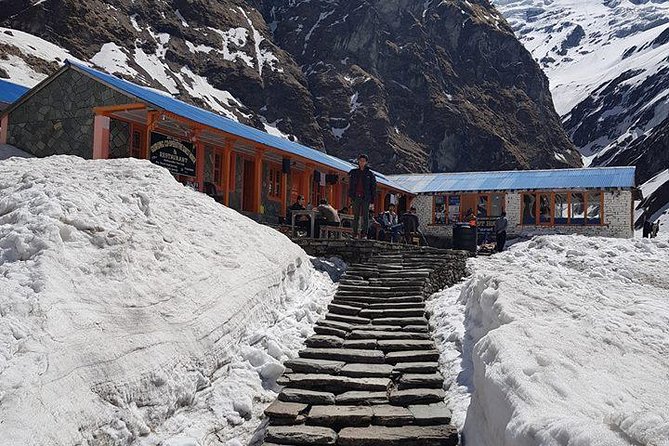
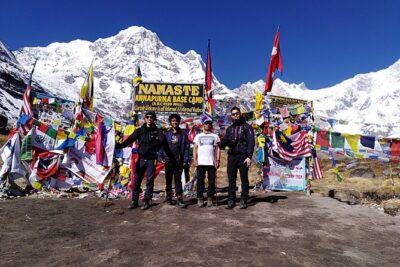
The planned walking time is about five hours. This is the day when the trip’s effort pays off. The surroundings open into a dramatic high-altitude basin, with the Annapurna massif rising around you.
The final approach is not a casual stroll. You are gaining height, and the cold, thinner air can affect your energy. Walk at a steady pace, drink regularly, and tell your guide if you develop a headache, unusual weakness, dizziness, or other symptoms that concern you. The included oxygen saturation checks give the guide one more way to monitor your condition, but they do not replace honest communication.
The arrival at base camp is the central moment of the trek. You have not simply driven to a viewpoint. You have reached the high basin by crossing villages, forests, bridges, stairs, and river valleys. That gradual change makes the mountain setting feel earned.
Day 5: Time for Annapurna Base Camp and the descent
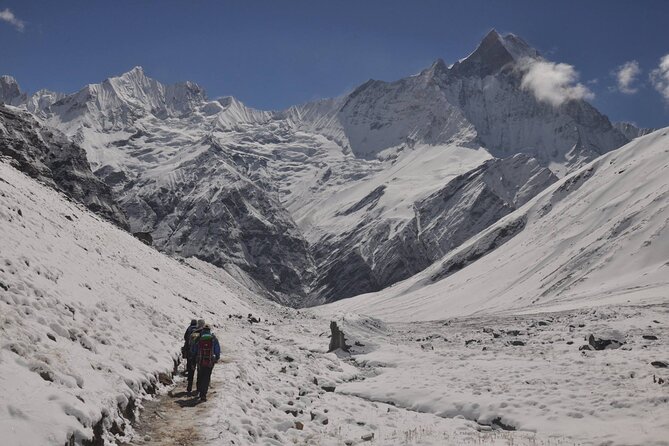
The fifth day is designed around exploring Annapurna Base Camp. The plan allows about eight hours, making it the longest day on the schedule.
At base camp, you can take in a 360-degree mountain view of the surrounding peaks and spend time looking across the snow-covered walls. The extra time matters. A quick arrival, photo, and departure would miss much of what makes the place special.
The day-by-day description is not fully clear about the exact overnight location after this exploration. It appears to begin the return journey, but the written sequence later refers to Bamboo and Jhinu Danda in a way that compresses several trail sections. Do not treat the published times as a minute-by-minute schedule. Ask your guide or booking contact to confirm where you sleep on night five and night six.
That small planning check is important because the return can feel very different from the ascent. Going downhill may seem easier for your lungs, but it can be rough on your knees, especially after the long climb to base camp.
Day 6: Return through the forest toward Jhinu Danda
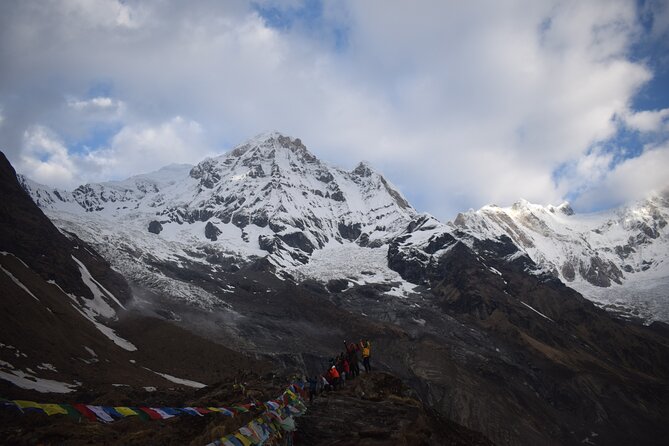
The itinerary names Jhinu Danda hot spring for this part of the journey. It also describes leaving Bamboo, climbing through bamboo forest, following a narrow ridge toward Sinuwa, and then descending toward the Chhomrong River.
The walking time is about six hours. This is another mixed day, with uphill sections even though you are generally returning to lower ground. The forest provides shade and a change from the exposed high country, while the river crossings and ridge walking keep the route interesting.
Jhinu Danda is a welcome idea after several days on foot. The tour name identifies the hot spring stop, but the supplied schedule does not explain the exact bathing arrangements or how much free time you receive there. Confirm those details if the hot spring is a major reason you are booking.
The return route also shows why private guiding helps. Your group may want to spend more time at the hot spring, walk faster through familiar sections, or pause for photographs. Your guide can explain what is practical within the day’s transport and accommodation plan.
Day 7: Jeep return to Pokhara
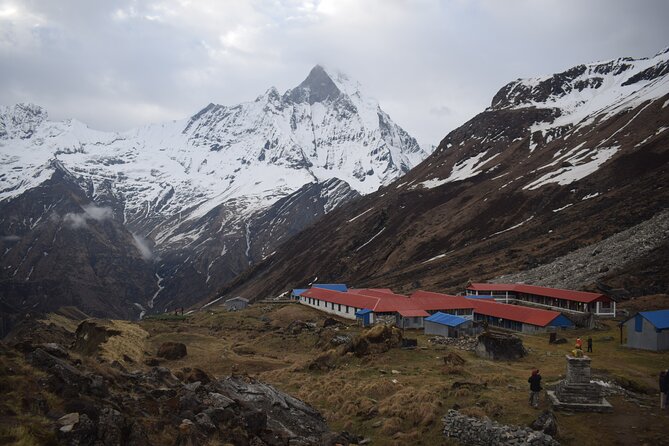
The final morning begins with breakfast and another chance to look toward Annapurna I and Machhapuchhre. You then take a short walk to Samrung before boarding a private jeep for the drive back to Pokhara along the Baglung route.
The listed activity time is about three hours. The tour ends at the original meeting point in Pokhara Lakeside, so you should have the rest of the day available for your own plans, subject to road conditions and the actual return time.
This final transfer is useful because you do not need to arrange a separate vehicle from the trail. It also keeps the trip tidy: start in Pokhara, reach base camp, return to Pokhara.
What the $625 price really covers
At $625 per person, the package is priced as a supported trek rather than a bare route and bed. The value comes from having the main mountain logistics gathered into one booking.
Included are:
- A government-registered trekking guide
- Porter support and the porter’s expenses
- Tea house accommodation
- ACAP and other necessary permits
- Overland transport described in the itinerary
- A trekking map
- Oxygen saturation checks
- Water purification
- A duffle bag
- Emergency rescue evacuation assistance
- Government tax and service charge
- Public liability insurance
- Seven breakfasts
- Six lunches
- Six dinners
That is a substantial list for a seven-day trek. Meals are covered on every full meal day shown, and you do not need to negotiate permits or arrange the return jeep separately.
The exclusions matter just as much. Hotels in Pokhara and Kathmandu are not included. Travel insurance is also your responsibility, and tips for the guide and porter are extra. Budget for those items before deciding that $625 is your complete Nepal trip cost.
The price is strongest for people who want a managed private trek without paying for luxury accommodation. It is less useful for independent hikers who already know the route, have their own gear, and prefer to arrange tea houses and transport themselves.
Guide support and the human side of the trek
The company has used guides and porters including Sanjay, Amar, Laxman, Andrea, Ram, Kumar, and others on similar Annapurna trips. The exact guide for your departure is not listed, so ask who will lead your group and how many people the porter will support.
The strongest pattern in the supplied feedback is personal care and flexibility. One group praised Sanjay’s help throughout the journey. Another described Amar and the management team as willing to adjust plans. Laxman and porter Ramesh were also singled out for strong support on a first Nepal trek.
That does not guarantee a particular person on your trip, but it gives you useful questions to ask. Find out who your guide is, whether the porter travels with the group, and how the team handles a slower pace or a change in plans.
The 98 percent recommendation rate and 4.8 rating from 50 reviews suggest a dependable operation, but the physical challenge remains yours. A helpful guide can manage the route and logistics. The guide cannot remove the stairs or the altitude.
Who should book this trek?
I would recommend it to a private group that wants Annapurna Base Camp in a short, organized format. It suits couples, friends, and families with a reasonable fitness base who prefer local support over managing each detail themselves.
It is also a good match if you value flexibility. The private setup gives your guide more room to respond to your group than a large shared departure would.
I would hesitate to recommend it to anyone seeking a soft adventure with short walks and hotel comforts. The six-hour days, eight-hour base camp day, steep stairs, and high altitude require preparation.
Before booking, confirm three things: the exact overnight sequence, the identity of your guide, and how the hot spring visit fits into the return. Those details are not fully clear in the day-by-day outline.
Should you book the Annapurna Base Camp trek?
Book this trek if you want the main Annapurna experience handled for you at a reasonable price, and you are comfortable with real mountain walking. The private format, included porter, meals, permits, tea houses, and return transport give you good practical value.
Skip it if you want a slow itinerary with plenty of spare days or if you dislike steep stairs and basic lodging. For the right group, this is a focused way to reach Annapurna Base Camp, with enough local support to let you pay attention to the villages, forests, rivers, and peaks instead of paperwork.
Free cancellation is available up to 24 hours before the 8:15 am start. Poor weather may lead to a new date or a full refund. That is useful flexibility, but travel insurance is still essential.
FAQ
Where does the trek start?
It starts at Pokhara Lakeside, at Lakeside Road in Pokhara, Nepal. The listed start time is 8:15 am.
Where does the trek end?
The activity ends back at the original meeting point in Pokhara Lakeside.
How long is the Annapurna Base Camp trek?
The trek lasts approximately seven days.
Is this a private trek?
Yes. Only your party participates, along with the assigned guide and porter.
Are meals included?
Yes. The package includes seven breakfasts, six lunches, and six dinners.
Is accommodation included?
Tea house accommodation along the trek is included. Hotel accommodation in Pokhara and Kathmandu is not included.
Are permits included?
Yes. The Annapurna Conservation Area Permit and necessary permits are included.
Do I need travel insurance?
Yes. Travel insurance is not included, and you are advised to arrange it before the trek.
Can I cancel for a full refund?
You can cancel for a full refund up to 24 hours before the experience start time. Cancellations or changes made less than 24 hours before departure are not accepted for a refund.
More Annapurna Treks in Nepal
- Annapurna Circuit Trek with Tilicho Lake
★ 5.0 · 368 reviews - Annapurna base camp trek 5 Days
★ 5.0 · 252 reviews - Trekking in Annapurna/Langtang/Everest/Upper Mustang regions
★ 5.0 · 161 reviews - From Pokhara: 10-Day Poon Hill and Annapurna Base Camp Trek
★ 5.0 · 7 reviews
Recently reviewed hikes in Nepal
- Australian Base Camp Day Hike From Pokhara★ 4.8 · 19 reviews
- From Pokhara: Budget 2 Night 3 days Poon hill trek★ 5.0 · 20 reviews
- 1 N 2 Days easy Dhampus,Australian camp trek from Pokhara★ 4.9 · 10 reviews
- From Pokhara: 10-Day Poon Hill and Annapurna Base Camp Trek★ 5.0 · 7 reviews
- 14 Days Private Tour Everest Base Camp Trek★ 5.0 · 105 reviews
- Kathmandu: Nagarkot Sunrise & Hike with Lunch -Private/Group★ 4.9 · 122 reviews
- Pokhara: 2-Day Ghorephani and Poon Hill Private Trek★ 4.6 · 50 reviews
- Pokhara: 3-Day Ghorephani and Poon Hill Private Trek★ 5.0 · 58 reviews
Annapurna Treks, compared.
Trekking in Annapurna/Langtang/Everest/Upper Mustang regions
Read our review →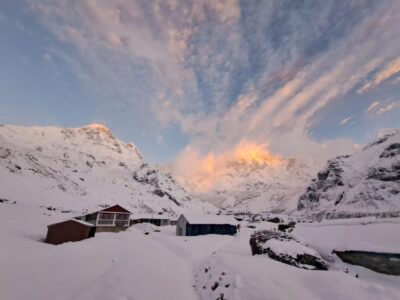
From Pokhara: 10-Day Poon Hill and Annapurna Base Camp Trek
Read our review →Other lists this hike appears in