
Review · KATHMANDU
Annapurna base camp trek 5 Days
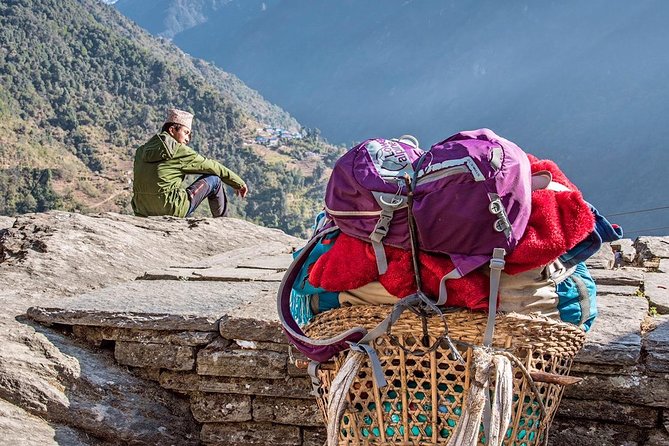
Annapurna Base Camp gives you a rare Himalayan payoff in a short package: within several trekking days, you move from forest trails to a high mountain bowl ringed by snowy peaks. Fish Tail, or Machhapuchare, is the visual star, with Annapurna rising nearby.
I like the practical setup: transport from Kathmandu to Pokhara, local road transfers, permits, meals, tea-house lodging, and trekking equipment are included. I also like the small group limit of 12, since that should make walking pace and daily arrangements easier to manage.
The main caution is the schedule. It is advertised as a five-day trek but runs across six itinerary days, and several days involve long walks, steep descents, or early starts. A moderate fitness level is required, and a couple of poor guide experiences point to the need to confirm small details before departure.
Key points to know before you book
- Kathmandu to Pokhara by tourist bus: The first day includes a roughly seven-hour scenic road journey before your time in Pokhara.
- A forest-to-mountain route: You walk through rhododendron, bamboo, and oak forests before reaching the snowy peaks around Base Camp.
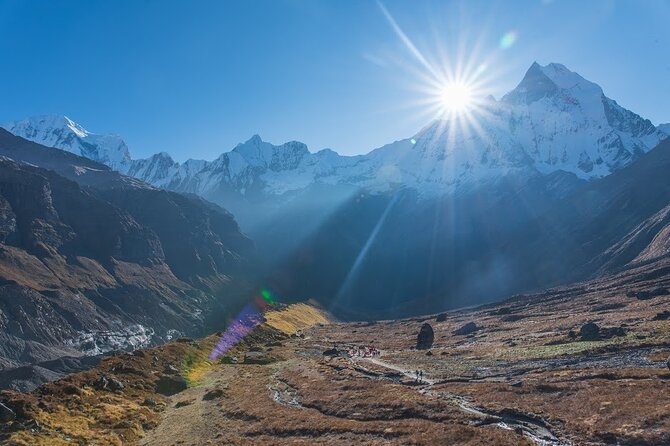
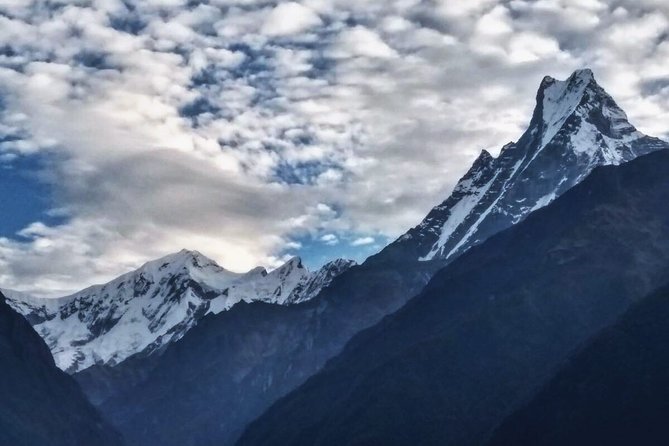
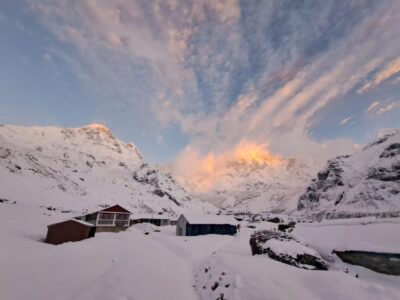
- Fish Tail is a daily visual reference: Machhapuchare and Annapurna provide the most memorable mountain views, especially around sunrise.
- Tea houses keep the trek simple: Lodging, breakfast, lunch, and dinner are included for five nights of the trekking program.
- Transport is built into the price: Airport pickup and drop-off, the tourist bus, local jeep travel, and return ground transport are covered.
- A small but active group: The maximum is 12 people, and the route suits anyone with moderate physical fitness.
What the six-day schedule really involves
The name suggests a five-day Annapurna Base Camp trek, but the supplied schedule runs from Day 1 through Day 6. That is worth noticing when you arrange flights, hotel nights, and onward plans.
The first day is largely a transfer day. The trek begins in practical terms after you leave Kathmandu, so this is not five full walking days from the capital. That is normal for this route, but it helps to understand the timing before you book.
The experience starts early, with a 6:45 am meeting time. Airport transfers are included, along with the tourist bus to Pokhara. You should expect a long road day, not a quick hop. The roughly seven-hour drive follows the Prithvi Highway and gives you an introduction to Nepal beyond Kathmandu.
More Annapurna Treks in Kathmandu:
- Annapurna Circuit Trek with Tilicho Lake
★ 5.0 · 368 reviews - 14-Day Private Annapurna Base Camp Trek
★ 5.0 · 180 reviews - Trekking in Annapurna/Langtang/Everest/Upper Mustang regions
★ 5.0 · 161 reviews
Day 1: Kathmandu to Pokhara and Lakeside
Pokhara is more than a staging point. After the bus ride, you visit the Lakeside area, a popular tourist district beside Phewa Lake. It is a gentler first day than the walking days that follow, giving you time to arrive, look around, and prepare for the mountains.
I like that the itinerary includes time in Pokhara rather than treating it only as a transport stop. Lakeside is a useful place to settle into the trip, though the day can feel long because of the early departure and road travel.
The tourist bus is included, which protects you from one common source of hassle. You do not have to arrange the Kathmandu to Pokhara connection separately. The tradeoff is time: road travel in Nepal can be tiring, and this first day does not deliver the quiet mountain walking you may be imagining.
Food in Kathmandu and Pokhara is not included, so budget separately for meals before and after the trek. Your included meal plan begins with five breakfasts, five lunches, and five dinners connected to the walking portion.
Day 2: Jeep transfer to Siwai and the Chhomrong area
After breakfast at your Pokhara hotel, you travel by local jeep toward Siwai. The drive takes about two hours. Before reaching Siwai, the route passes through Birethati, described as an entry point to the trekking area.
This transfer matters because the road shortens the approach. Instead of spending another full day walking from a lower starting point, you reach the trail area by vehicle and begin the mountain route from there.
The day includes about five hours of activity and an overnight stay connected with Chhomrong Cottage. Chhomrong is one of the key settlements on this route, and the name appears again in the return section of the journey. You should expect a mountain village setting and basic tea-house accommodation rather than hotel comfort.
Tea houses are part of the appeal of this trek. They keep costs down and place you in the same simple lodging tradition used on many Himalayan routes. Rooms and facilities can be basic, so bring patience and use the sleeping bag supplied by the operator. A down jacket and sleeping bag are included, which is useful because you do not need to purchase or rent those items separately.
Day 3: Sinuwa and the forest trail
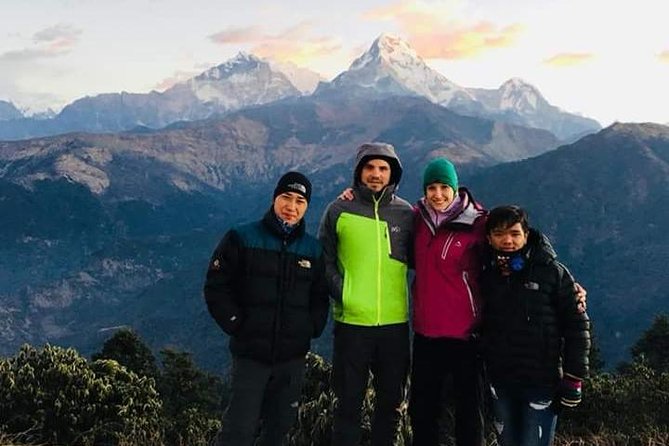
The next morning begins with tea and, if the weather cooperates, a sunrise view over the white mountains. That early light is one of the best reasons to rise before breakfast. Mountain visibility can change quickly, so do not assume the view will appear on demand.
After breakfast, the route continues toward Sinuwa, with an overnight stay at Sinuwa Hilltop Lodge and Restaurant in Upper Sinuwa. The trail passes through rhododendron, bamboo, and oak forest. This section gives the trek its sense of progression: you are not simply walking toward a viewpoint, but moving through several distinct mountain environments.
The forest also offers a break from constant exposure. On clear sections you may see the peaks, while other stretches are enclosed by trees and trail. That variety makes the walk more interesting, though it also means the biggest mountain views are not continuous.
This is a good point to manage your expectations. Annapurna Base Camp is not a quick scenic walk. You will be walking for hours, often on uneven mountain trails, with changes in elevation and repeated uphill and downhill sections. The operator asks for moderate physical fitness, and that is a sensible minimum.
More Five-Day Trips around Kathmandu:
- Machu Picchu: 5-Day Salkantay Trek with Panoramic Train
★ 5.0 · 79 reviews - 5-Day Pearl of Africa Chimps and Gorilla Trekking Safari
★ 5.0 · 52 reviews
Day 4: The main goal, Annapurna Base Camp
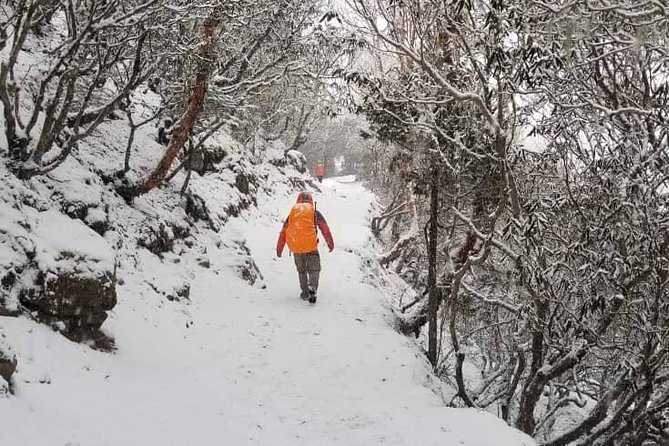
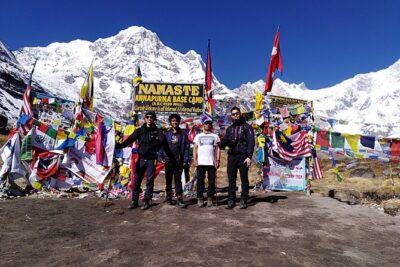
Day 4 is the emotional center of the trek. After breakfast, you continue on foot toward Annapurna Base Camp, described as the base area of the world’s tenth-tallest mountain. The reward is a close setting among major Himalayan peaks rather than a distant mountain view from a road or town.
Machhapuchare, or Fish Tail, is especially important to the visual character of the route. Its distinctive profile helps you understand why it is one of Nepal’s best-known mountains. Annapurna and other high peaks fill out the surrounding view.
The supplied schedule describes this as one of the most exciting days, and the reason is clear: you reach the main objective under your own power. The route’s appeal comes from the change in scale. Forests and villages give way to a more open, high mountain setting.
You should keep the practical side in mind. Weather controls visibility, and the tour can be canceled if conditions are poor. If that happens, you are offered a different date or a full refund. This is useful protection, but it also means you should avoid planning an immediate, nonrefundable flight connection after the trek.
The guide handles trekking permits, accommodation arrangements, meals, transport, and other daily details. That lets you focus on walking and scenery instead of negotiating each overnight stop. Still, two reported problems involved a guide forgetting water purification tablets and initially expecting hikers to pay for water. I would confirm before departure exactly what water treatment is supplied and what you should carry yourself.
Day 5: Sunrise views and the return to Sinuwa
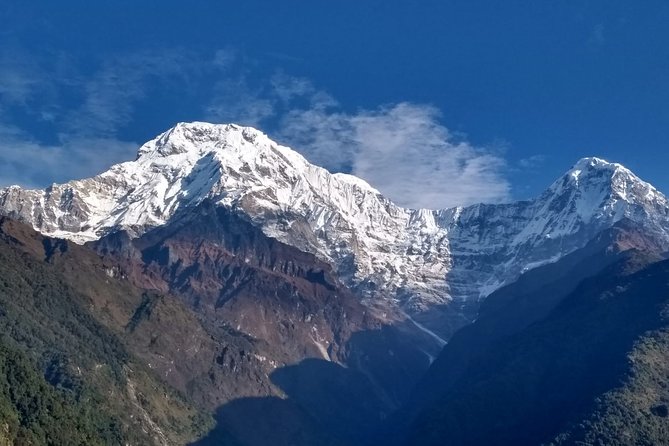
The morning begins with a short walk to find a sunrise view over Machhapuchare and Annapurna. This is an excellent feature of the schedule because the mountains often look most dramatic in early light, before cloud cover builds.
After breakfast, you retrace the route toward Sinuwa. Returning by the same trail is not a flaw here. You get a different view of the path, and the descent changes how the forest, villages, and peaks appear. You may also appreciate the trail more after reaching the main goal.
The day is listed at about six hours. That is still a substantial walking day, especially after the push to Base Camp. Descending is not automatically easy. Steep steps and uneven ground can be hard on knees, so trekking poles may be useful, though they are not listed among the included items.
The return to Sinuwa also shows why this is a short Annapurna route rather than a leisurely village holiday. The schedule makes good use of the available days, but it leaves limited spare time if you walk slowly or if weather delays the plan.
Day 6: Chhomrong, the hot spring, and Pokhara
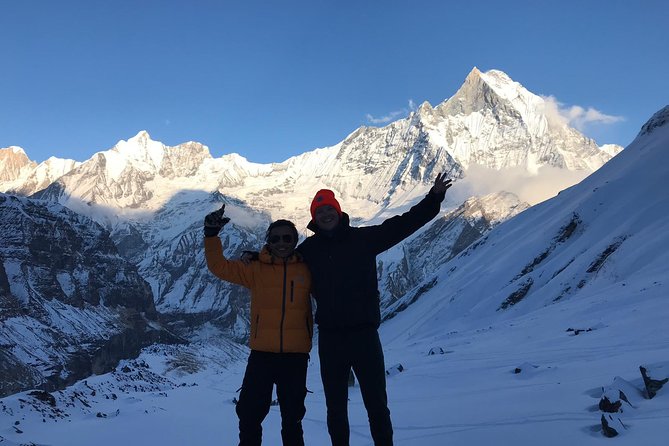
The final day follows the trail back toward Chhomrong. From there, you descend steeply to the Jhinu hot spring area. The route then continues downhill to Siwai, a walk of about two hours, where a local jeep takes you onward.
This is a satisfying finish because the hot spring offers a natural break after several days of mountain walking. The steep descent is also the day’s main physical warning. You may find the downhill section tougher than expected, particularly if your legs are tired.
The itinerary then lists Pokhara Museum as the final stop. The key practical point is that you return to Pokhara rather than Kathmandu. Plan your next stage accordingly and allow time before any important onward connection.
Ground transport is included, along with airport pickup and drop-off. The exact vehicle arrangements can change by section, since the plan uses a tourist bus, local jeeps, and trekking transfers. Ask the operator how your airport transfer connects with the six-day schedule if you are arriving or departing on a tight timetable.
Tea houses, meals, and included equipment
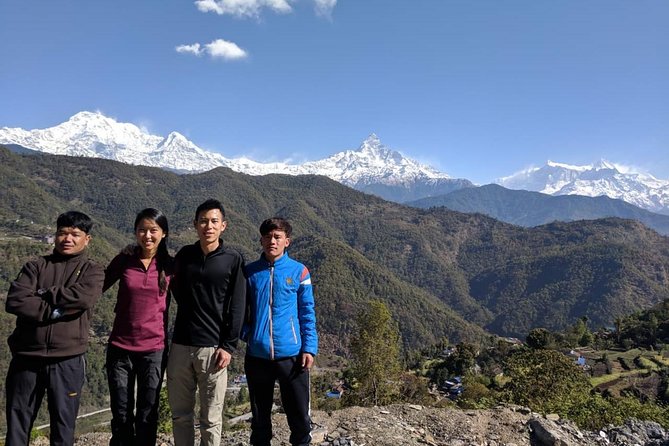
The $699 price covers far more than guiding. It includes trekking permits, tea-house lodging, meals during the trek, ground transportation, airport transfers, a down jacket, a sleeping bag, and an English-speaking local guide or Sherpa.
That package has real value. Buying permits, organizing multiple lodges, arranging a Pokhara transfer, and hiring transport separately would take time and create more chances for confusion. The included equipment is also useful for occasional trekkers who do not own cold-weather trekking gear.
Five breakfasts, five lunches, and five dinners are included. Food in Kathmandu and Pokhara is not. Arrival visa fees, tips, travel insurance, and extra accommodation caused by schedule changes are also excluded.
The operator includes an ART T-shirt, a certificate of achievement, and a farewell dinner. These are pleasant extras, but they should not be the reason you book. The main value lies in the transport, guide, permits, lodging, meals, and equipment.
Travel insurance is not included, and you should arrange it yourself. The package mentions insurance in the list of services connected with guide operations, but the exclusions clearly place personal travel insurance on you. Read the coverage carefully, especially for trekking and weather-related disruption.
How much value do you get for $699?
At $699 per person, the package is priced as a guided, organized Himalayan trek rather than a bare-bones walking route. You are paying for logistics as much as for the trail itself.
I consider the price reasonable for someone who wants a clear plan from Kathmandu through Pokhara and back to Pokhara. The small group limit helps, and the included permits, food, tea houses, vehicles, airport transfers, jacket, and sleeping bag reduce the number of extra payments you must handle.
The value is lower if you already have local contacts, your own equipment, and experience arranging Nepal transport. Independent trekkers may prefer more flexibility. Here, you trade some control for convenience.
Budget extra money for food in Kathmandu and Pokhara, visa fees, tips, insurance, and any nights added outside the planned schedule. You should also clarify water treatment. The two poor accounts supplied with this experience both focus on a guide forgetting purification tablets and then asking hikers to pay for water. That is a small item, but it matters on a trek and should be settled before departure.
Guide quality and group size
Your English-speaking guide is meant to handle permits, lodges, meals, transport, and daily arrangements. That support is particularly valuable when the route changes because of weather or road conditions.
The maximum group size is 12. That is small enough to keep the group manageable, while still large enough that walking speeds may vary. If you are a fast hiker, you should ask how the group handles different paces. The supplied information does not state whether porters are included, so ask directly about luggage arrangements before you go.
Guide performance is the largest point to check. Two low ratings describe an unprofessional guide who did not appear familiar with the planned route and forgot water tablets. Those accounts do not cancel out the strong overall rating, but they are specific enough to take seriously.
Before departure, confirm:
- The name and experience of your guide
- The daily route and overnight lodges
- What water purification method is supplied
- What personal luggage the guide or porters will carry
- Whether the down jacket and sleeping bag are provided for the full trek
- The exact airport pickup and return arrangements
These questions take only a few minutes and can prevent avoidable trouble.
Who should book this Annapurna trek?
I would recommend this route to you if you want a classic Himalayan trek without arranging every permit, vehicle, meal, and lodge yourself. It suits people with moderate fitness who can handle several hours of walking, steep descents, and early mornings.
It is also a good fit if you have limited time in Nepal. The route gives you Pokhara, forest trails, mountain villages, Fish Tail views, Annapurna Base Camp, and the Jhinu hot spring in six scheduled days.
I would be cautious if you want a relaxed holiday, dislike basic lodging, or need a flexible daily pace. This is not a sightseeing coach tour with a little walking added. The transfer days are long, the trail days are active, and the final descent can be demanding.
You should also reconsider if your flight schedule leaves no room for weather changes. The experience depends on good weather, and mountain transport can affect timing.
Should you book it?
Book this trek if the $699 price, included transport, tea-house stays, meals, permits, and small-group format match what you want. The route offers a strong mountain payoff for a relatively short itinerary, and the journey from Pokhara through forest to Annapurna Base Camp is the real attraction.
Before paying, get written confirmation about the guide, water purification tablets, luggage support, and the five-day versus six-day wording. If those details are clear, this is a practical way to reach one of Nepal’s best-known base camps without managing every part yourself.
FAQ
How long does the Annapurna Base Camp experience take?
The schedule runs across six days, although the experience is also described as a five-day trek. The first day is travel from Kathmandu to Pokhara, followed by trekking and return transport to Pokhara.
What time does the experience start?
The stated start time is 6:45 am.
Is transport from Kathmandu to Pokhara included?
Yes. A tourist bus from Kathmandu to Pokhara is included, along with local jeep travel and other ground transportation shown in the schedule.
What accommodation is provided?
Tea-house accommodation is included during the trek. The schedule names Chhomrong Cottage and Sinuwa Hilltop Lodge and Restaurant in Upper Sinuwa.
Are meals included?
Five breakfasts, five lunches, and five dinners are included during the trekking program. Food in Kathmandu and Pokhara is not included.
Is the trek suitable for all fitness levels?
No. A moderate level of physical fitness is required. The itinerary includes several hours of walking, steep descents, and early starts.
What is the cancellation policy?
You can receive a full refund if you cancel at least 24 hours before the local start time. Cancellations or changes made within 24 hours are not refunded or accepted. If poor weather causes the operator to cancel, you are offered another date or a full refund.
Recently reviewed hikes in Kathmandu
- 14 Days Private Tour Everest Base Camp Trek★ 5.0 · 105 reviews
- Kathmandu: Nagarkot Sunrise & Hike with Lunch -Private/Group★ 4.9 · 122 reviews
- 4 Days Poon Hill Trek★ 5.0 · 94 reviews
- Langtang Valley Trek★ 5.0 · 140 reviews
- Manaslu Circuit Trek★ 5.0 · 292 reviews
- Manaslu Circuit Trek★ 5.0 · 184 reviews
- Nagarkot Sunrise View & Day Hiking with Lunch – Private/Group★ 5.0 · 73 reviews
- Kathmandu: Dhulikhel to NamoBuddha Day Hike with Lunch★ 4.8 · 62 reviews
Annapurna Treks, compared.
Trekking in Annapurna/Langtang/Everest/Upper Mustang regions
Read our review →
From Pokhara: 10-Day Poon Hill and Annapurna Base Camp Trek
Read our review →Other lists this hike appears in