
Review · KATHMANDU
Everest Base Camp Trekking – 13 Day
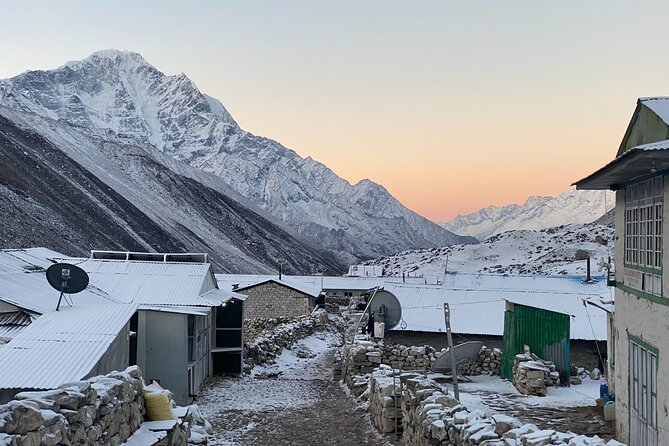
The big draw here is simple: in 13 days, you walk from Lukla to Everest Base Camp, with the flights, lodges, meals, permits, and route planning handled for you. The trail brings you through Namche Bazaar, Tengboche, Dingboche, and Lobuche before the high-altitude push to Base Camp and Kala Patthar.
I like the two built-in acclimatization days, since they give your body time to adjust rather than treating the Himalayas like a race. I also like the guide-led format. Guides including Milan, Dibash, Achyut Mishra, Ratna, and others are praised for clear briefings, careful pacing, and practical problem-solving.
The main consideration is that this remains a hard trek at high altitude, not a sightseeing stroll. Weather can disrupt the Lukla flights, Kathmandu meals are not included, personal insurance is required, and a single traveler may pay a $150 surcharge if a shared group is not available.
Key points at a glance
- Lukla flights are included: You fly from Kathmandu into the small mountain gateway used for the Everest route, then return the same way.
- Two acclimatization days matter: Namche Bazaar and Dingboche provide time for short hikes and adjustment to altitude.
- The high point comes late: Day 9 reaches Everest Base Camp, followed by an early start to Kala Patthar on Day 10.
- Lodges and most meals are covered: You sleep in trailside lodges and receive 12 breakfasts, 12 dinners, and 11 lunches.
- Private trekking gives you flexibility: Your group can personalize parts of the schedule, subject to weather and trail conditions.
- Guide quality is central: Clear next-day briefings, sensible pacing, and help with logistics make a major difference on this route.
What the $1,399 price really covers
At $1,399 per person, this trek offers solid value for a Himalayan route that includes the major practical pieces. Your price covers the Kathmandu to Lukla and Lukla to Kathmandu flights, airport departure tax, national park entrance fees, the TIMS card, government and local taxes, trailside accommodation, and meals during the trekking portion.
That matters because the Everest route has a lot of moving parts. You are not simply paying for a guide to point toward the mountains. The operator handles the permits, flight arrangements, lodge planning, and daily route structure. That saves you weeks of preparation and removes much of the guesswork.
The meal coverage is generous but not total. You receive 11 lunches, 12 dinners, and 12 breakfasts. Meals in Kathmandu are excluded, as are alcoholic drinks, bar bills, beverages, phone calls, battery charging, and other personal costs. You should also budget for your Nepal visa, personal travel insurance, health insurance, and helicopter evacuation insurance.
The single-person wording deserves attention. The advertised price is for one person, but the operator says a solo departure can carry a $150 surcharge if you do not join an existing group. The amount can also depend on the departure date, group size, and room-sharing arrangement. Ask about this before you settle your plans.
More Everest Base Camp Treks in Kathmandu:
- Everest Base Camp Trek – 14 Days
★ 5.0 · 1,499 reviews - Everest Base Camp Trek
★ 5.0 · 842 reviews - Everest Base Camp Trekking
★ 5.0 · 485 reviews
Day 1: A soft landing in Kathmandu
Your first day begins at Tribhuvan International Airport, where a representative receives you and takes you to your Kathmandu hotel after customs formalities. It is a practical arrival day, not a sightseeing day.
That is useful. You have time to recover from the flight, meet the team, check your equipment, and make sure your passport details and trek arrangements are in order. The next morning starts early, so I would not plan a late night or a packed city schedule.
If you need last-minute trekking items, Kathmandu is also the place to organize them. The supplied details advise bringing a day pack of 25 to 40 liters, trekking shoes, warm layers, rain protection, gloves, a torch, water bottles, toiletries, and a small towel. One complimentary Trekking Planner duffel bag is provided for the trek and must be returned afterward.
Day 2: The flight to Lukla and the first trail miles
The trek begins with an early flight from Kathmandu to Lukla. The flight is included, but mountain weather can affect departure times. You should treat the schedule as flexible, especially on the return journey.
Lukla is the gateway to the Everest region. Once there, you begin walking with your guide and porter support. The early trail introduces you to the basic rhythm of the trek: steady walking, simple lodge accommodation, changing weather, and a route that asks you to conserve energy from the first day.
Your guide will organize the day, but you still need to manage your own pace. The supplied information describes the trip as requiring moderate physical fitness. That is a useful minimum, but you should also be comfortable walking for several days in a row and handling steep sections.
Day 3: Along the Dudh Koshi River to Namche Bazaar
The route follows the Dudh Koshi River toward Namche Bazaar, one of the best-known settlements on the Everest trail. You cross suspension bridges and begin to see the first views of Kongde Ri Peak.
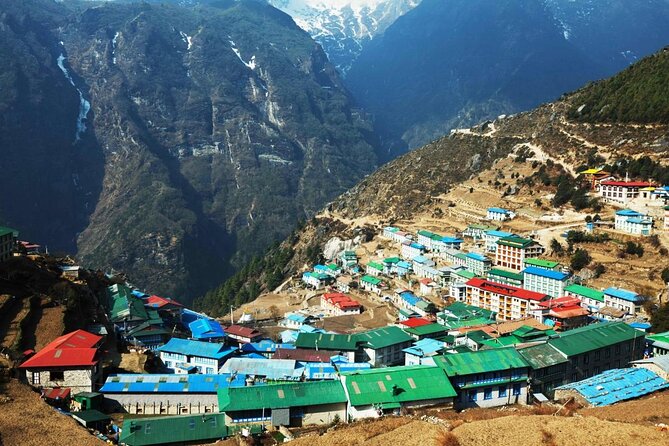
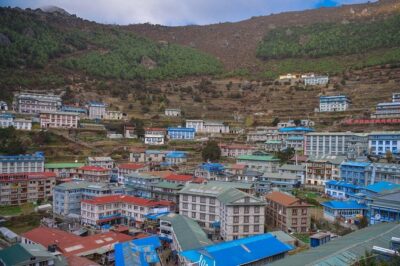
Namche is more than an overnight stop. It is the main trading and supply center for this part of the route, with shops and a lively Saturday market. That makes it a good place to feel the practical side of mountain life, not just admire the peaks.
The approach involves a climb, so the day can feel harder than the distance suggests. I would keep your pack light, drink regularly, and resist the temptation to hurry into Namche. The purpose of this day is to arrive with enough energy for the acclimatization stop that follows.
More hikes and treks around Kathmandu:
- Nagarkot Sunrise View and Day Hiking from Kathmandu
★ 5.0 · 471 reviews - Annapurna Circuit Trek with Tilicho Lake
★ 5.0 · 368 reviews - Everest Base Camp Trek
★ 5.0 · 350 reviews - Everest Base Camp Trek -14 Days
★ 5.0 · 321 reviews
Day 4: Acclimatizing in Namche Bazaar
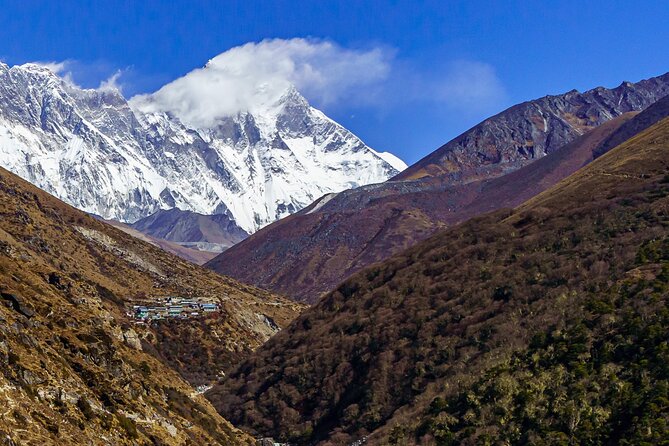
Day 4 is reserved for acclimatization. Rather than spending the entire day in bed, you take short hikes to higher ground and return to Namche to sleep. This approach helps your body adjust while keeping the day manageable.
Namche also gives you a chance to visit shops and take in the local atmosphere. The town’s colorful streets and Saturday market add a human element to the trek. You are not only moving between mountain lodges. You are passing through a working community that supplies the route above it.
The guide’s role becomes especially important here. Milan, one of the guides associated with this trek, has been praised for explaining the following day’s plan, estimating walking times according to ability, and watching the timing of sunset. Those details sound small, but they help you make better decisions when the altitude starts to affect your energy.
Day 5: Forest trails, Sanasa, and the approach to Tengboche
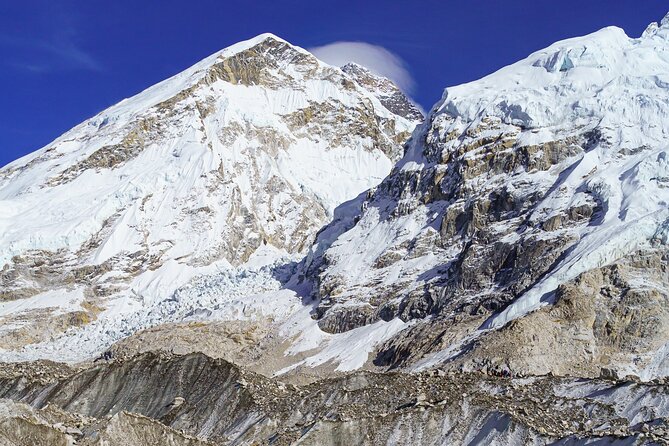
You leave Namche with a short, steep climb, then continue along a more level trail toward Kenjoma and Sanasa. The route passes through dense forest before continuing toward Tengboche.
This section gives you a change from the busier feel of Namche. The trees provide a different setting, while the views open up in places toward the high peaks. The walk still has ups and downs, so do not read fairly level as flat.
Tengboche is known for its monastery and mountain setting. The plan allows time around the village, including the chance to take in sunset and sunrise. That is one of the most memorable parts of the route, but it can also be cold and exposed, so warm clothing should be ready in your day pack rather than buried in your duffel.
Day 6: From Tengboche toward Dingboche
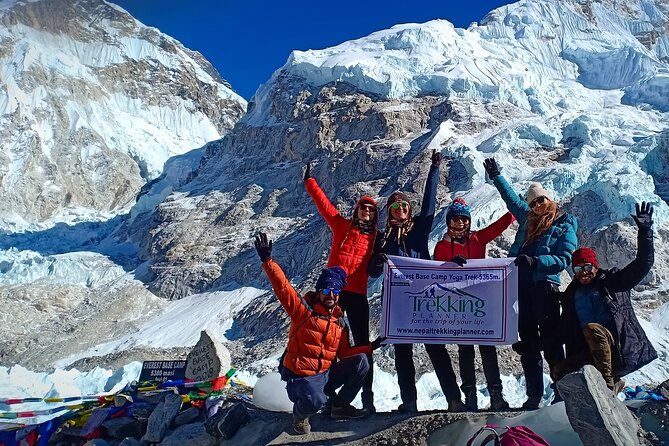
The route continues from Tengboche toward Dingboche, passing through forest and the village of Deboche. The trail includes a descent before the route rises again toward higher settlements.
Dingboche is an important change of scale. You are now moving farther above the lower forest belt, and the surrounding mountains become the main feature of each walking day. You also begin to feel more clearly that altitude, rather than distance alone, controls the pace.
Keep your expectations realistic. Lodge accommodation is part of the value of this package, but it is still trailside lodging in a remote region. Personal comforts such as battery charging and drinks are not included, and the supplied guidance specifically tells you to bring a torch, water bottles, and warm clothing.
Day 7: Another acclimatization day in Dingboche
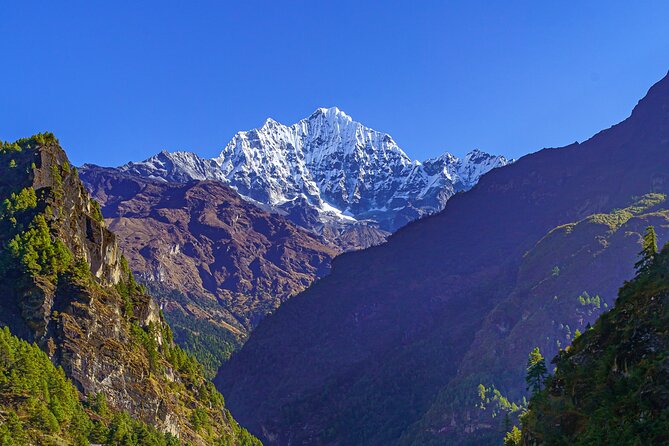
The second rest day is spent in Dingboche, with short hikes to higher ground before returning to sleep at the same altitude. This is one of the most important design choices in the trip.
You might be eager to press on, but skipping a rest day can make the days ahead much harder. Here, the goal is to adapt before the route reaches Lobuche and the final approach to Base Camp. Your guide can help adjust the pace and decide how far to walk during the acclimatization outing.
This is also a good day to check your clothing, water, socks, gloves, and head torch. Small equipment problems are easier to solve in Dingboche than later on. Keep your next day’s essentials close and protect batteries from the cold as much as you can.
Day 8: Higher ground, chortens, and Lobuche
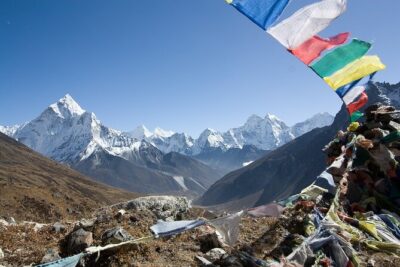
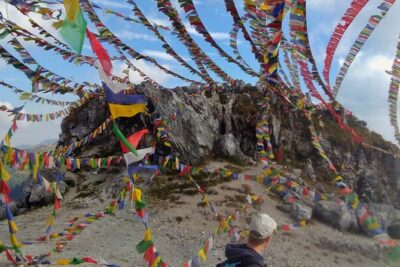
From Dingboche, the trail climbs gradually through grazing areas and past chortens and Mani walls. These Buddhist features give the route a strong cultural character, while the open mountain views make the walking feel increasingly dramatic.
You continue toward Lobuche, where the air is thinner and the day’s effort becomes more noticeable. The route is not described as a technical climb, but the altitude makes ordinary walking demanding. You should follow your guide’s advice, slow down when needed, and report symptoms rather than trying to hide them.
Lobuche is the staging point for Base Camp. Try to treat this night as a rest stop, not a victory lap. The main goal is to reach the next day in good enough shape for the long walk out and back.
Day 9: Reaching Everest Base Camp
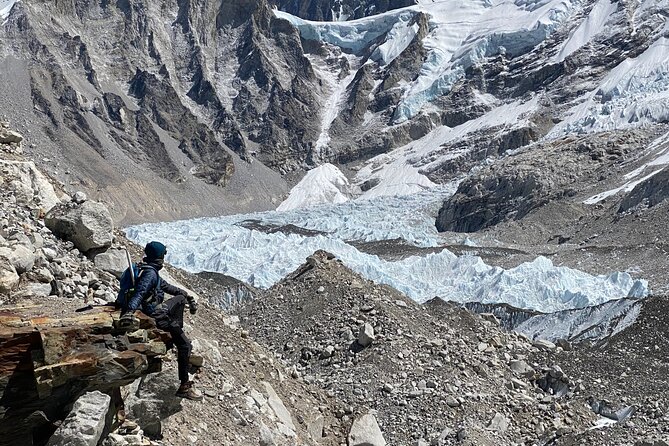
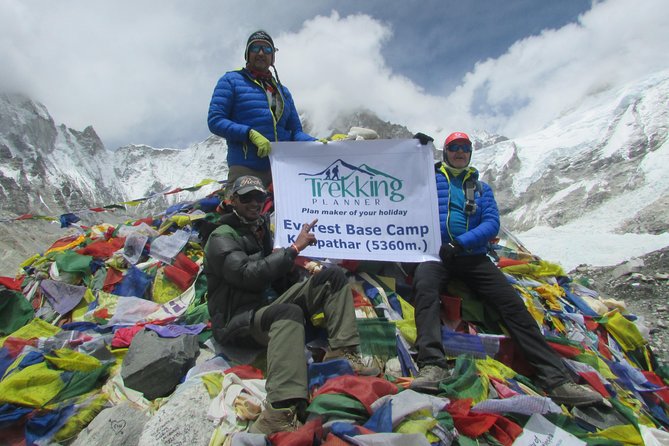
This is the day most people have been waiting for. You leave Lobuche early and walk toward Everest Base Camp, with the route taking you through the high Khumbu area.
The destination is meaningful, but the day should not be treated as a simple photo opportunity. The supplied guidance warns about acute mountain sickness at this altitude, and that warning deserves serious attention. Move slowly, stay aware of how you feel, and tell your guide if you develop concerning symptoms.
Base Camp itself is the turning point of the trek. You reach the place associated with expeditions on Everest, then return toward the lower overnight stop rather than sleeping at Base Camp. That return adds effort, but it also means you preserve the acclimatization plan and prepare for the next morning’s early walk.
Day 10: Sunrise at Kala Patthar and the descent
You start before dawn for Kala Patthar, aiming for early mountain views before descending to lower ground. The early start is tough, particularly after the Base Camp day, but it gives this section a different mood from the previous day.
Kala Patthar is the high viewpoint portion of the trip. From here, you get a broad mountain panorama and a strong sense of the scale of the Khumbu region. After the viewpoint, you return to lower altitudes, which many people find physically welcome.
This is another day when guide judgment matters. The trek team has to balance timing, weather, daylight, and your condition. The guide feedback associated with the trip places heavy emphasis on time management, including getting groups to special sunrise outings on schedule.
Day 11: Returning through Pheriche to Namche
The return continues from Pheriche toward Namche Bazaar. Much of the route is downhill, and the Dudh Koshi River accompanies part of the journey.
Downhill walking is not automatically easy. Your knees and feet may be tired after the high point, and a steep descent can be just as demanding as a climb. Trekking poles are not listed as required equipment, so if you use them, bring your own or confirm availability before departure.
Reaching Namche again gives you a familiar place to rest before the final trail day. You have also moved into a lower, more comfortable altitude, which can make eating and sleeping easier.
Day 12: The final descent to the Lukla route
The last full trekking day takes you down from Namche on a steep trail toward the river confluence of the Dudh Koshi and its tributaries. You finish the walking portion of the journey in the same region where it began.
There is a pleasant sense of closure here. The trail that felt demanding on the way up now looks different on the return, and the lower altitude can make the final miles feel more manageable. Still, save energy. Tired feet and changing weather can make the last day unexpectedly slow.
Your duffel bag arrangement also ends with the trek. Remember that the complimentary bag belongs to Trekking Planner and must be returned after the trip.
Day 13: Flying back to Kathmandu
The final day brings you back to Kathmandu by air. Because weather can affect flights, an early departure is planned, and you should avoid booking a tightly timed international connection without checking the flight arrangements carefully.
The included return flight is a major convenience, but it is not a guarantee of a precise timetable. Mountain aviation depends on conditions. Build flexibility into your wider Nepal plans, especially if you have onward travel.
Once back in Kathmandu, the organized portion of the trek is complete. Meals in the city are not included, so plan for your own food and any extra hotel or personal expenses.
Guides, group style, and personal attention
This is described as a private tour, with only your own group participating. That gives you more room to adjust the pace and discuss personal needs than a large fixed group would.
The strongest guide qualities associated with this trek are practical rather than theatrical. Milan is praised for daily explanations and time estimates. Dibash is praised for handling logistics and keeping the trek organized. Achyut Mishra and Achyut are described as attentive, supportive, and good at finding solutions when the route becomes difficult. Ratna is noted for adding local explanation and care during the trek.
You should still ask who your guide will be and how porter support is arranged before departure. The supplied details confirm a guide-led private trip and a complimentary duffel bag, but they do not spell out a porter-to-client ratio or exact luggage limit.
What to pack and what to pay for yourself
The clothing list is aimed at changing conditions. Bring trekking shoes, sports shoes or sandals, a sun hat, a warm wool cap, fleece or a puffy jacket, a waterproof outer layer, a sweater, rain protection, gloves, trekking trousers, shirts, underwear, and several pairs of good socks.
You should also carry two one-liter water bottles, a torch, camera supplies, toiletries, toilet paper, and a small hand towel. The advice specifically warns against bringing a large towel because it adds bulky weight.
The operator asks you to state dietary requirements when booking. Alcohol, drinks unless specified, bar charges, phone use, battery recharge, Kathmandu meals, visa fees, and personal expenses are extra. Travel and health insurance are also your responsibility, including insurance for helicopter evacuation.
Who should book this trek
I would choose this trip if you want the classic Everest Base Camp route without arranging every permit, flight, lodge, and meal yourself. It suits someone who values a private guide, built-in acclimatization, and a clear day-by-day structure.
It is also a good fit for couples, families, honeymooners, and groups, since discounts may be available and the private format allows some personalization. The guide-led approach can be especially useful if you are visiting Nepal for the first time or do not want to manage high-altitude logistics alone.
I would hesitate if you need luxury lodging, guaranteed flight times, or a relaxed walking holiday. The route is physically demanding, the weather can interfere with flights, and the price does not cover every daily expense. You need a moderate fitness level, suitable clothing, insurance, and a willingness to slow down when altitude demands it.
Should you book the 13-day Everest Base Camp trek?
Book it if your priority is a well-organized route to Everest Base Camp and Kala Patthar, with flights, permits, lodges, meals, and guide support bundled into one price. The acclimatization days and the emphasis on clear daily planning are real strengths.
Before paying, confirm the likely guide, the possibility of a $150 solo surcharge, the shared or private departure arrangement, and the flight schedule flexibility. If you accept basic lodge living and the hard work of altitude, this is a practical way to take on one of Nepal’s best-known treks without carrying the entire planning burden yourself.
FAQ
Is the Kathmandu to Lukla flight included?
Yes. The package includes the Kathmandu to Lukla and Lukla to Kathmandu flights, along with airport departure tax.
How long is the Everest Base Camp trek?
The experience lasts approximately 13 days, including arrival and departure in Kathmandu, the flight to Lukla, the trek to Everest Base Camp, the return walk, and the flight back.
Are meals included?
Yes. The package includes 12 breakfasts, 12 dinners, and 11 lunches. Meals in Kathmandu are not included, and alcoholic drinks and other personal beverages cost extra.
Are accommodation and permits included?
Yes. Trailside lodge accommodation is included, as are the national park entrance fee, the TIMS card, and applicable government and local taxes.
Is this a private trek?
Yes. The activity is described as a private tour, with only your group participating. Private packages may allow some itinerary personalization.
What level of fitness do I need?
You should have a moderate level of physical fitness. The trek includes steep sections, multiple days of walking, high altitude, and an early start for Kala Patthar.
Can I cancel for a full refund?
You can cancel at least 24 hours before the experience start time for a full refund. Cancellations or changes made less than 24 hours before the start time are not accepted for a refund.
Recently reviewed hikes in Kathmandu
- Kathmandu: Nagarkot Sunrise & Hike with Lunch -Private/Group★ 4.9 · 122 reviews
- 14 Days Private Tour Everest Base Camp Trek★ 5.0 · 105 reviews
- 4 Days Poon Hill Trek★ 5.0 · 94 reviews
- Manaslu Circuit Trek★ 5.0 · 184 reviews
- Langtang Valley Trek★ 5.0 · 140 reviews
- Manaslu Circuit Trek★ 5.0 · 292 reviews
- Nagarkot Sunrise View & Day Hiking with Lunch – Private/Group★ 5.0 · 73 reviews
- Kathmandu: Dhulikhel to NamoBuddha Day Hike with Lunch★ 4.8 · 62 reviews
Everest Base Camp Treks, compared.
Trekking in Annapurna/Langtang/Everest/Upper Mustang regions
Read our review →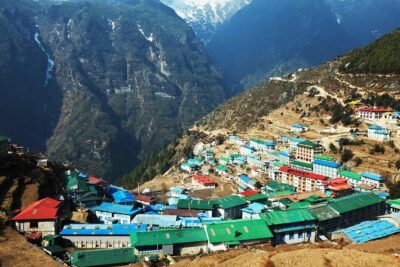
Hathipaown Heritage Walk – A guided walk to Mini Everest
Read our review →Other lists this hike appears in